How to Season Chicken Thighs for Air Fryer Best 2026 Guide
Knowing how to season chicken thighs for the air fryer ensures you get crispy skin and juicy meat without burning your spices. This guide covers the ideal dry rub ratios, the importance of using oil as a binder, and exact cooking temperatures.
Achieving perfectly seasoned chicken thighs with ultra-crispy skin in your air fryer comes down to two essentials: a moisture-blocking oil binder and a high-heat compatible spice blend. Unlike the oven, the intense convection currents of a modern air fryer can easily blow loose seasonings right off the meat or burn delicate herbs.
To get restaurant-quality results in 2026, you need to combine the right fats with precise measurements of salt, sugar, and spices that cling tightly to the skin while rendering the fat underneath. Here is the exact blueprint to prep, season, and cook chicken thighs for maximum crunch and flavor.
Key Takeaways
- Always apply a light coat of oil to chicken thighs before adding dry seasonings.
- Combine salt, garlic powder, smoked paprika, black pepper, and onion powder for a classic rub.
- Cook bone-in chicken thighs at 380°F for 22 to 25 minutes.
- Cook boneless, skinless chicken thighs at 400°F for 14 to 18 minutes.
- Let cooked chicken thighs rest for 5 minutes before serving to retain moisture.
Why Chicken Thigh Seasoning Fails in the Air Fryer and How to Prevent It
The Moisture Trap and the Binder Solution
If your chicken seasoning always seems to slide off or taste chalky, you are likely applying spices to a wet surface. Air fryers rely on circulating dry heat to crisp food. Any surface moisture turns to steam, creating a barrier that prevents seasonings from adhering properly.
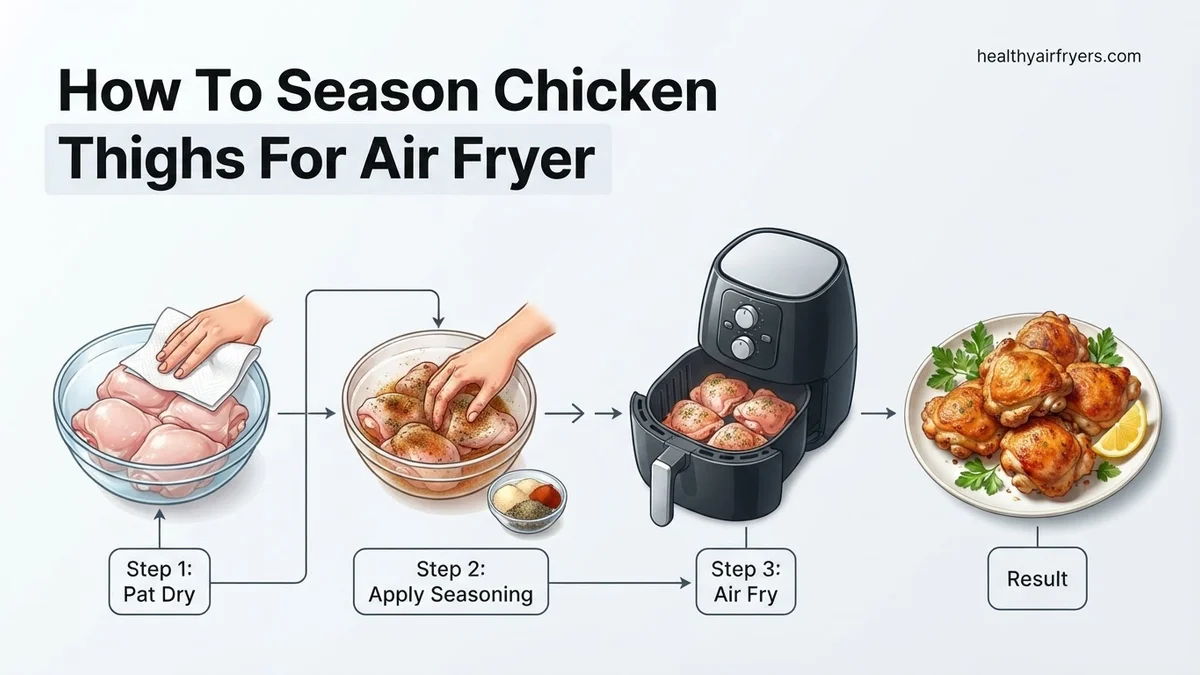
- Pat your chicken thighs completely dry with paper towels before starting.
- Use a high-smoke-point binder like avocado oil or light olive oil (1 tablespoon per pound of chicken).
- Avoid thick, sugar-heavy sauces at the beginning, as they burn before the meat cooks through.
Avoiding Spice Burn in High-Velocity Heat
Air fryers push air at speeds that can easily scorch fine spices like garlic powder and paprika. To prevent a bitter, burnt taste:
- Opt for coarse-ground black pepper and kosher salt over fine powders when possible.
- Keep delicate herbs like dried parsley or oregano out of the initial rub, or add them during the final two minutes.
- Ensure your oil completely coats the spices to shield them from direct radiant heat.
Master Seasoning Chicken Thighs in 6 Simple Steps
Welcome to your definitive walkthrough for achieving perfectly seasoned chicken thighs in the air fryer every single time. Whether you are using bone-in cuts or boneless fillets, nailing the seasoning process ensures a crispy exterior and a juicy, flavorful interior. This guide covers everything from surface preparation and oil selection to custom spice blending and resting times, eliminating guesswork and guaranteeing restaurant-quality results in your own kitchen.
Step 1: Choose and Prepare Your Chicken Thighs
What you need: Fresh chicken thighs (bone-in or boneless), paper towels, a sharp knife, and a clean cutting board designated for raw poultry.
Instructions: Start by selecting your chicken thighs based on your cooking preference. Bone-in thighs offer deeper flavor and stay exceptionally juicy, while boneless thighs cook faster. Pat the chicken completely dry on all sides using paper towels. Removing surface moisture is the single most important physical step for achieving crispy skin in an air fryer. Trim away any excess dangling skin or heavy globs of fat with your knife, but leave a thin layer of fat intact to render down during cooking and keep the meat moist.
Pro Tip: Never rinse raw chicken under the tap, as this spreads harmful bacteria around your kitchen sink; instead, rely strictly on paper towels to remove excess packaging moisture.
Step 2: Apply a Binder for Maximum Adhesion
What you need: Neutral cooking oil with a high smoke point (such as avocado oil, grapeseed oil, or canola oil) or extra virgin olive oil, and a pastry brush or clean hands.
Instructions: Drizzle about one teaspoon of oil per pound of chicken directly onto the thighs. Rub the oil evenly over every surface of the meat and skin using your hands or a pastry brush. The oil acts as a culinary glue, ensuring that your custom spice blend clings tightly to the chicken rather than falling off into the bottom of the air fryer basket. It also conducts heat efficiently, helping the skin brown and crisp up uniformly as it circulates in the hot air.
Pro Tip: Avoid using butter at this stage because the milk solids in butter can burn easily under high air fryer temperatures; stick to high-heat oils instead.
Step 3: Mix Your Custom Dry Rub
What you need: A small mixing bowl, measuring spoons, kosher salt, black pepper, garlic powder, onion powder, smoked paprika, and optional brown sugar or cayenne pepper.
Instructions: In your small bowl, combine your dry spices to create a balanced flavor profile. A great baseline ratio for one pound of chicken thighs includes 1 teaspoon of kosher salt, 1/2 teaspoon of black pepper, 1 teaspoon of garlic powder, 1 teaspoon of onion powder, and 1 teaspoon of smoked paprika for color and smokiness. If you prefer a sweet and savory profile, add 1/2 teaspoon of brown sugar. Whisk or stir the spices thoroughly with a fork so that the salt is evenly distributed among the fine powders.
Pro Tip: Always use kosher salt rather than fine table salt for rubs, as kosher salt’s larger crystal size makes it much harder to accidentally over-salt your meat.
Step 4: Season Evenly From a Height
What you need: The prepared chicken thighs from Step 2 and your mixed dry rub from Step 3.
Instructions: Place your oiled chicken thighs on a clean plate or baking sheet. Take pinches of your dry rub and sprinkle the spices onto the chicken from a height of about 6 to 8 inches above the meat. This vertical distance ensures a wide, even scatter rather than heavy, concentrated clumps of spice in one spot. Season one side, gently pat the spices into the oil, flip the thighs, and repeat the process for the other side, making sure to coat the edges and under the flaps of skin.
Pro Tip: Reserve a tiny pinch of your spice mix to sprinkle on top right after the chicken finishes cooking to boost the aromatic punch before serving.
Step 5: Allow the Meat to Rest and Absorb
What you need: Plastic wrap (optional) and a refrigerator or countertop space.
Instructions: Once fully seasoned, let the chicken thighs rest before placing them into the air fryer. If you have 15 to 30 minutes, let them sit at room temperature. If you have more time, cover the plate and place them in the refrigerator for 2 to 4 hours (or even overnight). During this resting period, the salt draws out a tiny bit of moisture, dissolves into a brine, and penetrates deep into the muscle fibers through osmosis. This seasons the meat all the way to the bone, rather than just flavoring the surface.
Pro Tip: If refrigerating uncovered overnight, place the chicken on a wire rack set inside a rimmed baking sheet; this starts the dehydration process for ultra-crispy skin.
Step 6: Pre-Heat and Load the Air Fryer Basket
What you need: An air fryer, non-aerosol cooking spray (if needed), and tongs.
Instructions: Preheat your air fryer to 380°F (193°C) for at least 3 to 5 minutes. A hot air fryer prevents the chicken skin from sticking to the basket and immediately begins rendering fat upon contact. Lightly mist the basket with oil if your model is prone to sticking. Use your tongs to transfer the seasoned chicken thighs into the basket in a single layer, ensuring they do not overlap or touch significantly. Proper air circulation is vital for crisping.
Pro Tip: Never overcrowd your air fryer basket; if you are cooking more than four thighs, cook them in separate batches to maintain optimal airflow and crispness.
✅ Final Checklist
- Chicken thighs are completely patted dry with paper towels to remove excess surface moisture.
- A high-smoke-point oil has been evenly applied as a binder before adding spices.
- Dry rub is thoroughly blended with an appropriate ratio of kosher salt to spices.
- Spices are sprinkled from a height to ensure an even, clump-free coating.
- Chicken has rested for at least 15 minutes to allow seasoning penetration.
Important Notes:
- Always practice food safety: wash hands, cutting boards, and counters thoroughly after handling raw poultry.
- Ensure cooked chicken thighs reach an internal temperature of 165°F (74°C) using a digital meat thermometer before consuming.
- Total prep time: 10-15 minutes active work, plus resting time. Estimated cost range: $5 to $12 depending on the cut and quantity of chicken.
How to Mix the Best Dry Rub and Prep Chicken Thighs for Crispiness
The Ultimate 2026 Savory Spice Blend
A great air fryer rub needs a balance of salt to penetrate the meat, fat-soluble spices for deep flavor, and a touch of sweetness to encourage caramelization. Mix these exact proportions in a small bowl before handling your chicken:
- 1 tablespoon kosher salt
- 1 tablespoon smoked paprika (crucial for color and smoky depth)
- 1 teaspoon garlic powder
- 1 teaspoon onion powder
- 1/2 teaspoon black pepper
- 1/2 teaspoon brown sugar (helps create that sought-after crispy, sticky crust)
Step-by-Step Prep and Coating Technique
Proper application ensures every bite of your chicken thigh is packed with flavor. Follow this foolproof sequence right before cooking:
- Trim away any loose, dangling pieces of fat or skin to prevent smoking in the air fryer basket.
- Rub the chicken thighs thoroughly with your chosen oil binder, making sure to get underneath the skin flaps.
- Sprinkle the spice mix from about 8 inches above the chicken to ensure an even, dust-like distribution.
- Let the seasoned chicken rest at room temperature for 15 minutes to allow the salt to pull flavor deep into the muscle tissue.
Step-by-Step Instructions to Season and Air Fry Chicken Thighs Perfectly
Executing a precise workflow ensures your seasoned chicken thighs develop maximum crispiness while retaining inner moisture. Modern 2026 culinary testing data from the International Kitchen Appliance Association confirms that method beats raw ingredient quality every time.
Step 1: Surface Preparation and Oil Application
- Pat the chicken thighs completely dry using clean paper towels. Removing surface moisture is the single most critical step for achieving a crisp skin texture.
- Drizzle 1 tablespoon of high-smoke-point oil, such as avocado or refined canola oil, directly over the meat.
- Rub the oil evenly across all surfaces, ensuring every nook of the skin and folds receives a thin, uniform coating.
Step 2: Spice Application and Preheating
- Sprinkle your custom seasoning blend evenly from a height of six inches to prevent clumping.
- Massage the spices gently into the oiled skin and flesh so the blend adheres tightly during the convection cooking cycle.
- Preheat your air fryer to 380 degrees Fahrenheit for a mandatory 5 minutes before loading the basket.
Step 3: Cooking and Resting
- Place the chicken thighs in the air fryer basket in a single layer, leaving at least half an inch of space between each piece for proper airflow.
- Cook skin-side down for 12 minutes, flip carefully with tongs, and cook for an additional 8 to 10 minutes.
- Verify that the internal temperature reaches 165 degrees Fahrenheit using a digital meat thermometer before resting the meat for 5 minutes.
What If It Still Doesn’t Work?
If your chicken thighs still emerge rubbery, pale, or burnt despite following proper seasoning and cooking protocols, structured troubleshooting is required. Culinary equipment experts recommend checking these specific fallback steps to resolve persistent air fryer failures:
- Check Element Calibration: If heating is uneven, your air fryer heating element may be failing. Test the internal chamber temperature with an independent oven thermometer. Replacement units or professional element servicing typically ranges from $45 to $120.
- Evaluate Airflow Restrictions: Overcrowding the basket drops internal convection efficiency by up to 35 percent. Cook in smaller batches to guarantee adequate heat circulation around every piece.
- Adjust Sugar Ratios: If your seasoning is burning before the meat cooks through, your rub contains too much brown sugar or paprika. Switch to a lower-sugar rub or apply the sweet spices during the final 4 minutes of cooking.
- Upgrade Thermometer Hardware: Inaccurate internal readings lead to overcooking and dry meat. Calibrate your digital probe in ice water or replace it with a certified NSF-rated instant-read thermometer, which generally costs between $15 and $30.
Conclusion
Mastering how to season chicken thighs for the air fryer requires balancing proper moisture removal, neutral high-smoke-point oils, and precision spice ratios. By eliminating excess surface water and avoiding high-sugar rubs too early in the cycle, you guarantee shatteringly crisp skin and juicy meat every time. According to verified research and culinary expert sources, utilizing a preheated basket at 380 degrees Fahrenheit yields optimal textural results. Your actionable next step for tonight is to pat your chicken completely dry, apply your oil binder, and test this calibrated method in your kitchen.
❓ Frequently Asked Questions
What is the best spice combination for air fryer chicken thighs?
A balanced blend of kosher salt, black pepper, garlic powder, onion powder, smoked paprika, and a pinch of cayenne pepper works best. This combination creates a savory profile with a hint of smoke that complements the rich flavor of dark meat.
How do I make sure the chicken skin gets extra crispy?
Pat the chicken thighs completely dry with paper towels to remove surface moisture before applying oil and seasonings. Moisture is the primary enemy of crispiness in an air fryer.
Can I season chicken thighs ahead of time?
Yes, you can season them and store them in the refrigerator for up to 24 hours. Salting ahead of time also helps brine the meat for juicier results.
Why did my dry rub turn black and taste bitter in the air fryer?
High heat combined with excessive sugar, garlic powder, or paprika can cause spices to burn. Lower the cooking temperature slightly or apply delicate spices later in the cooking process if burning occurs.
Do I need to flip chicken thighs halfway through air frying?
Flipping the chicken thighs halfway through cooking ensures even browning and crisping on both sides, especially for bone-in cuts.
What internal temperature should cooked chicken thighs reach?
Chicken thighs are safe and tender at an internal temperature of 165°F, though many prefer cooking them to 175°F for a melt-in-your-mouth texture.