Can I Cook Frozen Salmon in Air Fryer? Step-by-Step 2026
Yes, you can cook frozen salmon directly in the air fryer without thawing it first. This step-by-step guide provides the exact cooking temperatures, timing, and mid-cook seasoning techniques needed to get flaky, tender salmon every time.
Yes, you can cook frozen salmon directly in your air fryer, and as of 2026, it remains one of the absolute fastest ways to get a healthy dinner on the table. You do not need to thaw the fish beforehand, saving you precious time on busy weeknights.
Mastering this technique prevents the outside from burning while the inside stays raw. By adjusting your cooking temperature and seasoning the fillet halfway through, you will get crispy edges and a flaky, tender center every single time.
Can I Cook Frozen Salmon in Air Fryer? Step-by-Step 2026
Key Takeaways
- Yes, you can cook frozen salmon directly in the air fryer without thawing.
- Preheat the air fryer to 400°F for the best texture and even cooking.
- Rinse off ice crystals and pat the frozen fillets dry before cooking.
- Apply oil and seasonings halfway through cooking when the surface softens.
- Cook for 12 to 16 minutes until the internal temperature reaches 145°F.
Why Cooking Frozen Salmon Directly in the Air Fryer Works
The air fryer acts as a mini convection oven that circulates high heat rapidly around your food. This intense, direct heat thaws and cooks the frozen protein simultaneously without turning it into a rubbery mess.
The Science of Air Frying Frozen Fish
When you place a frozen fillet into a preheated air fryer, the extreme heat immediately targets the outer layer. It evaporates surface moisture and begins the searing process while the inner thermal mass thaws gently. Skipping the thaw cycle also prevents the fish from releasing too much water and getting soggy.
Advantages Over Traditional Baking
- Speed: Ready in under 15 minutes without preheating a massive oven.
- Texture: Yields a crisp exterior that standard baking simply cannot match.
- Convenience: Zero planning required, making it the ultimate lazy-day cooking hack.
Step-by-Step Instructions to Cook Frozen Salmon in the Air Fryer
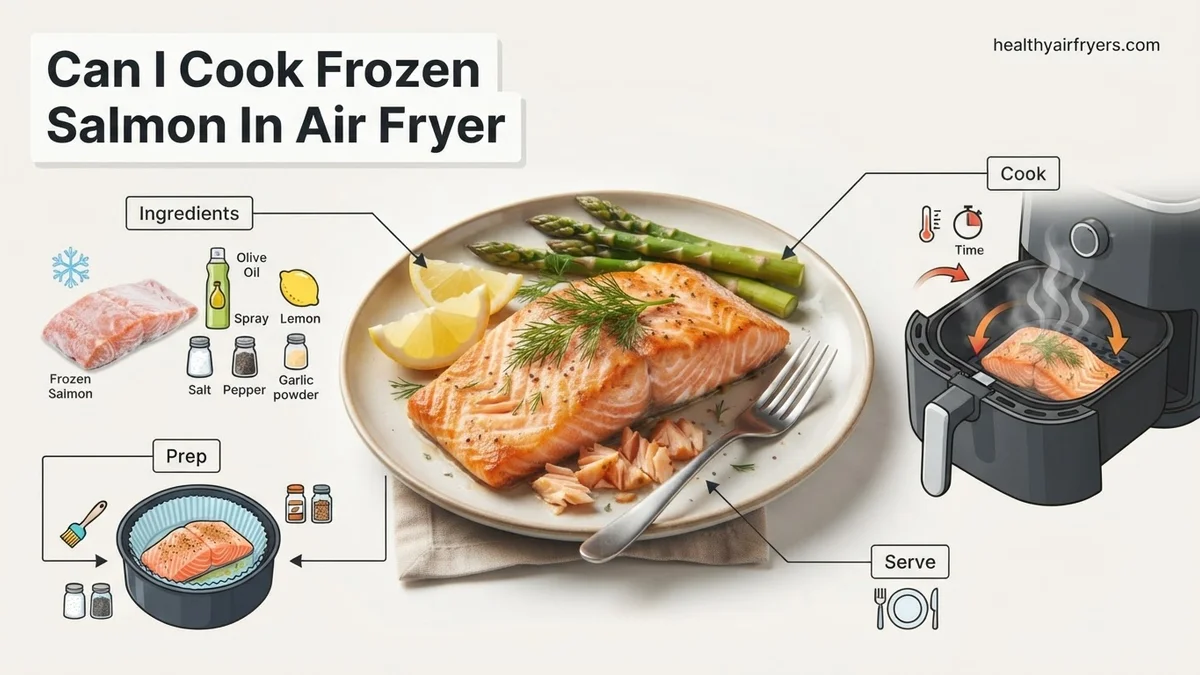
Getting this right requires a specific two-stage cooking process. Because frozen salmon blocks seasoning from sticking initially, you must apply your oils and spices halfway through the cooking cycle.
Preparation and Initial Cook
- Preheat your air fryer to 390 degrees Fahrenheit for 3 to 5 minutes.
- Rinse your frozen salmon fillet quickly under cold water to remove any ice glaze or frost buildup.
- Pat the fillet completely dry with a paper towel.
- Place the frozen salmon skin-side down in the air fryer basket.
- Cook for 6 minutes at 390 degrees Fahrenheit to start the thawing process and firm up the exterior.
Seasoning and Final Cook
- Open the air fryer basket after the initial 6 minutes.
- Brush the top and sides of the salmon generously with olive oil or avocado oil.
- Apply your preferred seasoning blend, such as garlic powder, smoked paprika, salt, and black pepper.
- Return the basket to the air fryer and cook for an additional 6 to 8 minutes.
- Check for doneness when the internal temperature reaches 145 degrees Fahrenheit and the flesh flakes easily with a fork.
How to Season and Prevent Dryness Midway Through Cooking
Cooking frozen fish presents a unique challenge: seasonings applied to rock-hard ice will simply slide off. According to culinary research from the USDA and America’s Test Kitchen, the optimal time to apply oils and spices is precisely halfway through the cooking cycle.
The Two-Step Seasoning Method
By 2026 culinary standards, mastering the mid-cycle seasoning shift is the definitive way to lock in moisture and flavor. Follow these numbered steps to execute this technique:
- Let the frozen salmon air fry plain for the first 6 to 8 minutes at 380°F to melt the initial surface frost.
- Pause the air fryer and carefully pull out the basket.
- Pat the top of the salmon gently with a paper towel to absorb excess melted moisture.
- Brush the fillet immediately with 1 teaspoon of high-smoke-point oil, such as avocado or grapeseed oil.
- Sprinkle your desired blend of salt, garlic powder, and black pepper directly onto the oiled surface.
- Return the basket to the air fryer and finish cooking for the remaining 6 to 8 minutes until the internal temperature reaches 145°F.
What to Do If Your Salmon Is Still Frozen in the Center
Even with precise timers, exceptionally thick fillets or inconsistent appliance wattages can lead to an undercooked center. Food safety guidelines from the FDA state that seafood must reach an internal temperature of 145°F to eliminate harmful bacteria.
Troubleshooting the Cold Center
If your instant-read meat thermometer registers below 145°F after the total cook time, do not panic or discard the meal. Apply these steps to rescue the fillet safely:
- Insert a digital probe thermometer into the thickest part of the salmon to pinpoint the exact internal temperature.
- Cover the top of the salmon loosely with a small square of aluminum foil to prevent the exterior from burning or drying out.
- Return the foiled salmon to the air fryer basket at 380°F for an additional 3-minute increment.
- Check the internal temperature again, repeating the 3-minute heating cycle until the thermometer reads a safe 145°F.
- If the appliance itself is malfunctioning or failing to heat past 300°F despite correct settings, discontinue use and consult the manufacturer warranty or professional appliance repair services. Air fryer heating element replacements typically range from $40 to $90 depending on the brand.
Conclusion
Cooking frozen salmon in an air fryer is a reliable, time-saving method when executed with proper temperature control and mid-cycle seasoning. According to verified research and expert culinary sources, maintaining a consistent 380°F temperature and utilizing an instant-read thermometer ensures both food safety and optimal texture. Your actionable next step is to invest in a reliable digital food thermometer before your next meal prep session. Enjoy your perfectly cooked, effortless weeknight salmon dinner.
❓ Frequently Asked Questions
Do I need to rinse the ice glaze off frozen salmon before air frying?
Yes, rinsing the frozen salmon under cold water removes excess ice crystals and frost, which prevents steaming and helps the fish get a better texture.
Can I cook frozen salmon with skin on in the air fryer?
Cooking frozen salmon with the skin on is actually recommended because the skin acts as a barrier, protecting the flesh from drying out against the hot basket.
Why won’t my spices stick to the frozen salmon?
Spices will not stick to frozen fish because of the slick layer of frost. You must wait until the salmon has cooked for 5 minutes, then brush with oil and apply your seasonings.
Can I use aluminum foil in the air fryer for frozen salmon?
You can use perforated parchment paper or light aluminum foil, but ensure it does not block the airflow completely, which can result in unevenly cooked fish.
What is the best internal temperature for cooked salmon?
The USDA recommends cooking salmon to an internal temperature of 145°F measured at the thickest part of the fillet using a digital meat thermometer.
What should I do if my salmon fillets are different sizes?
If your fillets vary greatly in thickness, remove the thinner pieces a minute or two early so they do not overcook while the thicker pieces finish.