How Many Watts Is a Air Fryer? Best Guide for 2026
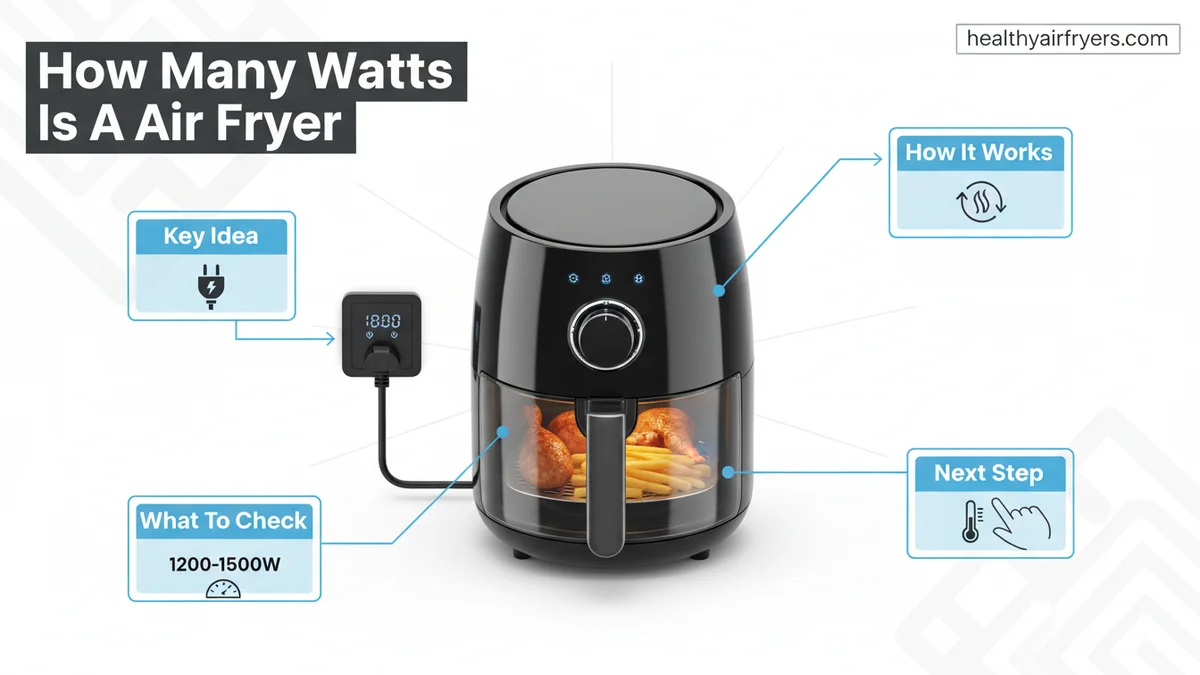
Most standard air fryers consume between 1,400 and 2,000 watts of electricity depending on their overall size and basket capacity. Understanding this wattage helps you calculate running costs and prevents overloading kitchen circuits.
A typical air fryer uses between 1,400 and 2,000 watts of electricity, depending on its physical size and cooking capacity. Smaller compact models rated at 2 quarts draw around 1,000 watts, while large family-sized basket models and dual-zone cookers routinely pull 1,800 to 2,400 watts in 2026.
Knowing your appliance wattage matters because it directly impacts your monthly utility bill and determines whether your kitchen circuit can handle running multiple appliances at once. Choosing the right size ensures you get fast, crispy results without unnecessarily inflating your energy consumption.
Key Takeaways
- Standard air fryers typically range between 1,400 and 2,000 watts.
- Compact models under 2 quarts use about 1,000 to 1,200 watts.
- Large family-sized models over 5 quarts pull up to 1,800 to 2,000 watts.
- Air fryers use significantly less electricity than traditional electric ovens.
- Check the rating label on the bottom of the unit for exact wattage.
What Causes High Power Consumption in Air Fryers
Air fryers pull a significant amount of electricity because they combine a high-intensity heating element with a powerful convection fan. This localized heating setup forces rapid hot air circulation in a compact chamber, requiring dense thermal output.
Capacity and Basket Size
The physical size of your air fryer dictates its baseline electrical draw. Manufacturers scale the wattage up alongside the cooking volume to ensure the unit can preheat rapidly.
- Compact (1 to 2 quarts): 800 to 1,000 watts, ideal for single portions or small snacks.
- Standard (3 to 5 quarts): 1,400 to 1,600 watts, suitable for couples and standard side dishes.
- Large Family Size (6 to 10+ quarts / Dual Zone): 1,800 to 2,400 watts, designed for whole chickens or multi-basket meal prep.
Temperature Settings and Preheating
Reaching high temperatures quickly requires maximum current flow. While the heating element cycles on and off to maintain heat once your target temperature is reached, hitting 400 degrees Fahrenheit demands peak wattage utilization. Running your appliance on maximum heat for longer stretches naturally increases cumulative power consumption during your cooking cycle.
How to Calculate Electricity Usage and Costs
Calculating how much your air fryer costs to run is straightforward once you know your appliance wattage and local utility rates. You can easily translate these figures into kilowatt-hours (kWh) to see the exact financial impact on your 2026 household budget.
The Math Behind the Meter
To find out how much energy your air fryer uses per cooking session, use this simple formula based on your appliance rating:
- Convert the wattage to kilowatts by dividing by 1,000 (for example, a 1,500-watt air fryer equals 1.5 kW).
- Multiply that kilowatt figure by the total hours of use (cooking for 30 minutes equals 0.5 hours).
- Multiply the resulting kWh by your local electricity rate per kilowatt-hour.
Real-World Cost Example
Imagine you own a standard 1,500-watt air fryer and run it for 30 minutes a day, five days a week. At an average national electricity rate of 16 cents per kWh in 2026, your daily energy consumption is 0.75 kWh. That amounts to roughly 3.75 kWh per week, costing you about 60 cents weekly or roughly $2.40 per month to enjoy crispy meals.
Step-by-Step Guide to Choosing the Right Wattage for Your Kitchen
Selecting the correct air fryer wattage requires balancing cooking capacity, counter space, and home electrical limits. Appliance experts recommend evaluating your household size and typical meal preparation habits before purchasing a model for your 2026 kitchen setup.
1. Assess Your Household Size
Single individuals and couples typically find that compact models ranging from 1,000 to 1,500 watts satisfy daily needs. Families of three to five people require larger basket capacities that draw between 1,500 and 1,800 watts to cook adequate portions without running multiple batches.
2. Check Electrical Circuit Capacity
Standard kitchen circuits in modern homes operate on 15 to 20 amps at 120 volts, providing a maximum threshold of 1,800 to 2,400 watts. Review your kitchen breaker limits to ensure high-wattage air fryers will not overload lines shared with refrigerators or coffee makers.
3. Evaluate Counter Space and Multi-Functionality
Oven-style air fryers and multi-cookers often exceed 1,800 watts due to larger heating elements and integrated convection fans. Measure your designated kitchen space and verify that your electrical infrastructure can safely support heavy-duty, multi-purpose countertop appliances.
What If Your Air Fryer Keeps Tripping the Circuit Breaker
High-wattage kitchen appliances frequently expose underlying electrical limitations in residential properties. If your air fryer consistently triggers power outages, systematic troubleshooting can isolate whether the issue stems from the appliance, the power cord, or the home electrical circuit.
- Relocate to a Dedicated Circuit: Unplug the air fryer and plug it directly into an unshared wall outlet. Avoid using extension cords or power strips, which introduce resistance and voltage drops that worsen circuit tripping.
- Inspect the Heating Element and Plug: Examine the power cord for fraying, melting, or exposed copper. Clean built-up grease inside the cooking chamber, as excess residue can cause internal short circuits during high-heat operation.
- Test Another High-Draw Appliance: Plug a microwave or hair dryer into the same outlet to determine if the circuit breaker trips under a similar load. This test isolates whether the issue is isolated to the air fryer or a failing circuit breaker.
- Consult a Licensed Electrician: If multiple heavy-draw appliances trip the breaker, your electrical panel may require an upgrade. Professional electrical diagnostic services typically cost between $150 and $300 depending on your region and the complexity of the wiring repair.
Conclusion
Understanding how many watts an air fryer uses ensures energy efficiency, prevents household electrical overloads, and optimizes cooking performance. Matching appliance wattage to your kitchen infrastructure protects your home while delivering fast, crispy meals. According to verified research and expert appliance standards, selecting the appropriate power rating remains the most effective way to balance utility costs and culinary results. Review your current kitchen circuit capacity today to choose a safe, compatible air fryer model for your household.
❓ Frequently Asked Questions
How many watts is a standard 4-quart air fryer?
A standard 4-quart air fryer typically consumes between 1,400 and 1,500 watts of power during normal operation. This size provides a balanced ratio of cooking capacity to energy efficiency for everyday meals.
How many watts does a large dual-basket air fryer use?
Large dual-basket or extra-large capacity air fryers (6 to 10 quarts) often require 1,800 to 2,200 watts. Because they power two heating zones or a larger cavity, they draw more electricity.
Will running an air fryer increase my electric bill significantly?
No, because air fryers cook food faster than traditional ovens and use a concentrated heating element, they generally cost very little to operate per month—often less than a few dollars total.
Why does my air fryer trip my kitchen circuit breaker?
Air fryers draw high current rapidly. If other high-wattage appliances like a toaster or coffee maker are running on the same circuit, it can exceed the breaker’s limit and cause it to trip.
Where can I find the exact wattage of my specific air fryer model?
The exact wattage is always printed on the silver or white specification rating label located on the bottom or back panel of the appliance. You can also check the user manual.
Are higher-wattage air fryers better than lower-wattage ones?
Higher-wattage models generally heat up faster and maintain more stable cooking temperatures, which is ideal for larger food batches. However, they also consume slightly more electricity while running.