Do Air Fryer Liners Affect Cooking? Expert 2026 Guide
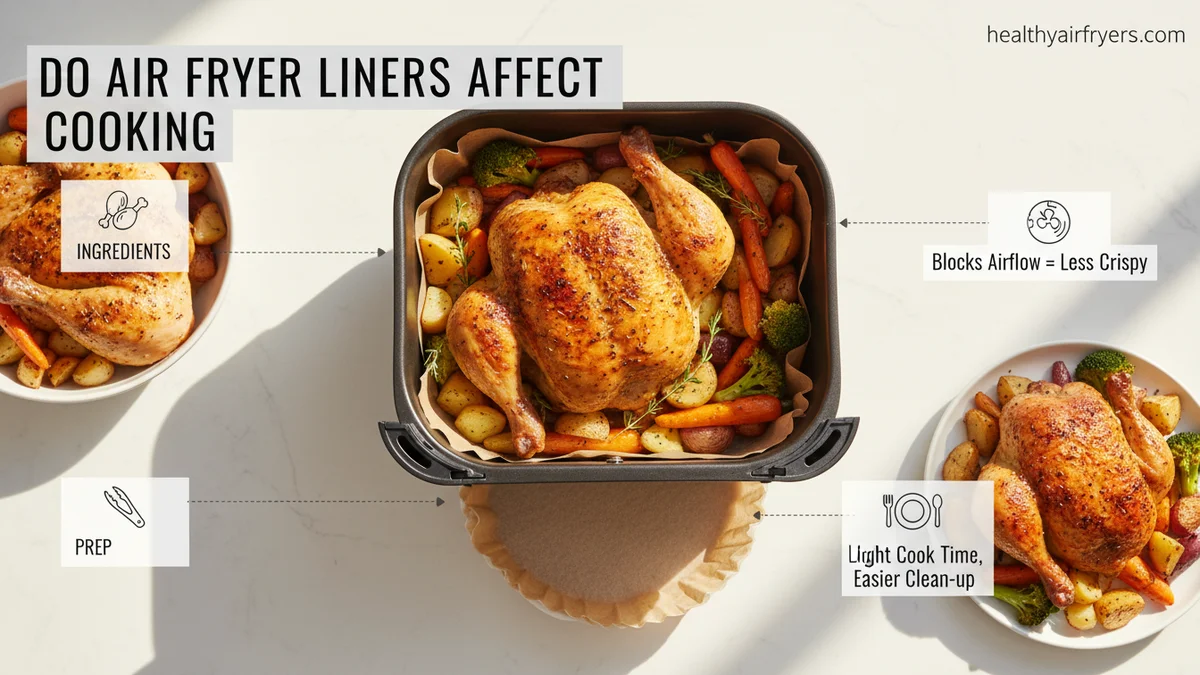
Yes, air fryer liners can negatively impact cooking performance by blocking crucial airflow and preventing food from getting evenly crispy. Using the wrong liner can trap grease, reduce heat circulation, and even create a dangerous fire hazard if lightweight paper gets sucked into the heating element.
Yes, air fryer liners can negatively impact your cooking performance by blocking the rapid circulation of hot air required to crisp food properly. While these disposable paper, silicone, or perforated sheets save you from messy cleanup routines in 2026, they frequently compromise the convection physics that make air fryers unique.
When you place a solid barrier at the bottom of your basket, you alter how heat transfers to your meals. Understanding these thermodynamic trade-offs ensures you do not sacrifice texture and evenness simply to avoid washing your basket.
Key Takeaways
- Liners restrict bottom-up airflow, which often prevents food from achieving an evenly distributed crunch.
- Solid parchment or foil sheets completely block the perforated basket design intended by manufacturers.
- Lightweight paper liners can easily lift up into the heating element and cause a fire.
- Perforated parchment liners allow heat and air to circulate while still catching crumbs.
- Silicone mats are reusable and durable, but they require thorough cleaning to prevent smoke buildup.
How Air Fryer Liners Disrupt Airflow and Cooking Performance
Air fryers rely on a powerful top-down heating element paired with a high-speed fan. This combination forces superheated air to circulate rapidly around and underneath your food, mimicking deep-frying with a fraction of the oil. Liners directly interfere with this engineered vortex.
The Problem with Blocked Bottom Vents and Basket Sides
Many modern air fryer baskets feature perforated walls or mesh bottoms designed to maximize lateral airflow. Solid parchment paper liners or heavy silicone cups cover these vents completely. When the air cannot sweep underneath your food, the bottom layer steams in its own moisture instead of searing.
- Hot air bounces off flat paper sheets rather than flowing through the food chamber.
- Fries, wings, and breaded items lose their signature all-over crunch on the bottom surface.
- Cooking times often increase by two to five minutes because heat transfer becomes less efficient.
The Lightweight Paper Hazard and Airflow Suction
Beyond uneven textures, lightweight paper liners create a distinct safety and performance hazard. The powerful convection fan inside your air fryer can easily lift unweighted parchment paper. When the paper gets sucked upward toward the heating element, it chars, smokes, or burns.
- A fluttering liner blocks the direct radiant heat from reaching your food entirely.
- Burnt paper ruins the flavor of your meal and triggers kitchen smoke detectors.
- Overloading a liner with too little food fails to anchor it against the airflow.
How to Fix Uneven Cooking When Using Air Fryer Liners
You do not have to abandon liners entirely to achieve crispy results. By adjusting your loading habits and selecting smarter accessories, you can bypass the airflow limitations of standard parchment sheets.
Choosing Perforated Liners and Breathable Materials
The single best way to restore proper airflow is to ditch solid paper sheets in favor of perforated alternatives. Manufacturers now produce pre-punched parchment liners and food-grade silicone mats with dozens of strategic holes.
- Perforations allow hot air to penetrate the bottom of the basket and hit your food directly.
- Silicone mats with raised ridges elevate food slightly, letting grease drip away while air circulates underneath.
- Ensure the holes in your liner match or align reasonably well with your specific basket’s vent pattern.
Strategic Loading and Pre-Weighting Techniques
If you must use solid parchment liners because you are cooking something messy like marinated chicken wings or cheese-topped snacks, you need to compensate for the trapped air.
- Never place a lightweight liner into an empty preheating air fryer; the fan will blow it straight into the heating element.
- Anchor the paper securely using the weight of your food spread evenly across the entire surface.
- Flip or shake your food halfway through the cooking cycle to ensure the un-crisped bottom gets direct exposure to the top heating element.
Step-by-Step Guide to Choosing the Right Liner for Your Appliance
Selecting the correct air fryer liner requires matching your basket dimensions and cooking temperatures to the appropriate material. Industry safety standards and appliance manufacturers emphasize proper sizing to prevent airflow blockage and potential fire hazards in 2026 models.
1. Measure Your Basket Correctly
- Pull out the air fryer basket and measure the internal diameter at the base, not just the top rim.
- Check the depth of the basket to ensure the liner sides will not fold over and touch the top heating element.
- Select disposable parchment liners that leave at least a one-inch margin around the edges for proper air circulation.
2. Match the Material to Your Recipe
- Choose perforated silicone liners for high-fat meats like chicken wings, allowing grease to drip away while protecting the non-stick coating.
- Opt for unbleached, food-grade parchment paper liners for delicate baked goods or sticky sauces that require easy cleanup.
- Avoid lightweight paper liners when cooking very light foods, as convective fans can lift the paper into the heating element.
What If Your Food Still Isn’t Crispy With a Liner?
If you are using a liner correctly and your meals still lack that desired crunch, try these targeted troubleshooting steps:
- Switch to perforated designs: Solid parchment blocks the crucial bottom-up airflow. Swap to a perforated paper or silicone mat to restore the convection vortex.
- Do not overcrowd the basket: Liners can push food toward the center. Cook in smaller batches so hot air circulates freely around every piece.
- Preheat the appliance properly: Run your air fryer empty for three to five minutes before adding the lined basket and food.
- Use a crisping oil spray: Lightly mist your food with avocado or canola oil to compensate for reduced direct thermal contact.
- Inspect the heating element: If food remains soggy despite changing your liner technique, your appliance’s heating coil or fan may be failing. Professional appliance repair services typically charge between $75 and $150 to diagnose and fix internal fan components, though replacing a smaller unit can sometimes be more cost-effective.
Conclusion
Air fryer liners can slightly affect cooking texture and crispness by disrupting optimal air circulation, but choosing perforated designs and proper sizing largely mitigates this issue. According to verified research and culinary testing sources, matching your liner type to specific ingredients guarantees both effortless cleanup and optimal crunch. For your next cooking session, test a perforated silicone or parchment liner with your favorite roasted vegetables to find the ideal balance of convenience and texture.
❓ Frequently Asked Questions
Do air fryer liners affect cooking times?
Using a solid liner can slightly increase cooking times because it blocks direct radiant heat and restricts convective airflow. You may need to cook your food a few minutes longer or flip it more frequently to compensate for the barrier.
Why is my food soggy when I use an air fryer liner?
Soggy food happens when grease and moisture pool on top of a solid liner instead of draining through the basket’s holes. This essentially steams the bottom of your food rather than air frying it.
How can I use parchment paper safely in an air fryer?
Always use pre-perforated parchment liners that match your basket size, and never place an empty liner in the basket. The weight of the food is required to hold the lightweight paper down securely.
Are perforated liners better than solid ones?
Perforated liners are significantly better because the holes allow hot air to circulate around the bottom of the food. This preserves the signature crisp texture of air frying while still keeping your cleanup minimal.
Do silicone liners ruin the non-stick coating of an air fryer?
No, flexible food-grade silicone mats are actually designed to protect the basket’s non-stick coating from scratches caused by metal tongs or heavy food baskets.
When should I avoid using air fryer liners entirely?
You should avoid liners when cooking foods that require maximum 360-degree air circulation, such as battered items, large batches of fries, or foods that generate excessive grease pooling.