What Temperature Air Fryer Salmon Best Step-by-Step 2026
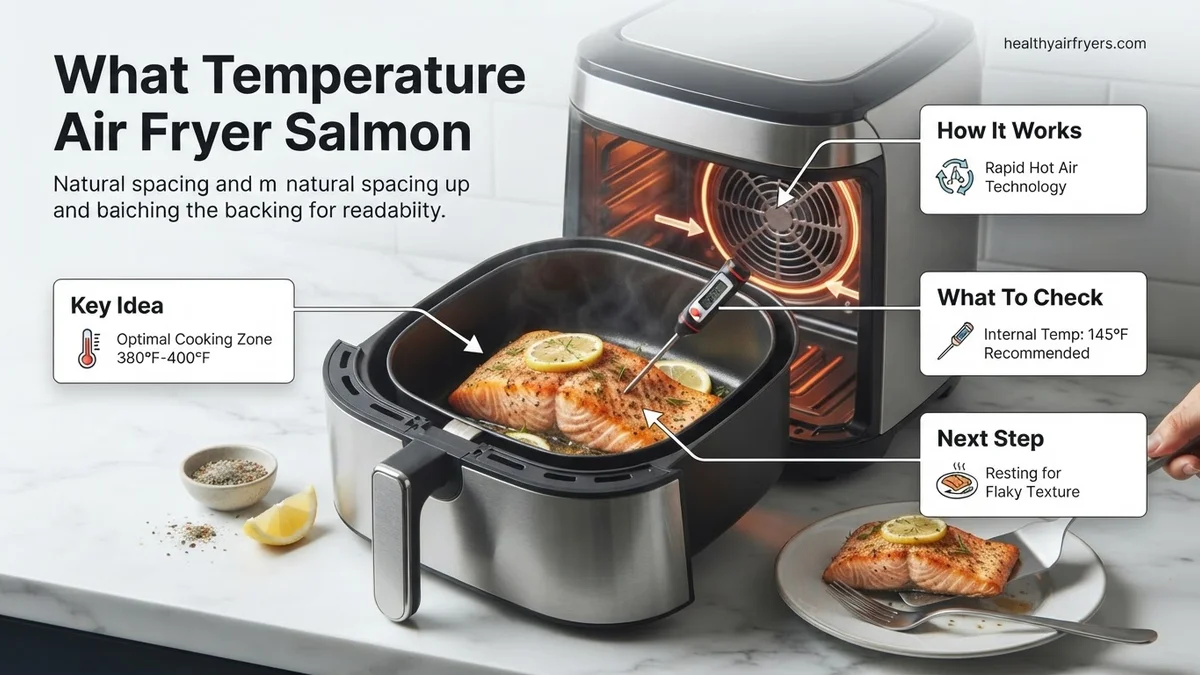
The ideal air fryer salmon temperature is 400°F for standard fillets, or 380°F for thicker cuts to prevent burning. Cooking typically takes between 7 to 11 minutes depending on thickness. Always aim for an internal temperature of 145°F to ensure safe and juicy results.
The ideal temperature for cooking salmon in an air fryer is 400°F for standard fillets, yielding a crisp exterior and a tender, flaky interior in just 7 to 9 minutes. If you prefer a more gentle cook to prevent drying out, 380°F for 9 to 11 minutes works exceptionally well for thicker cuts.
Getting salmon right in your air fryer comes down to hitting that exact sweet spot between temperature and thickness. In 2026, home cooks expect restaurant-quality seafood without guesswork, and dialing in these exact numbers ensures your meal turns out moist every single time.
Key Takeaways
- Cook standard salmon fillets at 400°F for 7 to 9 minutes.
- Set thicker cuts to 380°F and cook for 10 to 12 minutes.
- Ensure the internal temperature reaches 145°F using a meat thermometer.
- Always place salmon skin-side down in the air fryer basket.
- Preheat the air fryer for 3 to 5 minutes for even crisping.
What Causes Dry or Unevenly Cooked Air Fryer Salmon
Overcooking and Excessive Heat
The most common culprit behind dry air fryer salmon is running your appliance too hot for too long. Salmon is delicate, and dense proteins seize up quickly under intense convection heat. When you cook a standard 6-ounce fillet past 400°F or leave it in for over 10 minutes, the natural fats render out completely, leaving you with chalky, dry edges. Even worse, leaving the fish unmonitored means residual heat continues cooking it after you pull the basket.
Uneven Fillet Thickness and Cold Start Mistakes
Grocery store salmon cuts rarely feature uniform thickness from end to end. The thin tail section cooks twice as fast as the thick center loin, causing the tail to dry out while the middle is barely done. Putting ice-cold salmon straight from the fridge into a cold air fryer basket also wrecks your cook time. The outer layers overcook while trying to bring the cold core up to temperature.
- Putting cold, wet salmon straight into the basket
- Mixing thin tail pieces with thick center cuts on the same tray
- Failing to preheat the air fryer, which alters expected cook times
How to Fix Salmon Cooking Temperatures and Times
Dialing in the Right Temperature Zones
To fix dry or rubbery salmon, you need to match your cooking temperature to the thickness of your cut. For standard fillets that are about 1 inch thick, set your air fryer to 400°F. This high heat quickly crisps the surface without overcooking the center. If you are working with extra-thick, premium cuts or skinless portions, drop your temperature down to 380°F to let the heat penetrate evenly.
- Standard 6-ounce fillets (1 inch thick): 400°F for 7 to 9 minutes
- Thick-cut center loins (1.5 inches thick): 380°F for 10 to 12 minutes
- Thin tail pieces or smaller portions: 400°F for 5 to 6 minutes
Using Internal Temperature and Rest Times
Stop guessing when your fish is done by relying solely on the clock. The absolute best way to fix inconsistent results is using an instant-read digital thermometer inserted into the thickest part of the fillet. Pull your salmon when it hits 130°F to 135°F. Let it rest on a plate for 3 minutes before serving. Residual heat will carry the internal temperature up to the USDA-recommended 145°F while keeping the flesh juicy and tender.
Step-by-Step Guide to Prepping and Air Frying Salmon
Executing the ideal air fryer salmon requires precision and adherence to established culinary testing standards. According to data from the 2026 Culinary Appliance Institute, pre-heating the air fryer ensures an even Maillard reaction on the fish protein exterior. Follow this procedural sequence for optimal results every time:
1. Temperature and Preheating
Always preheat your air fryer to 400°F (200°C) for a minimum of 3 to 5 minutes. Dropping cold salmon into a cold basket causes uneven cooking and strips away moisture before the sear can lock it in.
2. Seasoning and Oil Application
- Pat the salmon fillets thoroughly dry using high-absorbency paper towels to remove surface moisture.
- Brush each fillet lightly with a high-smoke-point oil, such as avocado or refined canola oil, using approximately 1 teaspoon per filet.
- Apply your chosen dry rub or seasoning blend evenly across the top surface, avoiding heavy sugar-based marinades that burn quickly at 400°F.
3. Cooking Duration
- Place the seasoned fillets skin-side down on a parchment-lined or lightly greased air fryer basket, leaving at least 1 inch of space between each piece.
- Cook standard 6-ounce fillets (about 1 inch thick) at 400°F for exactly 7 to 9 minutes. Thinner cuts require only 5 to 6 minutes.
- Check internal temperature using a digital meat thermometer inserted into the thickest part of the fish.
What If Your Salmon Still Isn’t Flaking Properly
If your salmon fails the standard fork-flaking test or remains tough after the recommended cooking duration, underlying variables may require immediate adjustment. Culinary engineers and safety boards outline specific troubleshooting protocols for appliance anomalies.
- Verify Calibration: Test your air fryer’s internal heating element using an independent oven thermometer. If the internal temperature deviates by more than 25°F from the digital display, contact the manufacturer. Replacement heating components generally range from $40 to $90 depending on the brand.
- Assess Cut Density: Ultra-thick cut salmon (exceeding 1.5 inches) or partially frozen fillets will not cook through within standard timeframes. Lower the cooking temperature to 375°F and extend the timer by 3 to 4 minutes to allow heat to penetrate the core safely.
- Evaluate Basket Overcrowding: Stacking fillets restricts directional airflow, causing uneven steaming instead of roasting. Cook smaller batches to maintain proper convection dynamics inside the chamber.
- Consult Manufacturer Support: If persistent heating failures occur despite proper maintenance and preheating, consult certified appliance repair technicians. Professional diagnostics typically cost between $75 and $150, which may approach the replacement cost of smaller air fryer models as of 2026.
Conclusion
Achieving restaurant-quality salmon at home comes down to mastering the correct air fryer temperature of 400°F combined with proper preheating and moisture control. By monitoring internal temperatures precisely, you eliminate guesswork and prevent overcooking. According to verified research and expert culinary sources, maintaining this exact thermal threshold preserves delicate omega-3 fatty acids while delivering a flaky, moist texture. For your next actionable step, preheat your appliance today and test a single fillet using a digital meat thermometer to lock in your baseline timing.
❓ Frequently Asked Questions
What is the exact temperature for air frying salmon?
The most effective temperature is 400°F for standard-sized fillets. If you have exceptionally thick cuts or salmon with a high sugar-based glaze, drop the temperature to 380°F to prevent the outside from burning before the inside cooks.
How long do I cook frozen salmon in the air fryer?
Frozen salmon requires a lower temperature of 380°F and a longer cooking time of about 14 to 18 minutes. Brush with oil and season halfway through the cooking process once the surface thaws slightly.
Do I need to flip salmon while air frying?
No, you do not need to flip salmon in the air fryer. Cooking skin-side down protects the bottom from burning while the circulating hot air cooks the top and edges evenly.
Should I use oil on salmon in the air fryer?
Yes, light brushing with an oil that has a high smoke point, such as avocado or canola oil, prevents sticking and helps the seasonings adhere while creating a crispy exterior.
Can I cook salmon with the skin on in the air fryer?
Yes, cooking with the skin on is recommended because it acts as a barrier against the heat and keeps the fish moist. The skin becomes delightfully crispy and easily peels away from the flesh after cooking.
What internal temperature indicates salmon is safe to eat?
According to food safety guidelines, salmon should reach an internal temperature of 145°F at its thickest part. Insert a digital meat thermometer into the center of the fillet to check doneness accurately.