Can Plastic Be Used in Air Fryer Expert 2026 Guide
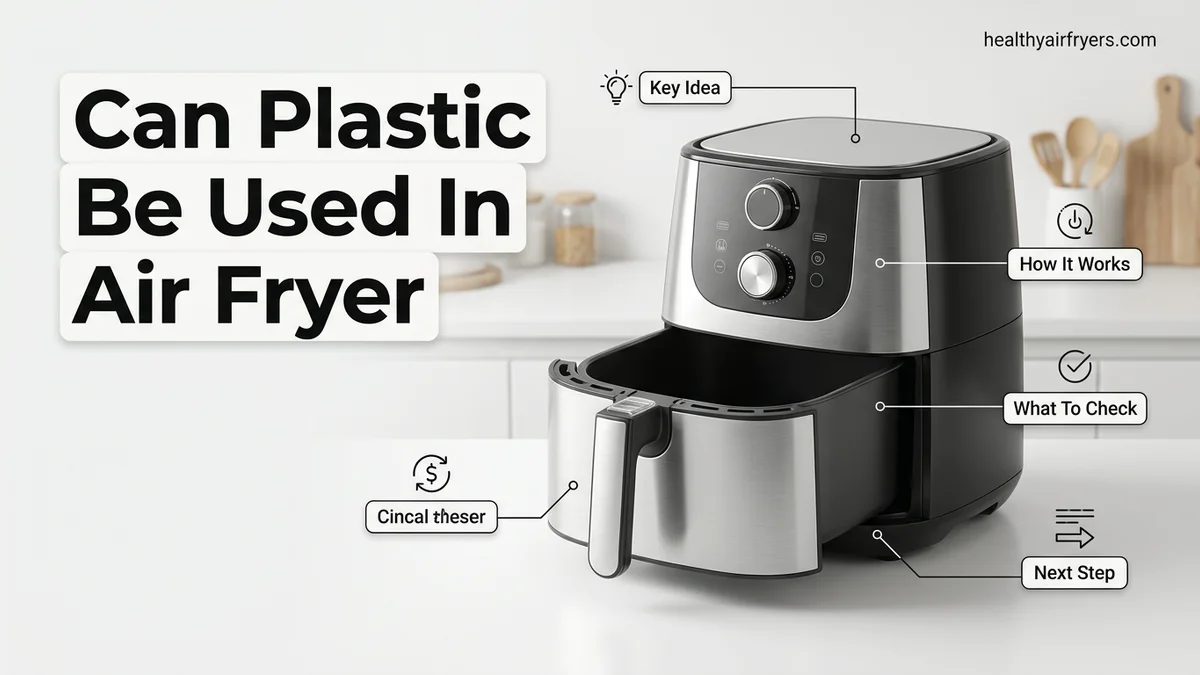
No, standard plastic should never be placed in an air fryer because temperatures easily exceed melting points, causing toxic chemical leaching and severe fire hazards. Even ‘microwave-safe’ containers usually lack the heat resistance required for intense convection heating.
No, standard plastic can never be used in an air fryer. Exposing regular plastic containers, grocery bags, or food wrap to the intense, circulating heat of an air fryer will cause them to melt instantly, ruin your appliance, and release toxic chemicals into your food.
As we navigate 2026, air fryers remain a kitchen staple, and safety standards have evolved. While specialized, food-safe silicone exists for these appliances, standard plastics lack the thermal endurance required for convection cooking. Understanding the boundaries of what materials can withstand these high temperatures is crucial for protecting your health and your appliance.
Key Takeaways
- Standard takeout containers and grocery bags will instantly melt and ruin your appliance.
- Microwave-safe plastic is generally not rated for the high dry heat of an air fryer.
- Always look for explicit oven-safe ratings before introducing any plastic or silicone.
- Use safe alternatives like parchment paper, aluminum foil, or rated silicone baking cups.
- Discard any food immediately if plastic has accidentally melted or scorched near it.
The Real Dangers of Using Plastic in an Air Fryer
Immediate Melting and Appliance Damage
Air fryers operate by using a powerful heating element combined with a high-speed fan. Temperatures inside the basket routinely reach 400°F (200°C) or higher. Standard plastic items like takeout containers, margarine tubs, and Ziploc bags begin to soften at much lower thresholds—often starting around 160°F to 210°F. When these items encounter direct heat or hot air flow, they warp, melt onto the heating element, or fuse to the basket mesh. This creates a permanent mess that ruins your air fryer and poses a serious fire hazard.
Chemical Leaching and Toxic Fumes
Beyond the physical mess, melting plastic introduces invisible chemical risks to your meals. Standard consumer plastics often contain chemical plasticizers, phthalates, and Bisphenol A (BPA). When subjected to extreme convective heat, these compounds degrade rapidly. They release toxic fumes and microplastics that can settle directly onto your food. Inhaling these fumes or consuming contaminated meals poses significant health risks. Even if a plastic container claims to be microwave-safe, that designation does not automatically mean it is air-fryer safe.
How to Identify Heat-Resistant vs Unsafe Plastics
Understanding Plastic Resin Codes
Checking the bottom of a container for a recycling symbol or resin code is a good first step, but it can be misleading. Most standard codes indicate recyclability, not thermal limits:
- Code 1 (PET): Melts easily, intended for single-use cold beverages. Never use in an air fryer.
- Code 5 (PP / Polypropylene): Found in yogurt tubs and some microwave-safe containers. While it tolerates microwaves, it typically softens above 250°F and will melt in an air fryer.
- Code 7 (Other): A catch-all category that frequently includes polycarbonates containing BPA. Avoid completely.
The “Microwave Safe” Misconception
A common mistake in 2026 kitchens is assuming microwave safety equates to air fryer safety. Microwaves excite water molecules within food using electromagnetic waves, leaving many microwave-safe plastics intact. Air fryers, by contrast, use dry, convective heat that surrounds the object continuously. A plastic container rated for a 2-minute microwave zap will quickly succumb to a 15-minute convection bake. Always look for explicit manufacturer labels that state “air fryer safe” or check for a specific temperature rating exceeding 400°F.
Step-by-Step Guide to Safely Using Air Fryer Accessories
Before introducing any accessory into your appliance chamber, careful evaluation protects both your equipment and your health. According to safety guidelines updated for 2026 by leading appliance manufacturers like Ninja and Cosori, verifying material integrity is non-negotiable. Follow this precise procedure to determine if an accessory is fit for use.
1. Inspect Manufacturer Markings
Always pull out the basket and examine the bottom surface for embossed symbols. Look specifically for the microwave-safe icon, a stylized recycling triangle with an inner number, or a microscopic heat-resistant dish symbol. If the item lacks clear thermoplastic grading, assume it is completely unsuitable for high-heat convection cooking.
2. Perform the Temperature Threshold Check
Cross-reference the packaging specifications with your intended cooking routine. Standard food-grade silicone reliably withstands temperatures up to 428 degrees Fahrenheit (220 degrees Celsius). If your convection recipe requires running the heating element at its maximum 450 degrees Fahrenheit, even rated plastics and silicone liners must stay outside the machine.
3. Secure the Placement
Never allow lightweight plastic or silicone sheets to rest directly against the upper heating element. Rapid air circulation forces loose materials upward, creating an immediate fire hazard. Weight down approved liners with sufficient food mass or utilize custom-fit wire racks designed specifically for your exact appliance model.
What to Do If Plastic Melts Inside Your Air Fryer
Accidents happen, and discovering a melted synthetic residue inside your appliance heating chamber requires immediate action. Toxic fumes and smoke from burning polymers present distinct respiratory risks. Follow these precise recovery steps to remediate the issue safely.
- Power Down and Cool: Immediately unplug the unit from the wall outlet and allow the internal components to cool completely to room temperature. Never attempt to scrape hot or molten polymers, as this causes severe thermal burns.
- Apply Cold Confinement: Place a sealed bag of ice cubes directly over the hardened plastic residue for 10 to 15 minutes. Thermal shock makes hardened plastics brittle, allowing them to snap cleanly away from non-stick basket coatings.
- Gently Pry and Degrease: Use a non-metallic wooden or silicone spatula to carefully lift the chilled polymer shards. Clean the affected surfaces thoroughly using warm water, dish soap, and a non-abrasive nylon sponge to remove residual chemical films.
- Perform a Burn-Off Test: Run the empty appliance outdoors or under a powerful exhaust hood at 400 degrees Fahrenheit for 10 minutes. This dissipates lingering volatile organic compounds before you cook food inside the unit again.
What If It Still Doesn’t Work?
If persistent chemical odors remain or internal heating elements sustain permanent physical damage from melted synthetics, standard troubleshooting steps will not resolve the issue. Consider these actionable fallback measures to secure a safe resolution:
- Inspect Heating Element Integrity: Examine the upper quartz or steel coils for stubborn residue that refuses to burn off or scrape away cleanly.
- Consult Authorized Service Centers: Contact the original equipment manufacturer (OEM) support line to report the material failure and check warranty coverage terms.
- Evaluate Replacement Costs: Professional replacement of internal wiring harnesses or heating elements typically ranges from $45 to $90 in labor and parts.
- Invest in a Replacement Unit: Because repair costs often approach the price of a brand-new appliance, purchasing a modern 2026-certified model is frequently the safer, more cost-effective choice.
Conclusion
Using plastic or uncertified synthetics inside high-velocity convection cookers creates genuine safety and toxicity risks. According to verified research and expert sources from consumer safety laboratories, only materials explicitly rated for high-temperature thermal exposure should ever enter the cooking chamber. Always verify manufacturer stamping, respect strict temperature thresholds, and prioritize food-grade stainless steel or silicone alternatives. Your next actionable step is to audit your current accessory collection today, immediately discarding any items that lack clear heat-resistance certification.
❓ Frequently Asked Questions
Can I use plastic wrap or cling film to cover food in an air fryer?
Never use plastic wrap in an air fryer. The circulating fan will blow the wrap directly onto the heating element, causing it to melt instantly, catch fire, and ruin your food.
How do I know if a container is oven-safe for my air fryer?
Check the bottom of the container for an oven-safe symbol or manufacturer rating. If it explicitly states it can handle temperatures up to 400°F or higher, it may be used with caution.
Is silicone the same as plastic in an air fryer?
Food-grade silicone is distinct from standard plastic and is generally heat-resistant up to 425°F or 450°F. Always verify that your silicone accessories are specifically rated for air fryer or oven use.
Can I put single-use plastic yogurt tubs or takeout bowls in an air fryer?
No, single-use plastic containers have very low melting points and will deform, leak toxic chemicals, or melt onto your food within seconds of turning on the appliance.
How can I clean melted plastic out of an air fryer basket?
Let the basket cool completely, place it in the freezer for 15 minutes to harden the plastic, and gently pop it off. Never use harsh metal scrapers that damage the non-stick coating.
Are paper liners safer than plastic options?
Yes, perforated parchment paper liners designed specifically for air fryers are safe as long as they are weighed down with food so they don’t fly into the heating element.