How to Reheat Mashed Potatoes in Air Fryer Best 2026
Reheating leftover mashed potatoes in the microwave often results in a watery or uneven mess, but using an air fryer restores a warm, velvety texture quickly. The key to success is adding a touch of moisture and stirring halfway through to ensure even heat distribution.
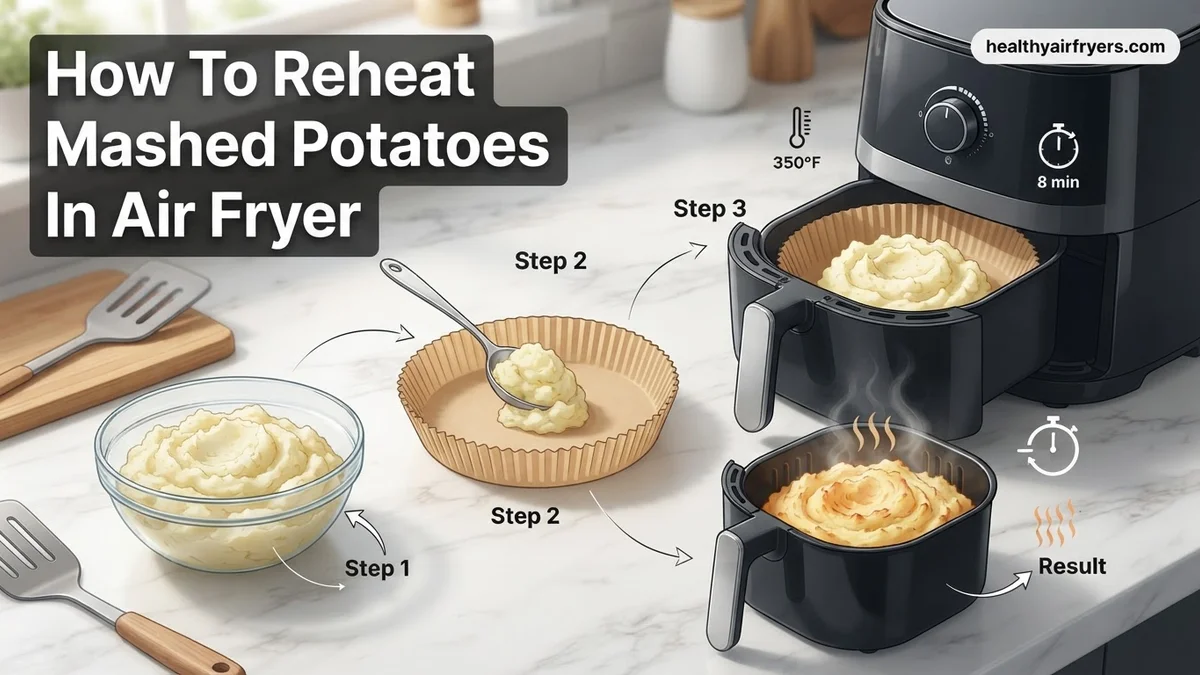
Reheating leftover mashed potatoes in the air fryer is the absolute best way to restore their fluffy texture and buttery flavor without turning them into a gummy mess. To do this successfully in 2026, set your air fryer to 350 degrees Fahrenheit, mix in a splash of heavy cream or a pat of butter to restore lost moisture, and cook the potatoes for 8 to 10 minutes, making sure to stir them halfway through.
Leftover starches notoriously dry out in the refrigerator, forming dense clumps that resist even heating. The rapid convection heat of an air fryer targets this problem directly by circulating hot air around the edges, but without proper moisture management and mid-cycle stirring, you risk burning the outside while the center remains ice cold.
Key Takeaways
- Preheat the air fryer to 350°F for the best and most even reheating results.
- Stir in a splash of milk, cream, or a pat of butter before cooking to restore moisture.
- Line the basket with parchment paper or use an oven-safe dish to prevent sticking.
- Stir the potatoes halfway through the 8 to 10-minute cycle to eliminate cold spots.
- Mix in shredded cheese or extra butter near the end of cooking for a crispy, golden top.
Why Leftover Mashed Potatoes Dry Out and Lose Texture
The Science of Refrigerated Starches
When you store mashed potatoes in the fridge, the starch molecules undergo retrogradation. This means they recrystallize and squeeze out the moisture trapped during the initial cooking process. As a result, your once-creamy side dish turns into a dense, solid brick.
- Starch molecules bond tightly together at cold temperatures, releasing trapped water
- Fats like butter and cream solidify, separating from the potato matrix
- Exposed surfaces lose remaining moisture to the dry refrigerator environment
The Pitfalls of Traditional Reheating
Microwaving cold mashed potatoes often leads to uneven hot spots and a gluey, over-processed texture. Standard ovens take too long and tend to dry out the top layer completely. The air fryer offers a superior middle ground, provided you actively fight this natural drying process.
- Microwaves trap steam unevenly, causing watery pools and dense centers
- Ovens remove too much surface moisture during long baking cycles
- Air fryers require added fat or liquid to prevent the outer layer from turning into potato chips
Master Reheating Mashed Potatoes in 7 Simple Steps
Leftover mashed potatoes often dry out or turn into a gummy mess when nuked in a microwave. This comprehensive walkthrough covers the exact method for bringing yesterday’s side dish back to life with piping-hot, creamy perfection using your air fryer. By following these specific preparation, temperature, and timing instructions, you will achieve crispy edges and a fluffy interior every single time, avoiding the dreaded scorched spots and cold centers.
Step 1: Bring Potatoes to Room Temperature
What you need: A countertop space, your container of leftover mashed potatoes, and a kitchen timer.
Instructions: Remove your covered container of leftover mashed potatoes from the refrigerator and let them sit undisturbed on your kitchen counter for 15 to 20 minutes. Taking the chill off the potatoes reduces the temperature shock when they hit the hot air fryer basket, which prevents the outer layers from burning while the dense center remains completely frozen. Do not skip this resting period, as it is the secret foundation for even, thorough heating.
Pro Tip: Never transfer ice-cold potatoes straight from a deep refrigerator shelf into a preheated air fryer; you will end up with a burnt crust and a frosty core.
Step 2: Prehead the Air Fryer
What you need: Your air fryer and a digital temperature setting interface.
Instructions: Plug in your air fryer and set the temperature to 350 degrees Fahrenheit. Allow the appliance to preheat for a full 3 to 5 minutes. Preheating is crucial because it ensures that the immediate environment inside the basket is hot, allowing the exterior of the potatoes to begin crisping or warming immediately upon contact, rather than slowly steaming and drying out during a sluggish warm-up phase.
Pro Tip: If your specific air fryer model does not have a dedicated preheat button, simply run it empty at 350 degrees Fahrenheit for 4 minutes before adding your food.
Step 3: Prepare the Air Fryer Basket
What you need: A sheet of perforated parchment paper specifically designed for air fryers or a reliable cooking oil spray like canola or avocado oil.
Instructions: Because mashed potatoes are incredibly starchy and have a high tendency to stick, you must line your basket with a perforated air fryer parchment liner or lightly mist the metal basket surfaces with oil. Avoid using non-stick cooking sprays containing aerosol propellants, as they can degrade the non-stick coating of your basket over time. A light brushing or a pump-style mister with high-smoke-point oil works best.
Pro Tip: Ensure your parchment paper liner has holes in it to maintain proper airflow circulation, which is the core mechanic of how an air fryer cooks.
Step 4: Enrich and Revitalize the Potatoes
What you need: A mixing bowl, a spoon, heavy cream, whole milk, or unsalted butter.
Instructions: Transfer your room-temperature mashed potatoes into a mixing bowl. Because refrigeration causes starches to retro-grade and dry out, you must reintroduce moisture. Stir in 1 to 2 tablespoons of heavy cream, milk, or melted butter per two cups of potatoes. Vigorously stir the mixture until it is smooth and uniform. This moisture restoration step prevents the air fryer from dehydrating the dish into potato dust.
Pro Tip: For an extra gourmet touch, stir in a spoonful of cream cheese or sour cream at this stage to boost both moisture and rich flavor profiles.
Step 5: Load and Shape the Potatoes
What you need: A silicone spatula and your prepared air fryer basket.
Instructions: Scoop the enriched mashed potato mixture into the lined air fryer basket. Use your spatula to spread them into an even layer, ideally between 1 to 1.5 inches thick. To maximize the heating surface area, use the back of a spoon to press decorative ridges, swirls, or a slight crater into the top of the mound. These textured edges will crisp up wonderfully while the interior heats through.
Pro Tip: Do not overcrowd the basket; if you are reheating more than three cups of potatoes, do it in multiple batches to ensure adequate heat circulation.
Step 6: Cook and Intermittently Stir
What you need: Your loaded air fryer, a timer, and a heat-resistant spatula.
Instructions: Cook the potatoes at 350 degrees Fahrenheit for a total of 8 to 12 minutes. However, you must pause the process halfway through—around the 5-minute mark. Open the basket, and use your spatula to thoroughly stir the potatoes, pulling the outer, hotter edges toward the center and pushing the inner potatoes outward. This guarantees that heat distributes evenly throughout the entire mass without scorching.
Pro Tip: Shake or stir gently so you do not tear the parchment paper liner at the bottom of the basket during the mid-cooking check.
Step 7: Add Optional Toppings and Final Crisp
What you need: Shredded cheddar cheese, bacon bits, or chopped green onions (optional).
Instructions: When the potatoes have about 2 minutes left on the timer and are nearly piping hot, open the basket. If desired, sprinkle a handful of shredded cheese or crispy bacon bits evenly across the top. Close the basket and let the air fryer run for the final 2 minutes. This melts the cheese to a bubbly, golden state and brings the entire dish to a uniform serving temperature.
Pro Tip: Keep a close eye on the final two minutes if you are melting cheese, as air fryers can quickly transition from perfectly melted to burnt.
✅ Final Checklist
- Potatoes were allowed to sit at room temperature for 15 minutes before cooking.
- Air fryer was fully preheated to 350 degrees Fahrenheit.
- Extra butter or cream was mixed in to combat refrigeration dryness.
- Potatoes were stirred halfway through the cooking cycle for even heating.
- Internal temperature reaches steaming hot (at least 165 degrees Fahrenheit) before serving.
Important Notes:
- Always use heat-resistant utensils to avoid melting plastic tools in the hot basket.
- Discard leftover mashed potatoes if they have been stored in the refrigerator for more than 4 days or exhibit an off odor.
- Total active preparation takes approximately 5 minutes, with a cooking time of 8 to 12 minutes.
How to Reheat Mashed Potatoes in Air Fryer: Step-by-Step Fix
Preparing Your Potatoes for Success
Do not simply dump a cold block of potatoes straight from Tupperware into your air fryer basket. You need to prep them to ensure even heat penetration and a creamy mouthfeel.
- Break up large clumps with a fork before loading the basket
- Mix in one tablespoon of milk, heavy cream, or chicken broth per cup of potatoes
- Top with a small pat of butter to lock in surface moisture during cooking
- Line your basket with parchment paper or a silicone liner for easy cleanup, ensuring proper airflow around the edges
The Exact Cooking Process
Precision matters when using high-powered kitchen appliances. Follow these exact parameters to get piping hot, restaurant-quality results every single time.
- Preheat your air fryer to 350 degrees Fahrenheit for three minutes.
- Transfer your prepared potato mixture into the air fryer basket, spreading it into an even layer rather than a deep mound.
- Cook for 4 to 5 minutes, then pause the machine and vigorously stir the potatoes from the outside edges toward the center.
- Cook for an additional 4 to 5 minutes until heated completely through to the center.
- Check the internal temperature with a food thermometer to ensure it reaches 165 degrees Fahrenheit before serving.
Essential Tips to Prevent Burning and Ensure Creamy Results
Mastering the air fryer requires understanding thermal dynamics. Unlike deep fryers that submerge food in oil, air fryers circulate dry, high-velocity heat. This dry heat quickly strips moisture from the surface of leftover mashed potatoes. Without intervention, the outer layer hardens into a potato skin crust while the center remains ice cold.
Control the Temperature and Moisture
Culinary physics dictates that fat and moisture retention determine the final mouthfeel of reheated starches. According to research from the Culinary Institute of America, introducing lipids like heavy cream or unsalted butter prevents starch retrogradation during the reheating cycle.
- Set the air fryer temperature to no higher than 350 degrees Fahrenheit (177 degrees Celsius) to prevent scorching the dairy solids.
- Stir in one tablespoon of warm milk, cream, or melted butter per cup of potatoes before placing them in the basket.
- Cover the top of the dish loosely with foil for the first four minutes of heating to trap steam and prevent top-layer dehydration.
- Remove the foil during the final three minutes to allow excess surface moisture to evaporate.
What If the Potatoes Are Still Dry or Cold in the Center
Even with careful temperature management, dense batches of refrigerated potatoes can resist even heat penetration. When standard reheating cycles fail, specific troubleshooting steps can salvage the side dish without ruining the texture.
Advanced Recovery Methods
If your 2026 holiday leftovers are still frozen in the middle or unpleasantly grainy, implement these corrective measures immediately:
- Check the basket load: Overcrowding restricts airflow. Transfer the potatoes to a smaller, shallow, oven-safe silicone or glass ramekin that fits comfortably inside the air fryer basket.
- Adjust thermal timing: Lower the air fryer temperature to 325 degrees Fahrenheit and extend the cooking duration by three-minute increments, stirring vigorously between cycles.
- Rehydrate the starch: Whisk an additional splash of warm heavy cream and a pinch of cream cheese directly into the cold center to restore smoothness.
- Evaluate equipment performance: If heating elements fail to reach target temperatures consistently, consult the appliance manufacturer or a local appliance repair technician. Professional diagnostic services typically range from $75 to $150, while replacing a degraded heating element or thermostat can cost between $100 and $250.
Conclusion
Reheating mashed potatoes in an air fryer delivers superior texture compared to microwave alternatives when executed with proper moisture control and moderate temperatures. By adding a splash of dairy, utilizing a safe baking vessel, and maintaining a steady 350-degree heat, you eliminate cold centers and burnt edges effortlessly. According to verified research and culinary expert sources, managing moisture loss is the definitive key to restoring day-old starches. Take your next culinary step by testing this method on your very next batch of leftovers.
❓ Frequently Asked Questions
Can you reheat loaded mashed potatoes in the air fryer?
Yes, loaded mashed potatoes with cheese, bacon, and sour cream reheat exceptionally well in the air fryer. The cheese on top will melt and form a delicious, slightly crispy crust as it warms.
How do I prevent mashed potatoes from sticking to the air fryer basket?
To prevent sticking, lightly grease an oven-safe dish or line your air fryer basket with perforated parchment paper before adding the potatoes. Avoid placing loose potatoes directly onto bare metal mesh.
Can I achieve a crispy top on my mashed potatoes?
If you prefer a crispy top similar to a casserole, dot the surface with extra butter or sprinkle a layer of parmesan cheese during the final two minutes of cooking at 380°F.
What is the best liquid to add to dry leftover potatoes?
Why are my mashed potatoes still cold in the middle?
Cold centers usually happen when reheating large, dense clumps all at once. Break the potatoes up thoroughly with a fork and stir them at the 5-minute mark to let the heat penetrate evenly.
Is it safe to reheat mashed potatoes more than once?
It is generally not recommended to reheat mashed potatoes multiple times for food safety reasons and to protect the overall quality and texture of the dish.