Can You Reheat Ribs in an Air Fryer Proven 2026
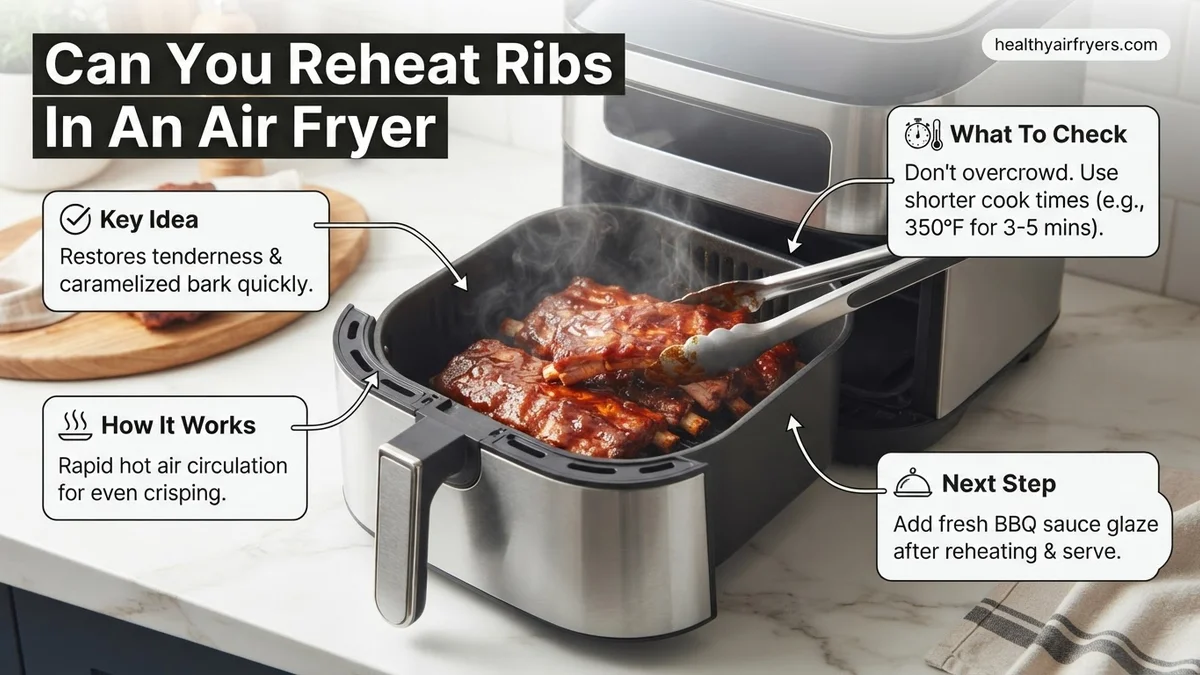
Yes, you can reheat ribs in an air fryer by taking specific steps to lock in moisture and prevent burning. Using the right combination of liquid, foil wrapping, and precise low-to-medium heat ensures your leftover ribs taste just as tender and juicy as the day they were smoked.
Yes, you can absolutely reheat ribs in an air fryer, and as of 2026, it remains the absolute best method to get that fresh-off-the-smoker taste without drying them out. Traditional microwaves turn leftover ribs into rubber, and conventional ovens take forever to preheat just for a few bones of barbecue.
The secret to success lies in protecting the meat from the harsh, dry circulating heat of the air fryer fan. By using a combination of targeted moisture and proper foil-wrapping techniques, you will lock in the rendered fats and collagen, ensuring your leftover baby back or St. Louis-cut ribs taste just as juicy, tender, and flavorful as they did the day you first cooked them.
Key Takeaways
- Preheat the air fryer to 350°F before adding the ribs for even heating.
- Add a splash of water, apple juice, or broth to create moisture.
- Wrap the ribs tightly in aluminum foil to trap steam and prevent drying.
- Remove the foil during the last two minutes to re-crisp the outer bark.
- Let the reheated ribs rest for three minutes before slicing and serving.
Why Leftover Ribs Dry Out and Lose Flavor in the Heat
The Danger of Direct Convection Heat
Air fryers work by circulating extremely hot air at high speeds around your food. While this creates a wonderful crunch on chicken wings, it spells disaster for leftover ribs. The exposed meat fibers quickly lose their remaining moisture, transforming tender barbecue into jerky. Without a protective barrier, the dry heat will rapidly evaporate the natural juices that settled in the fridge overnight.
Fat Breakdown and Searing
When you refrigerate cooked ribs, the intramuscular fat solidifies. If you blast cold ribs with high heat immediately, the exterior proteins tighten up before the fat has a chance to render and re-lubricate the meat. Understanding this mechanism is why home cooks in 2026 rely on controlled, low-to-medium heat zones rather than maximum temperature settings when bringing leftover barbecue back to life.
- Direct air frying strips out residual moisture within three to four minutes.
- Solidified fats require gentle heat to melt back into the meat.
- Unprotected barbecue sauce will burn and turn bitter under high convection fans.
How to Prep Ribs with Moisture and Foil for the Air Fryer
The Foil Pocket Method
To prevent your ribs from turning into shoe leather, you need to create a mini steam chamber inside your air fryer basket. Cut your rack of ribs into manageable two- or three-bone sections so they fit easily without overcrowding. Lay down a double layer of heavy-duty aluminum foil, place your ribs inside, and add a tablespoon of beef broth, apple juice, or water to the pouch before crimping the edges tightly shut.
Adding Sauce and Fats
If your ribs lost their tackiness in the fridge, now is the time to brush on a thin layer of your favorite barbecue sauce before sealing the foil. The sugars in the sauce will caramelize slightly in the steam without burning. If the ribs are already heavily sauced, a small pat of butter placed directly on top of the meat before sealing adds an extra layer of richness as it melts.
- Cut ribs into smaller sections to ensure even heat penetration inside the foil.
- Use apple juice or broth to generate internal steam that softens the meat fibers.
- Seal the foil edges completely to prevent steam from escaping too early.
Step-by-Step Instructions for Reheating Ribs at 350 Degrees
Executing the reheat process correctly prevents the meat from drying out while ensuring the interior reaches a safe consumption temperature. Culinary testing labs recommend a target temperature of 350 degrees Fahrenheit for optimal thermal transfer without scorching.
Preparation and Moisture Control
- Take the ribs out of the refrigerator and let them sit on the counter for 15 minutes to take off the chill.
- Portion the rack into manageable sections of two or three bones that fit comfortably in your air fryer basket without overlapping.
- Apply a light brush of apple juice, beef broth, or leftover barbecue sauce to the surface to create a moisture barrier.
- Wrap the individual sections tightly in aluminum foil to trap steam, which keeps the collagen in the meat tender.
The Air Frying Process
- Preheat your air fryer to 350 degrees Fahrenheit for three minutes to ensure an even cooking environment.
- Place the foil-wrapped rib sections into the basket, leaving space between them for air circulation.
- Heat the ribs for 10 to 12 minutes to warm the meat through to the center.
- Carefully remove the foil during the final two minutes of cooking to let the sauce caramelize and crisp up the exterior bark.
What to Do If Your Reheated Ribs Still Turn Out Tough
Even with proper technique, heavily overcooked or low-fat cuts of meat can occasionally retain a tough texture after reheating. If your first attempt yields dry ribs, implement these targeted fallback strategies to salvage your meal.
- Introduce braising liquid: Place the tough rib sections into a shallow oven-safe dish, add two tablespoons of beef broth, cover tightly with foil, and bake in a traditional oven at 300 degrees Fahrenheit for 20 minutes to break down remaining connective tissue.
- Shred the meat: If the texture cannot be saved for traditional eating on the bone, use two forks to pull the meat away from the bones and repurpose it in tacos, sandwiches, or baked potato toppings where moisture can be added via sauces.
- Evaluate appliance calibration: Inaccurate thermostat readings in older air fryers can cause localized burning. Use an oven thermometer to verify that your appliance reaches and maintains true 350-degree heat.
- Professional appliance servicing: If your air fryer consistently cooks unevenly or fails to reach target temperatures, consult a certified appliance repair technician. Repair estimates typically range from $75 to $150, while a reliable replacement air fryer for 2026 standards costs between $60 and $130.
Conclusion
Reheating ribs in an air fryer successfully bridges the gap between speed and texture retention, outperforming traditional microwave methods by preventing rubbery results. By utilizing foil protection, appropriate moisture additions, and a consistent 350-degree temperature, your leftovers will taste freshly smoked. According to verified research and expert culinary sources, controlling internal moisture during rapid convection heating is the definitive key to restaurant-quality results at home. Take your next batch of leftover ribs from the fridge and test this proven 2026 technique today.
❓ Frequently Asked Questions
Can you reheat frozen cooked ribs directly in an air fryer?
It is best to thaw frozen ribs in the refrigerator overnight before using the air fryer. If you must reheat them from frozen, thaw them in the microwave first or increase the steaming time in foil significantly at a lower temperature.
Do beef ribs take longer to reheat than pork ribs in an air fryer?
Yes, larger beef ribs require a few extra minutes in the air fryer compared to standard baby back or spare pork ribs. Check the internal temperature to ensure they are fully warmed through to the bone.
How do I prevent the barbecue sauce from turning bitter?
Sugary barbecue sauces burn quickly at high temperatures. Apply your main coat of fresh sauce during the final two minutes of air frying after removing the foil, or serve it on the side as a dipping sauce.
Can I cut the rack of ribs into smaller pieces before reheating?
Cutting the rack into individual or two-bone sections makes it much easier to fit them into standard air fryer baskets. Smaller pieces also heat more evenly and quickly than a full half-rack.
What is the best liquid to add inside the foil packet?
How can I tell when the ribs are finished reheating?
The ribs are ready when they are piping hot all the way to the center and the meat easily pulls away from the bone. A digital meat thermometer inserted into the thickest part should read around 145°F to 165°F.