How to Make Fish in the Air Fryer Step-by-Step Guide 2026
Cooking delicate seafood requires precise temperature control to prevent dry, overcooked edges or falling apart in the basket. Mastering exact cook times and proper pre-greasing techniques ensures perfectly tender, flaky fish every time. Follow this straightforward method for foolproof air-fried fish.
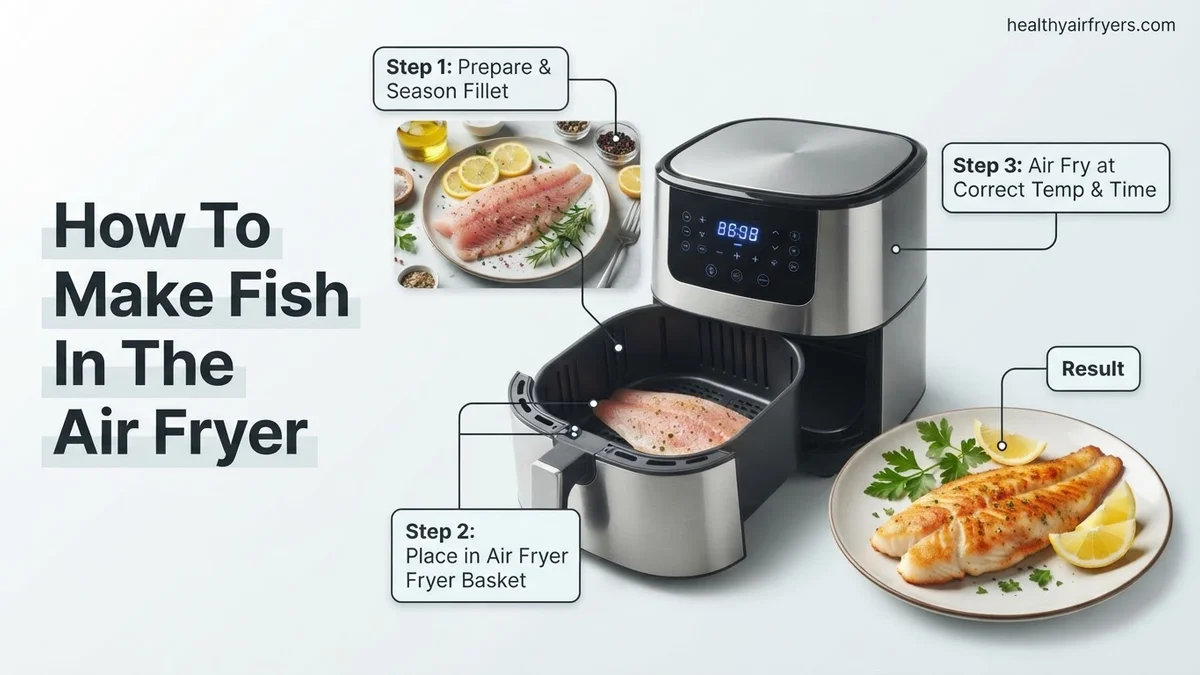
Cooking fish in the air fryer in 2026 comes down to balancing high heat with short cooking times. To keep your fish tender and prevent it from drying out or sticking, you need the right temperature, a light coating of oil, and precise timing based on the thickness of your fillets.
Most fish cooks completely in just 7 to 12 minutes at 400 degrees Fahrenheit. Because air fryers circulate rapid convection heat, delicate proteins can easily overcook or break apart when you try to flip or remove them. Getting restaurant-quality seafood at home requires mastering preparation and timing.
Key Takeaways
- Preheat the air fryer to ensure an immediate sear and prevent the fish from sticking.
- Lightly oil both the basket and the fish fillets with a high-smoke-point oil.
- Thick salmon fillets generally require 380°F for 7 to 9 minutes.
- Thin white fish fillets cook quickly at 400°F for 5 to 7 minutes.
- Test for doneness by checking if the flesh easily flakes with a fork.
What Causes Fish to Dry Out or Fall Apart in the Air Fryer
Why Overcooking Happens So Fast
Fish lacks the tough connective tissue found in beef or chicken. Once the internal temperature climbs past 140 degrees Fahrenheit, the muscle fibers contract aggressively and squeeze out all the moisture. In a modern 2026 air fryer, the concentrated circulating air cooks the outer edges long before the center catches up if your temperature is set too low or your cook time is too long.
Why Fish Sticks and Breaks
Fish sticks to air fryer baskets because the protein bonds directly to hot metal as the moisture evaporates from the surface. If you do not create a protective barrier using oil, or if you try to flip the fillet before a proper sear forms, the delicate flesh will tear apart. Overcrowding the basket also traps steam, which softens the exterior and causes the fish to fall apart structurally.
- Avoid setting air fryer temperatures below 380 degrees Fahrenheit for fish.
- Never force a fillet to release from the basket; wait for it to naturally crisp.
- Leave at least half an inch of space between fillets for optimal airflow.
Master Air Fryer Fish in 5 Simple Steps
Cooking fish in the air fryer is one of the fastest and healthiest ways to get a restaurant-quality meal on your dinner table without the heavy grease of deep-frying. However, because fish is delicate and tends to dry out quickly, getting that perfect balance of a crispy exterior and a flaky, moist interior requires precision. This comprehensive walkthrough guides you through selecting the right cut, preparing your seasonings, managing temperature, and executing the cooking process flawlessly so you never have to deal with soggy or overcooked seafood again.
Step 1: Selecting the Right Fish Fillet
What you need: Thick-cut white fish fillets (such as cod, halibut, haddock, or mahi-mahi) about 1 inch thick, paper towels, and a sharp chef’s knife.
Instructions: Choosing the right cut is the foundation of air fryer success. Thin fillets like flounder or sole will dry out instantly in the fierce circulating heat of an air fryer, so always opt for thick, sturdy white fish. Inspect your fillets for any stray bones using your fingers, and gently pat them completely dry on both sides with paper towels. Removing excess surface moisture is critical because wet fish will steam instead of searing and crisping up.
Pro Tip: If using frozen fish, thaw it completely in the refrigerator overnight and pat it dry twice. Never put frozen fish directly into the air fryer unless using a heavily battered, pre-cooked frozen product.
Step 2: Preparing the Breading or Seasoning Matrix
What you need: Olive oil spray or melted butter, coarse salt, black pepper, garlic powder, paprika, Panko breadcrumbs, and a shallow dredging dish.
Instructions: Because fish has virtually no natural fat, it needs a binding agent and a protective coating to lock in moisture. Lightly brush or spray your dried fillets with olive oil on all sides. In a small bowl, mix your dry spices together. If you prefer a naked, blackened fish, season generously with your spice blend. If you want a crispy crust, press the oiled fillets gently into a mixture of Panko breadcrumbs seasoned with salt, pepper, garlic, and paprika to ensure an even, adherent coating.
Pro Tip: Avoid using standard fine breadcrumbs, as they tend to become dense and hard in the air fryer. Panko breadcrumbs provide a light, airy crunch that mimics deep-frying much better.
Step 3: Preheating the Air Fryer Basket
What you need: Your air fryer unit, high-smoke-point cooking oil spray (such as avocado or canola oil), and silicone tongs.
Instructions: Turn on your air fryer and set the temperature to 400 degrees Fahrenheit (200 degrees Celsius). Allow the machine to preheat empty for at least 3 to 5 minutes. Preheating is non-negotiable when cooking fish; dropping delicate proteins into a cold basket guarantees that the crust will stick to the metal grates and tear apart when you try to flip or remove it. Once hot, lightly mist the basket surface with your high-smoke-point cooking spray.
Pro Tip: Do not use aerosol cooking sprays containing propellants like lecithin, as they can damage the non-stick coating of your air fryer basket over time. Use a pump bottle filled with pure oil instead.
Step 4: Arranging and Cooking the Fish
What you need: The preheated air fryer, your seasoned fish fillets, and a digital instant-read food thermometer.
Instructions: Carefully place your prepared fish fillets into the hot basket in a single layer, ensuring there is at least a half-inch of space between each piece to allow proper air circulation. Do not overcrowd the basket; if you are cooking more than two large fillets, cook them in separate batches. Cook at 400 degrees Fahrenheit for 8 to 12 minutes, depending on the thickness of your fillets. There is typically no need to flip the fish halfway through if your air fryer has strong top-down convection, but checking at the 7-minute mark is recommended.
Pro Tip: To test for doneness, insert an instant-read thermometer into the thickest part of the fillet. The internal temperature should reach 145 degrees Fahrenheit, and the flesh should easily flake apart with a fork.
Step 5: Resting and Plating
What you need: A wide spatula, fresh lemon wedges, chopped fresh parsley or dill, and a serving platter.
Instructions: Once the cooking cycle is complete, resist the urge to immediately scrape the fish out with a narrow utensil. Let the fish rest inside the basket for 2 minutes to allow the internal juices to redistribute throughout the delicate muscle fibers. Using a wide, flat spatula, gently slide it underneath each fillet and transfer them to your serving plates. Garnish immediately with fresh lemon wedges and herbs to brighten the rich, savory flavors of the crispy fish.
Pro Tip: Serve immediately while the crust is at peak crispness. Letting cooked air fryer fish sit on a plate at room temperature for more than five minutes will cause the steam escaping from the interior to soften the crunchy crust.
✅ Final Checklist
- Did you use thick-cut white fish fillets rather than thin cuts?
- Were the fillets completely patted dry with paper towels prior to seasoning?
- Did you preheat the air fryer to 400°F before adding the fish?
- Is there enough space between the fillets to prevent overcrowding in the basket?
- Did you verify an internal temperature of 145°F using a food thermometer?
Important Notes:
- Always use caution when opening the hot air fryer basket to avoid steam burns.
- Ensure your air fryer basket is thoroughly cleaned after cooking fish to prevent lingering odors from affecting your next meal.
- Estimated total time: 15-20 minutes. Estimated cost: $5-$12 per batch depending on the type of fish selected.
How to Prep Fish for the Air Fryer Without Sticking
The Right Oil and Seasoning Strategy
You need a high-smoke-point oil to protect your fish from the aggressive heat of the air fryer. Avocado oil or grapeseed oil work best. Avoid cooking sprays that contain propellants like lecithin, which can gum up your non-stick basket coating over time. Pat your fish completely dry with paper towels before applying a thin, even layer of oil using a pastry brush or a manual mister.
Basket Preparation and Liners
Preventing your fish from sticking starts with a clean, preheated basket. Preheat your air fryer for 3 to 5 minutes so the surface is hot before the fish goes in. If you want guaranteed zero sticking without sacrificing the air-circulating benefits, use perforated parchment paper liners designed specifically for air fryers.
- Always pat fillets bone-dry to ensure seasonings and oil adhere properly.
- Apply a light coating of oil directly to the fish, not just the basket.
- Use perforated parchment paper liners to maintain proper airflow while protecting delicate crusts.
Step-by-Step Guide to Cooking Fresh and Frozen Fish
Mastering air fryer seafood in 2026 requires understanding the precise parameters for both fresh fillets and frozen blocks. According to culinary data from the USDA and leading appliance manufacturers, utilizing the correct temperature profile prevents moisture loss and ensures food safety.
Cooking Fresh Fish Fillets
- Preheat your air fryer to 400 degrees Fahrenheit for three minutes to ensure an immediate sear that locks in natural juices.
- Pat your fresh fillets thoroughly dry with paper towels and lightly brush both sides with high-smoke-point oil like avocado or canola oil.
- Season the fish with your preferred blend of herbs, salt, and pepper just before placing it into the basket.
- Cook standard one-inch thick white fish fillets, such as cod or tilapia, for seven to nine minutes without flipping.
- Check for doneness by inserting a food thermometer into the thickest part; the internal temperature must reach 145 degrees Fahrenheit.
Cooking Frozen Fish
- Skip the thawing stage completely, as modern 2026 air fryer models are engineered to cook frozen proteins safely and evenly.
- Preheat the air fryer to 390 degrees Fahrenheit to counteract the surface moisture melting off the frozen fish.
- Rinse off any ice crystals under cold water, pat the frozen fillet dry, and coat it generously with oil and seasonings.
- Cook the frozen fillet for 12 to 15 minutes, pausing halfway through to carefully flip the fish for even browning.
- Verify that the internal temperature registers 145 degrees Fahrenheit before serving to guarantee complete food safety.
What If It Still Doesn’t Work?
If your fish continues to stick, tear apart, or cook unevenly despite adjusting your technique, the underlying hardware or preparation method may need troubleshooting. Follow these fallback steps to resolve persistent air frying issues:
- Inspect the non-stick coating on your air fryer basket for microscopic scratches or wear. If the basket is compromised, replace it immediately; OEM replacement baskets typically range from $25 to $60 depending on your specific appliance brand.
- Switch from standard cooking sprays to a refillable oil mister filled with pure vegetable oil. Aerosol propellants in commercial cooking sprays often contain lecithin, which bakes onto non-stick surfaces and creates a gummy, sticky residue.
- Calibrate your digital instant-read meat thermometer in an ice bath to ensure your temperature readings are accurate. A faulty thermometer can lead to undercooked seafood or over-dried fillets.
- Verify that your air fryer heating element is functioning at peak capacity by running an empty preheat cycle. If the unit fails to reach the target temperature within five minutes, consult the manufacturer’s warranty or contact professional appliance repair services.
Conclusion
Achieving restaurant-quality fish in the air fryer relies on precise temperature control, proper surface drying, and adequate oil application to prevent sticking. According to verified research and culinary safety standards from food science experts, maintaining an internal temperature of 145 degrees Fahrenheit guarantees both optimal texture and safety. Your immediate next step for tonight’s dinner is to preheat your air fryer to 400 degrees Fahrenheit and test a single fillet using a reliable digital thermometer.
❓ Frequently Asked Questions
What is the best type of oil to use when air frying fish?
High-smoke-point oils like avocado, canola, or grapeseed oil work best. Avoid using butter for the initial high-heat phase as it can burn quickly.
Should I use foil or parchment paper in the air fryer basket?
Perforated parchment paper designed for air fryers can prevent sticking, but solid foil or paper will block airflow and reduce the crisping effect.
How long does thin white fish take to cook at 400 degrees?
Thin white fish fillets like tilapia, cod, or sole typically take about 5 to 7 minutes at 400°F, depending on thickness.
Can I bread fish with flour and eggs before air frying?
Yes, standard breading works well, but you should lightly spray the breaded coating with oil to ensure it turns golden and crispy rather than remaining powdery.
Why did my fish fall apart when I took it out of the basket?
Fish falls apart if it sticks to an ungreased basket or if you try to flip it too early before the proteins have set. Use a thin spatula to gently remove it.
How do I reheat leftover air-fried fish without drying it out?
Reheat leftover fish at a lower temperature of 350°F for 3 to 4 minutes until warmed through, keeping it from overcooking.