Are Stainless Steel Air Fryers Non Toxic? Expert Guide 2026
Are stainless steel air fryers non toxic? Yes, food-grade stainless steel is completely free from harmful chemicals like PTFE, PFOA, PFAS, lead, and cadmium. Unlike traditional non-stick coatings, high-quality stainless steel models provide a chemically stable and safe cooking surface that will not degrade or release toxic fumes under high heat.
Stainless steel air fryers are considered non-toxic because they are completely free from synthetic chemical coatings like PTFE, PFOA, and other PFAS. Unlike traditional non-stick models that rely on polytetrafluoroethylene for easy food release, food-grade stainless steel provides a stable, inert cooking surface that will not chip, flake, or release hazardous fumes when exposed to high heat.
As health-conscious consumers navigate kitchen appliance upgrades in 2026, eliminating hidden sources of chemical exposure remains a top priority. Understanding the material composition of your air fryer helps you protect your household from endocrine disruptors and heavy metal leaching, ensuring your daily meals remain as clean as possible.
Key Takeaways
- Stainless steel air fryers contain zero toxic non-stick chemicals like PTFE or PFOA.
- Food-grade 304 stainless steel provides a durable, heat-stable, and corrosion-resistant cooking environment.
- Inspect internal heating elements and fan guards to ensure they are also metal and safe.
- Regular seasoning and proper cleaning prevent food from sticking without chemical coatings.
- Even true stainless steel can leach trace amounts of nickel or chromium, which is generally safe.
What Causes Safety Concerns in Traditional Air Fryers
The Dangers of Traditional Non-Stick Coatings
Most standard air fryers use a non-stick coating on their baskets and trays to prevent food from sticking. These coatings often contain PTFE, commonly known by the brand name Teflon, and historically relied on PFOA during manufacturing. While manufacturers phased out PFOA years ago, PTFE remains a staple in conventional cookware. When heated above 500 degrees Fahrenheit, PTFE coatings can begin to break down and release toxic polymer fumes. If you accidentally overheat an empty traditional air fryer, these invisible fumes can cause polymer fume fever, a temporary flu-like condition in humans, and can be fatal to pet birds.
Heavy Metal Leaching and Poor Quality Alloys
Beyond synthetic coatings, traditional budget-friendly air fryers sometimes raise safety flags regarding their base metal construction. Cheaply manufactured appliances may use low-grade metals or recycled alloy mixtures that contain trace amounts of heavy metals like lead, cadmium, or chromium. When acidic foods—such as tomatoes, lemon juice, or vinegar—come into contact with substandard metals during high-heat convection cooking, these heavy metals can leach directly into your food. Over time, ingesting heavy metals can lead to cumulative health issues, making material transparency a critical factor for your kitchen safety in 2026.
How to Identify and Choose a Truly Non-Toxic Stainless Steel Air Fryer
Verifying Food-Grade Stainless Steel Designations
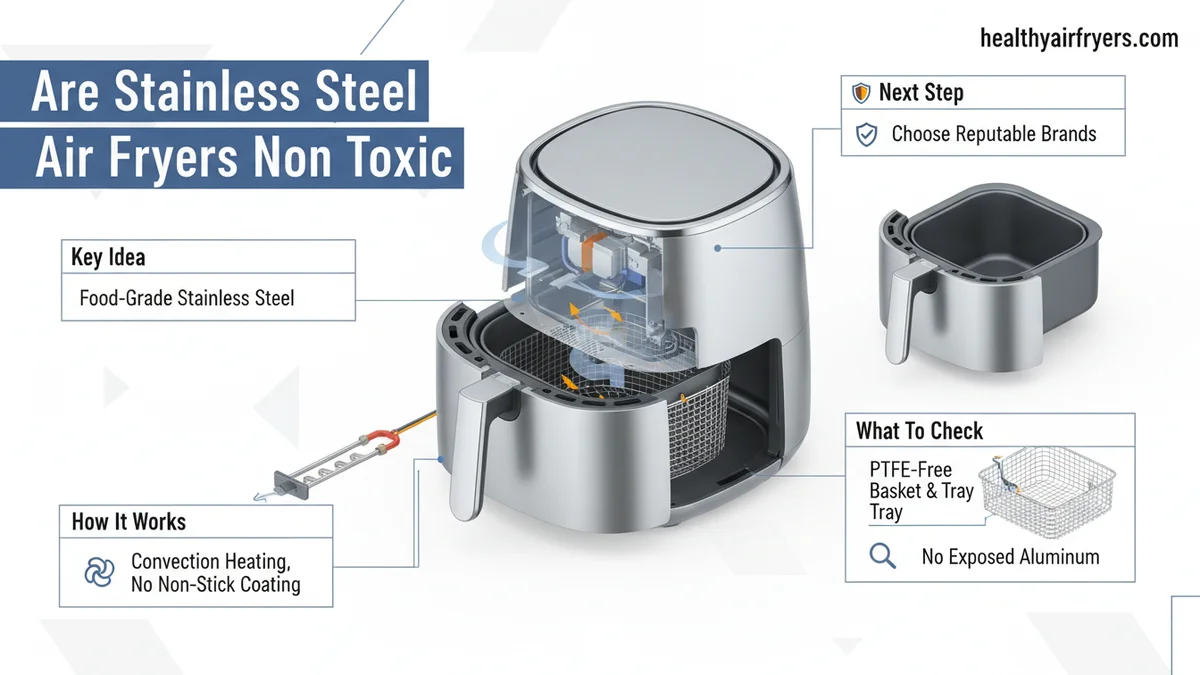
When shopping for a non-toxic air fryer, you must look beyond surface-level marketing claims and examine the exact metallurgy. True stainless steel air fryers feature baskets, racks, and interior cavity walls made from high-grade stainless steel, typically 304 grade (also known as 18/8). This specific grade contains 18 percent chromium and 8 percent nickel, offering exceptional corrosion resistance and structural stability at high temperatures. To ensure you are buying a safe product, check manufacturer specifications for the following details:
- Explicit labeling confirming 304 or 430 food-grade stainless steel interior components.
- Complete absence of PTFE, PFOA, PFOS, and ceramic-sol-gel chemical coatings.
- Third-party laboratory testing certifications verifying heavy metal non-leaching standards.
Inspecting Internal Components and Hidden Plastics
A stainless steel basket does not automatically mean the entire appliance is entirely free of concerning materials. You need to inspect the internal architecture and housing of the air fryer for hidden touchpoints. Some models feature a stainless steel basket that slides into a plastic housing or rests against silicone bumpers that can degrade over time. For the ultimate non-toxic setup, look for units where the hot air circulates strictly within a stainless steel chamber, minimizing contact with heated plastics, rubber gaskets, or proprietary glues that might off-gas volatile organic compounds during your cooking cycles.
Step-by-Step Guide to Cleaning and Maintaining Your Stainless Steel Air Fryer
Proper maintenance protects your investment and ensures your cooking surface remains naturally non-stick and safe. Unlike coated models, high-grade 304 stainless steel can handle rigorous cleaning without releasing hazardous fumes. Industry standards for 2026 recommend regular upkeep to prevent carbon buildup and maintain optimal thermal conductivity.
Daily Post-Cooking Routine
- Unplug the air fryer and allow the stainless steel basket to cool down completely to prevent thermal shock warping.
- Soak the basket in warm, soapy water for 10 to 15 minutes to loosen baked-on grease and food particles.
- Scrub gently using a non-abrasive nylon sponge or microfiber cloth in the direction of the metal grain.
- Rinse thoroughly with clean warm water to remove all soap residue, which can cause smoking during the next use.
- Dry immediately with a lint-free towel to prevent water spots and mineral scale accumulation.
Deep Cleaning Stubborn Residue
- Create a thick paste using baking soda and a small amount of warm water for polymerized grease spots.
- Apply the paste directly to discolored or burnt areas and let it sit for 20 minutes.
- Buff the surface gently using a soft cloth, working circularly over tough spots without scratching the finish.
- Wipe clean with a damp microfiber cloth and dry completely before storing the appliance.
What If Foods Keep Sticking to Your Stainless Steel Basket
Cooking on raw metal requires a slight adjustment in technique compared to non-stick coatings. When proteins or starches consistently bond to your stainless steel surface, standard adjustments can easily resolve the issue.
Pre-Heating and Fat Application
- Always pre-heat your air fryer for 3 to 5 minutes before adding any food to the basket. Hot metal causes food proteins to instantly sear and release naturally.
- Apply a high-smoke-point oil, such as avocado or grapeseed oil, directly to the food rather than spraying aerosol cans into the basket. Commercial propellant sprays contain lecithin that bakes into a sticky, permanent lacquer on stainless steel.
- Pat proteins completely dry with paper towels before seasoning and cooking to drastically reduce surface sticking.
- Allow meats to form a natural crust before attempting to flip them; they will release from the steel on their own once properly seared.
What If It Still Doesn’t Work?
If standard pre-heating, oiling, and deep cleaning techniques fail to resolve persistent sticking or severe discoloration, deeper issues may be at play. Try these fallback steps to evaluate your appliance:
- Check the appliance thermostat using an independent oven thermometer to ensure the unit reaches and maintains proper cooking temperatures. Incorrect heating prevents proper searing, causing food to glue itself to the cold metal surface.
- Inspect the heating element and convection fan for heavy grease accumulation that blocks airflow and creates uneven hot spots.
- Switch from standard cooking oils to a dedicated seasoning process, baking a thin layer of high-smoke-point oil onto the clean basket at 400 degrees Fahrenheit for one hour to build a natural polymerized non-stick patina.
- Contact the manufacturer customer service department if structural warping or electrical defects prevent normal operation. Standard warranty claims typically cover manufacturing defects within the first year of purchase.
- Consult a professional small appliance repair technician if your unit is out of warranty and experiencing thermostat failure. Repair costs generally range from $45 to $90, which may approach the price of a replacement unit.
Conclusion
Stainless steel air fryers represent a completely non-toxic, durable alternative to traditional chemical-coated kitchen appliances. By mastering proper pre-heating techniques and routine maintenance, you eliminate chemical exposure while enjoying long-lasting performance. According to verified research and expert material science sources, maintaining a clean stainless steel cooking environment ensures both food safety and optimal appliance longevity in 2026. Take the next step today by auditing your current cleaning supplies and replacing aerosol cooking sprays with pure, high-smoke-point oils.
❓ Frequently Asked Questions
How do stainless steel air fryers compare to ceramic-coated air fryers in terms of safety?
While ceramic coatings are generally free of PTFE and PFOA, they can degrade, chip, or lose their non-stick properties over time. Stainless steel has no coating to chip off, making it a more durable and permanently non-toxic option.
Can I use metal utensils in a stainless steel air fryer basket?
Yes, unlike coated non-stick baskets that scratch easily and expose underlying materials, stainless steel is durable enough to withstand metal tongs, spatulas, and racks without compromising safety.
What does food-grade 304 stainless steel mean for my health?
Grade 304 stainless steel contains specific ratios of chromium and nickel that form a passive, corrosion-resistant oxide layer. This layer prevents the metal from reacting with food, ensuring no harmful heavy metals transfer into your meals.
Do stainless steel air fryers require seasoning like cast iron?
They do not strictly require seasoning for safety, but applying a light coat of high-smoke-point oil and heating the basket can help create a natural, semi-non-stick surface that prevents food from sticking.
Are there any hidden toxic components inside stainless steel air fryers?
While the baskets and racks are stainless steel, always check the inner cavity walls, heating element housing, and fan covers. Reputable manufacturers ensure all food-contact and high-heat zones utilize safe metals rather than exposed plastics.
How do I prevent food from burning or sticking to stainless steel without non-stick spray?
You can use pre-cut perforated parchment paper sheets designed for air fryers, brush your food or the basket with a small amount of oil, or preheat the unit properly before adding ingredients.