
Are Silicone Liners for Air Fryers Safe? A Proven 2026
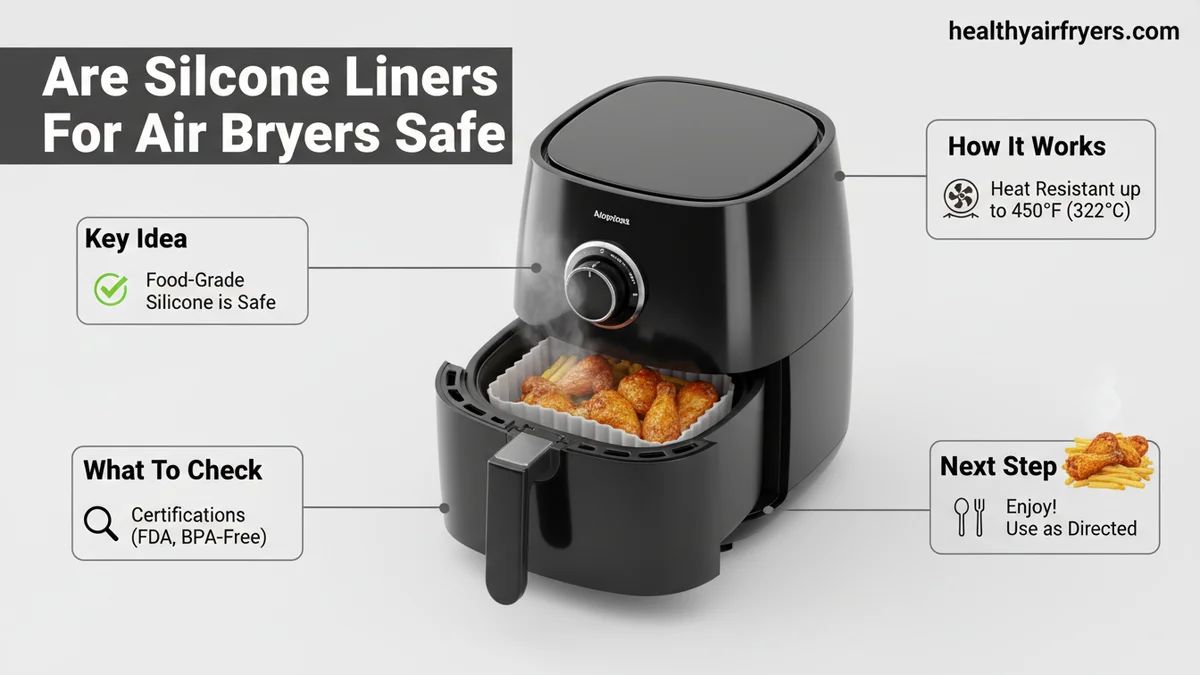
Are silicone liners for air fryers safe to use at high cooking temperatures? High-grade, food-safe silicone is generally non-toxic and heat-resistant, but cheap manufacturing or exceeding temperature limits can pose chemical leaching risks.
Yes, food-grade silicone liners are generally safe for air fryer cooking, provided they meet strict safety certifications like FDA or LFGB standards and you stay within their specified heat limits. Because these flexible accessories make cleanup significantly easier, millions of home cooks rely on them daily.
However, safety depends heavily on manufacturing quality, the absence of cheap chemical fillers, and whether you exceed maximum thermal thresholds. As safety testing standards evolve through 2026, understanding the material composition and proper usage prevents potential chemical leaching into your meals.
Key Takeaways
- Food-grade silicone is non-toxic and withstands high kitchen heat.
- Always verify products are 100% food-grade and LFGB or FDA certified.
- Respect the manufacturer’s maximum temperature threshold, usually around 428°F to 450°F.
- Low-quality silicone fillers can degrade and leach chemicals into warm food.
- Proper airflow is essential to maintain even cooking performance inside the basket.
What Causes Safety Concerns with Silicone Air Fryer Liners
Chemical Leaching and Cheap Fillers
Low-cost silicone liners often contain plasticizers or cheap fillers that break down under prolonged heat. When manufacturers cut corners, non-food-grade materials can degrade and release volatile organic compounds or siloxanes directly onto your food. You must look for products explicitly certified as 100 percent platinum silicone.
Thermal Breakdown and Temperature Limits
Every silicone liner has a strict maximum heat tolerance, usually hovering around 428 degrees Fahrenheit (220 degrees Celsius). Exposing low-quality silicone to higher temperatures causes the polymer matrix to destabilize. This thermal breakdown leads to a distinct chemical odor and potential toxic residue transfer.
- Always verify the exact temperature threshold stamped on the product packaging.
- Avoid letting the floppy edges of the liner touch the top heating element.
- Discard any liner that shows signs of melting, cracking, or sticky residue.
How to Test and Fix Your Setup for Safe Air Fryer Cooking
The Pinch Test and Quality Verification
You can quickly evaluate the purity of your silicone liner at home using the pinch test. Twist or squeeze a portion of the material firmly between your fingers. If the color turns white or lightens along the crease line, the manufacturer likely used cheap plastic fillers instead of pure silicone.
To ensure total peace of mind in 2026, purchase accessories that explicitly list LFGB certification, which is far more rigorous than standard FDA compliance regarding heavy metal and volatile compound limits.
Optimizing Airflow and Preventing Trapped Heat
Air fryers rely on rapid, 360-degree convection currents to cook food evenly. Solid silicone liners can block essential bottom-basket vents, creating uneven cooking zones and forcing your appliance to work harder. You can fix this issue and maintain safety by following specific usage guidelines:
- Choose perforated silicone liners that allow proper air circulation through the basket.
- Never preheat an empty air fryer with a lightweight silicone liner inside, as direct element exposure causes localized overheating.
- Wash liners thoroughly with hot, soapy water before the first use to remove any factory surface residues.
Step-by-Step Guide to Choosing High-Quality Silicone Liners
Selecting safe cookware accessories requires careful evaluation of material certifications and thermal tolerances. According to consumer safety standards updated for 2026, not all kitchen-grade polymers meet the rigorous demands of continuous high-heat convection cooking.
1. Verify Food-Grade LFGB Certification
Always prioritize liners that explicitly state they meet LFGB German standards rather than just FDA compliance. LFGB testing uses stricter parameters, involving harsher migration tests that ensure zero chemical leaching of volatile organic compounds into high-fat or acidic foods.
2. Check the Maximum Temperature Threshold
Confirm the manufacturer’s heat resistance rating exceeds your appliance’s maximum capability. Premium silicone products safely withstand temperatures up to 450°F (232°C). Operating an accessory beyond its certified thermal limit breaks down the polymer matrix, causing structural degradation.
3. Inspect Thickness and Rigidity
Select heavy-gauge options weighing at least 150 to 200 grams per insert. Flimsy, lightweight alternatives often contain cheap fillers like chalk or plasticizers that compromise structural integrity and accelerate thermal breakdown during standard cooking cycles.
What If It Still Doesn’t Work?
If you have already purchased a certified product but still encounter issues such as lingering chemical odors, warping, or flavor alteration in your meals, standard troubleshooting may not resolve the underlying safety risk. Implement these fallback steps immediately:
- Cease use of the accessory immediately to prevent potential ingestion of degraded polymer compounds or chemical additives.
- Inspect your air fryer heating element to ensure the flexible mat is not making direct contact with the exposed coils, which easily exceed 500°F and cause localized melting.
- Contact the manufacturer to request a full laboratory material safety data sheet (MSDS) or verify if the item is part of a silent recall batch.
- Transition to verified alternatives like unbleached parchment paper rounds specifically rated for convection appliances, or cook directly on the perforated metal basket.
- If you need to replace your compromised insert with a heavy-duty, certified food-grade silicone model or alternative stainless steel accessory, expect an estimated cost range of $12 to $25.
Conclusion
Ensuring the safety of silicone air fryer liners requires strict attention to LFGB certifications, precise temperature thresholds, and heavy-gauge construction. According to verified research and expert material safety sources, utilizing compliant, high-purity components prevents toxic chemical migration and structural melting during daily meal preparation. As a final actionable step, inspect your current kitchen accessories today and discard any unverified, flimsy products that lack transparent thermal ratings to protect your household’s health throughout 2026 and beyond.
❓ Frequently Asked Questions
Are silicone liners for air fryers safe for everyday use?
Yes, provided you purchase certified food-grade silicone and do not exceed the recommended heat limits. They offer a reusable alternative to parchment paper for daily cooking.
Do silicone liners leach microplastics into food?
High-grade silicone is an elastomer made from silicon, oxygen, carbon, and hydrogen rather than petroleum-based plastics, meaning it does not break down into microplastics under normal use.
What happens if a silicone liner touches the heating element?
Silicone can withstand high ambient heat, but direct contact with an open heating coil will cause it to melt, scorch, and release noxious smoke.
How do silicone liners compare to parchment paper for safety?
Both are safe when used correctly, but parchment paper carries a fire hazard if it floats up against the heating element, whereas silicone stays weighted down.
Why do some silicone liners leave a soapy taste on food?
This usually occurs because silicone is porous and absorbs dishwasher detergent residues. Washing them by hand with hot water and baking soda eliminates this issue.
How can I maximize crispiness while using a silicone liner?
Choose perforated silicone liners that allow air circulation, or flip your food halfway through the cooking cycle to ensure even heat distribution.
One Comment