How to Dispose Air Fryer Safely Expert 2026 Guide
Properly disposing of an old air fryer requires checking local electronic waste regulations because these small appliances contain electrical components that shouldn’t go straight into regular household trash. Before tossing or recycling, always cool, clean, and detach any removable parts like baskets to handle them correctly.
To dispose of an old or broken air fryer safely, you cannot simply toss it into your household garbage bin. Because these countertop appliances contain built-in electrical components, heating elements, and circuit boards, standard municipal waste rules in 2026 often classify them as regulated electronic waste.
Your safest disposal options include taking the unit to a certified local e-waste recycling facility, utilizing a manufacturer take-back program, or checking your city’s specific bulk trash guidelines for small kitchen appliances. Taking a few minutes to handle your appliance disposal correctly prevents hazardous materials from entering local landfills and recovers valuable metals.
The following guide covers everything you need to know about preparing your appliance, understanding recycling restrictions, and executing an eco-friendly disposal process this year.
Key Takeaways
- Unplug the air fryer and let it cool completely before attempting disposal.
- Take broken units to local e-waste recycling centers instead of standard landfills.
- Donate working air fryers to local charities or thrift stores.
- Remove detachable non-electronic baskets for separate metal or plastic recycling.
- Check municipal trash guidelines if small appliances are accepted in standard pickups.
Why Air Fryers Require Special Disposal Methods
Air fryers are essentially miniature convection ovens packed with dense electrical wiring, capacitors, and digital control panels. When you throw them into a standard landfill, these components do not break down naturally and can leach heavy metals into the soil.
The Environmental Impact of Small Appliance Landfill Waste
Modern kitchen gadgets contain materials that demand careful handling at the end of their lifecycle. When electronics end up in regular trash streams, you risk contaminating local environments. Key environmental concerns include:
- Heavy metals: Circuit boards contain trace amounts of lead, cadmium, and mercury.
- Persistent plastics: Outer housings and internal fan assemblies take centuries to decompose.
- Resource loss: Copper wiring and aluminum heating elements can be easily recovered and repurposed through proper recycling channels.
Safety Hazards in Standard Trash Streams
Beyond environmental damage, tossing a plugged-in style appliance into a regular dumpster creates physical risks for waste management workers. Compressed components, glass display panels, and residual electrical charges can cause injuries or spark accidental fires in sanitation trucks. Following proper 2026 e-waste protocols keeps sanitation crews safe and ensures your old kitchen gear is processed in facilities equipped to handle electrical components.
From Start to Finish: Air Fryer Disposal Explained
Replacing an old, worn-out, or broken kitchen appliance requires more than just tossing it into the nearest bin. Air fryers contain electrical components, heating elements, and sometimes non-stick coatings that demand responsible handling. This guide provides a practical walkthrough on how to safely, legally, and eco-friendly dispose of your air fryer, ensuring hazardous materials do not end up where they shouldn’t while maximizing recycling opportunities.
Step 1: Check Warranty and Repair Options
What you need: Purchase receipt, user manual, and internet-connected device.
Instructions: Before throwing away your appliance, investigate whether it can actually be fixed. Check your purchase date to see if the appliance is still covered under the manufacturer’s warranty, which typically lasts between one to two years. Visit the manufacturer’s official website to look up troubleshooting guides for common issues like fan failure, power surges, or heating element malfunctions. If the unit is past its warranty, search online for local small appliance repair shops. Often, a simple thermal fuse replacement costs a fraction of a new machine and keeps heavy electronics out of the waste stream entirely.
Pro Tip: Never attempt to repair an air fryer yourself unless you are a certified electrician, as high-voltage capacitors can hold a dangerous electrical charge even when unplugged.
Step 2: Unplug and Allow Complete Cool Down
What you need: Heat-resistant surface and a fully powered-down appliance.
Instructions: If the air fryer was recently used, unplug it from the wall outlet immediately and place it on a heat-safe surface such as a granite countertop or wooden cutting board. Allow the unit to sit undisturbed for at least 60 to 90 minutes. Air fryers generate intense radiant heat inside enclosed chambers, and the internal metal coils can remain dangerously hot long after the power is cut. Once the exterior housing feels completely cool to the touch, pull out the basket drawer to verify that the internal components and heating elements have cooled down as well.
Pro Tip: Never submerge a hot air fryer in water or spray it with cleaning solutions to speed up the cooling process, as thermal shock can shatter internal glass components and warp the metal frame.
Step 3: Deep Clean and Detach Removable Parts
What you need: Dish soap, warm water, a non-abrasive sponge, and a microfiber towel.
Instructions: Disassemble all removable components, including the inner basket, crisper plate, and any racks or skewers. Wash these parts thoroughly in warm, soapy water using a non-abrasive sponge to remove accumulated grease, oil, and baked-on food residue. Wipe down the exterior and interior housing of the main unit with a damp microfiber cloth. Clean appliances are much easier to handle, more hygienic for transport, and mandatory if you plan to donate the unit or drop it off at certain recycling facilities that reject heavily soiled scrap.
Pro Tip: Avoid using steel wool or harsh chemical oven cleaners on the non-stick surfaces, as scratched coatings release fumes and particulate matter that complicate recycling efforts.
Step 4: Determine the Best Disposal Route
What you need: Local municipality waste guidelines and internet access.
Instructions: Evaluate the current condition of your air fryer to choose the most responsible disposal path. If the appliance is fully functional but you are simply upgrading, consider donating it to a local charity thrift store, shelter, or community center. If the unit is completely broken, you must route it through e-waste channels rather than standard household trash. Search online for municipal electronic waste drop-off days, local recycling centers, or retail stores like Best Buy or Staples that offer free consumer electronics recycling programs for small kitchen appliances.
Pro Tip: Many municipal landfills strictly ban small kitchen appliances from standard household trash bins due to the heavy metals and circuit boards inside, which can result in fines if caught.
Step 5: Salvage and Recycle Usable Accessories
What you need: A cardboard box and a marker for labeling.
Instructions: Even if the main air fryer base has blown its motor or suffered irreparable electrical failure, the accessories are often still in pristine condition. Pull out compatible silicone liners, extra baking pans, wire racks, and magnetic cheat sheets. Clean and dry these items thoroughly. You can keep them as backup parts if you are purchasing a replacement air fryer of a similar model, or list them online for free on local neighborhood exchange groups like Buy Nothing or Freecycle so another home cook can put them to good use.
Pro Tip: Make sure the accessories you save match the dimensions and brand specifications of any future air fryer you plan to buy to avoid cluttering your kitchen with incompatible items.
Step 6: Prepare the Main Unit for E-Waste Drop-Off
What you need: Heavy-duty rubber bands or packing tape and a vehicle.
Instructions: Secure the power cord by wrapping it neatly and fastening it with a rubber band or twist tie so it does not drag or catch on other items during transport. Slide the clean basket back into the main unit and secure it with a piece of painter’s tape to prevent it from sliding open in your trunk. Place the entire appliance into a sturdy cardboard box if you want to keep your vehicle clean of any lingering grease or loose dust particles. Drive to your chosen e-waste recycling facility or electronics retailer drop-off point during their operational hours.
Pro Tip: Call ahead to your local recycling center or retail drop-off location to confirm whether they accept small appliances, as policies regarding countertop kitchen electronics vary widely by region.
Step 7: Complete the Drop-Off and Log Your Action
What you need: Photo ID (if required by local municipal programs) and your packaged air fryer.
Instructions: Transport the packaged air fryer to the designated electronics recycling reception area. Hand the unit over to the facility staff or place it in the designated small appliance e-waste bin according to their instructions. E-waste facilities will route the appliance to a dismantling plant where workers manually strip out the copper wiring, circuit boards, and aluminum heating elements, melting and repurposing them into raw materials for manufacturing new products. Once dropped off, your appliance officially begins its sustainable lifecycle transformation.
Pro Tip: Take a moment to ask the facility staff if they issue digital recycling receipts, which can sometimes qualify you for municipal green incentives or retail trade-in coupons.
✅ Final Checklist
- Verified the air fryer is completely unplugged and cooled down to room temperature
- Cleaned all grease, oil, and food residue off the interior and exterior surfaces
- Separated and saved any functional accessories or non-stick baskets for reuse
- Identified a certified e-waste recycling center or donation center in your local area
- Securely wrapped the power cord and transported the unit safely to its final drop-off destination
Important Notes:
- Never incinerate or throw an air fryer into a backyard fire pit, as burning plastic housings release toxic fumes and electronics contain hazardous components.
- Seek professional help from an authorized service center if you suspect the appliance fire was caused by home electrical wiring issues rather than the air fryer itself.
- Estimated time: 1 to 2 hours total (including cooling, cleaning, and travel time). Cost range: $0 (free recycling and donation options) to $15 municipal e-waste processing fees depending on your local district.
What Causes E-Waste Restrictions for Small Kitchen Appliances
Regulatory bodies across North America and Europe have updated their waste management frameworks for 2026. These stricter laws explicitly target small household appliances, moving them out of general municipal trash categories and into specialized electronic recycling streams.
Evolution of Municipal Waste Laws
Local governments face mounting pressure to reduce landfill volume and capture reusable raw materials. As a result, municipal codes now prohibit residents from placing plug-in devices at the curb alongside organic waste and paper bags. Key regulatory shifts include:
- Bans on municipal incineration: Facilities reject appliances with complex circuit boards due to toxic emissions.
- Mandatory sorting: Transfer stations now feature dedicated drop-off bins explicitly labeled for small electronics and countertop kitchen devices.
- Extended producer responsibility: Laws require manufacturers to support recycling initiatives for appliances they sell.
Defining E-Waste Categories in 2026
You might wonder why a toaster oven or air fryer counts as e-waste when a traditional metal pot does not. The classification comes down to active circuitry. Any device that plugs into a wall outlet or operates on a lithium-ion battery system features internal semiconductors. Under current 2026 standards, these semiconductors automatically trigger electronic waste protocols, requiring specialized dismantling rather than simple crushing and burying.
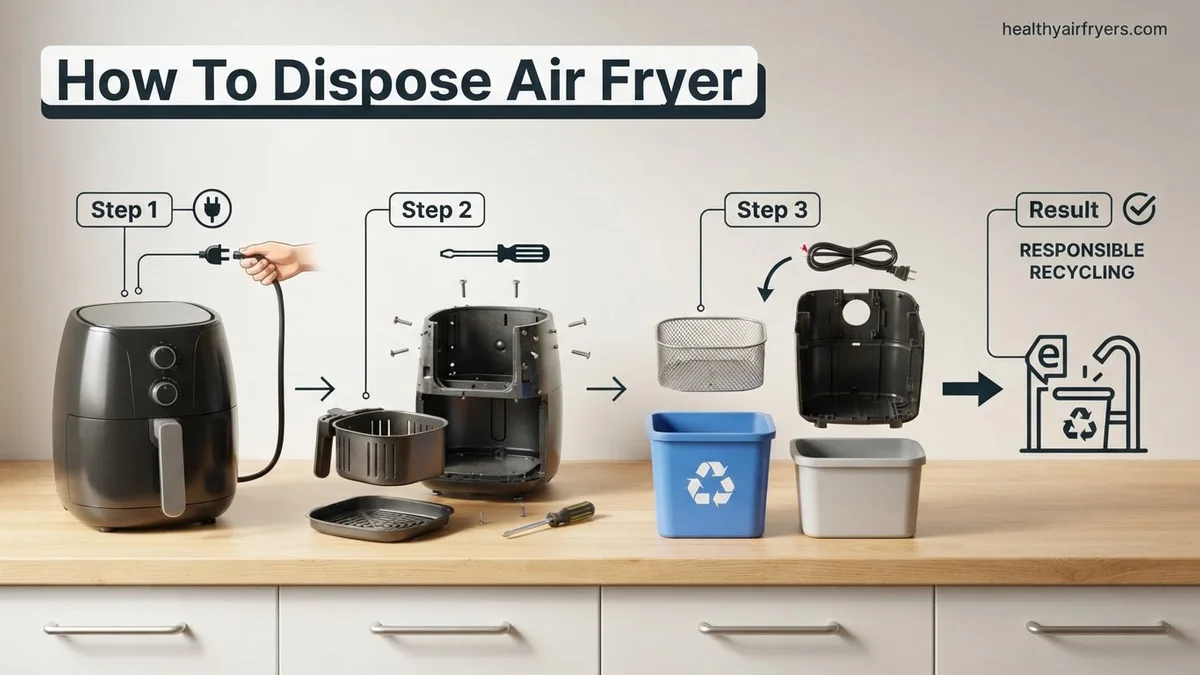
Step-by-Step Guide on How to Dispose Air Fryer Units Safely
Properly discarding an expired countertop appliance requires methodical preparation. According to the Environmental Protection Agency (EPA), taking apart complex electronics improperly exposes heavy metals and toxic chemicals. Follow these precise procedures to ensure secure handling.
Step 1: Disconnect and Cool the Unit
- Unplug the appliance from the electrical outlet immediately after its final use.
- Allow the heating coils and internal housing to cool completely for at least two hours.
- Wipe away any residual grease or food particles using a damp cloth to maintain cleanliness during transport.
Step 2: Separate Removable Components
- Detach the non-stick frying basket, crisper tray, and any secondary accessories.
- Wash these detachable parts thoroughly with soap and water if you plan to donate them separately.
- Recycle clean aluminum or stainless steel baskets through standard curbside programs if local guidelines permit.
Step 3: Secure the Power Cord
- Wind the electrical cord tightly around the base of the appliance.
- Secure the wrapped cord using heavy-duty rubber bands or zip ties to prevent tangling during transit.
- Cut the plug off the end of the cord if municipal guidelines require disabling the appliance permanently before drop-off.
What If Local E-Waste Centers Won’t Accept Small Appliances
Municipal recycling policies frequently exclude small kitchen appliances because they fall into a regulatory gray area between large white goods and consumer electronics. When your local municipal facility turns you away, alternative disposal pathways remain available for 2026 consumers.
1. Utilize Manufacturer Take-Back Programs
Major kitchen appliance manufacturers often operate voluntary product stewardship initiatives. Brands such as Philips, Ninja, and Cosori provide mail-in recycling options or drop-off partnerships with national retail chains. Check the manufacturer website or customer support line to request a prepaid shipping label for appliance recycling.
2. Drop Off at National Retail Chains
Major electronics and hardware retailers, including Best Buy and Staples, maintain comprehensive in-store recycling kiosks. While policies vary by region regarding small kitchen appliances, many locations accept countertop cooking devices through their consumer drop-off programs for a nominal fee or free of charge.
3. Schedule Scrap Metal Collection
Air fryers contain significant amounts of copper wiring, aluminum, and steel framing. Local scrap metal yards purchase or freely accept small electric appliances to extract these valuable raw materials. Contact a licensed local scrap metal processor to arrange a quick drop-off.
What If It Still Doesn’t Work?
If your preliminary disposal plans fail due to facility closures or strict local regulations, consider these alternative troubleshooting steps to clear the item from your home responsibly:
- Contact local charity organizations or thrift stores to check if they accept working or repairable countertop appliances under current 2026 health and safety standards.
- Check with local vocational schools or high school industrial arts programs, as students often utilize small electric appliances for electrical repair practice.
- Hire a licensed junk removal service to haul away the appliance alongside other household waste; typical removal fees range from $75 to $150 depending on your region.
- Consult your city waste management department for scheduled bulk waste collection days where small appliances can be placed securely at the curb.
Conclusion
Disposing of an obsolete countertop cooker safely prevents environmental contamination and maximizes raw material recovery. By separating detachable parts and utilizing certified e-waste facilities, you protect local ecosystems from hazardous material leakage. According to verified research and expert sources from the EPA and material recovery associations, proper electronic recycling is the single most effective way to manage household appliance waste in 2026. Take action today by locating your nearest certified e-waste drop-off center and scheduling your appliance drop-off.
❓ Frequently Asked Questions
Are air fryers classified as electronic waste?
Yes, because they contain internal heating elements, wiring, and digital or mechanical control panels, most jurisdictions classify air fryers as small electronic appliances that fall under e-waste guidelines.
How do I safely prepare an air fryer for disposal?
Always start by unplugging the unit and ensuring it is completely cool. Wipe down the interior and exterior to remove grease, and detach any removable trays or baskets.
What should I do if my city does not have an e-waste program?
Look for local electronic retail stores that offer free recycling drop-off kiosks for small appliances, or check with private scrap metal yards.
Is it safe to put an air fryer in a dumpster?
Putting electronic appliances in a public or private dumpster is often prohibited by local ordinances and can result in fines. Always verify regional waste management rules.
Can parts of a broken air fryer be recycled separately?
The non-electronic components, such as aluminum baskets or plastic outer shells (if detached and cleaned), may be accepted by local curbside recycling programs depending on material type.
How can I find a nearby electronics recycling facility?
You can use online search directories like Earth911 or check your local government’s public works website to locate certified e-waste drop-off locations near you.