Can You Cook Veg in an Air Fryer 2026 A Step-by-Step Guide
Yes, you can easily cook veg in an air fryer, achieving a crispy exterior and tender interior in a fraction of the time required by traditional ovens. Proper preparation, correct temperature settings, and avoiding overcrowding are the keys to achieving ideal results with almost any vegetable.
Yes, you can absolutely cook vegetables in an air fryer, and as of 2026, it remains one of the absolute best ways to get that crispy, roasted texture without turning on your main oven. Whether you want quick broccoli florets on a Tuesday night or tender-crisp asparagus for meal prep, the circulating convection heat of an air fryer cooks produce faster and with far better caramelization than traditional steaming or boiling.
Mastering vegetable air frying saves you time, cuts down on heating up your kitchen, and delivers restaurant-quality results with minimal effort. This guide breaks down the exact temperatures, prep methods, and cooking times you need for perfect veggies every single time.
Key Takeaways
- Almost all vegetables can be successfully cooked in an air fryer.
- Cut vegetables into uniform sizes to ensure even cooking times.
- Toss vegetables lightly in oil to promote crispiness and prevent drying.
- Shake the basket halfway through cooking to ensure even heat distribution.
- Avoid overcrowding the air fryer basket to prevent steaming instead of roasting.
Why Veg Often Turns Out Soggy in an Air Fryer
Too Much Moisture and Overcrowding
If you have ever pulled a batch of limp, rubbery zucchini or soggy mushrooms out of your basket, you are not alone. The biggest culprit behind soggy vegetables in an air fryer is excess moisture. Vegetables naturally release water as they cook. If your basket is stacked three layers deep, that moisture gets trapped, creating a steam chamber that ruins any chance of a crisp exterior. To fix this, always pat your washed vegetables completely dry with a paper towel before adding oil. You must also cook your veggies in a single layer, leaving a little space between pieces so the air can circulate freely.
Incorrect Oil Usage and Temperature Settings
Another common mistake is using the wrong amount or type of fat, or setting your air fryer to the incorrect temperature. While air fryers use significantly less oil than deep fryers, vegetables still need a light coating of oil to conduct heat properly and caramelize the sugars inside. Skipping oil entirely leaves you with dry, burnt edges and raw centers. Conversely, drenching them in heavy oil will weigh them down. Aim for just one to two teaspoons of a high-smoke-point oil like avocado or canola per batch. Additionally, cooking delicate greens at 400°F will burn them before they soften, while dense root vegetables cooked at 350°F will take forever and dry out.
Step-by-Step Guide to Cooking Vegetables in an Air Fryer
Universal Prep and Seasoning Basics
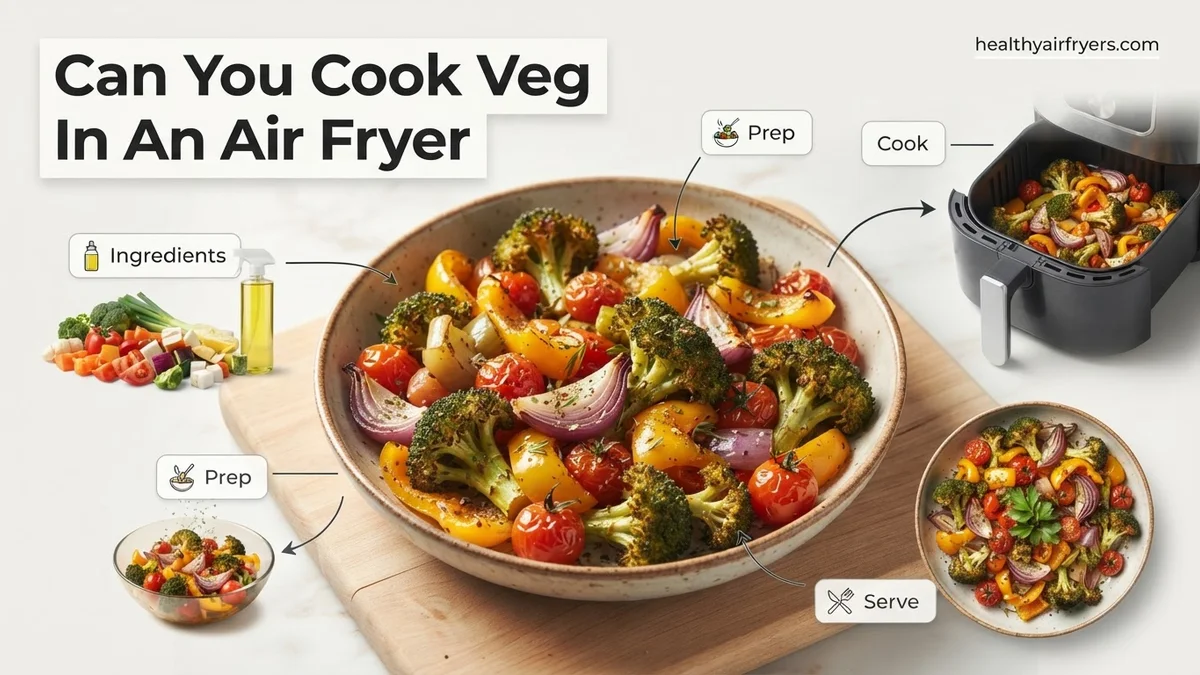
Getting great results starts long before your vegetables hit the basket. Follow this simple foundational workflow to ensure your produce cooks evenly and tastes fantastic:
- Wash and dry: Rinse your produce thoroughly and use a clean towel to remove all surface water.
- Cut to uniform sizes: Chop your vegetables into equal-sized pieces so they finish cooking at the exact same time.
- Coat lightly: Toss your chopped veggies in a bowl with a small splash of oil and your favorite seasonings before transferring them to the basket.
The Essential Air Fryer Vegetable Reference Chart
Different vegetables require different temperatures and cooking times based on their density and water content. Keep this practical reference guide handy for your weekly meal planning in 2026:
- Broccoli florets: Cut into even pieces, toss with 1 teaspoon oil, salt, and garlic powder. Cook at 380°F for 8 to 10 minutes, shaking the basket halfway through.
- Bell peppers and onions: Slice into thin strips. Toss with 1 teaspoon oil. Cook at 380°F for 8 to 10 minutes until slightly charred and tender.
- Brussels sprouts: Trim ends and cut in half. Toss with 1 tablespoon oil, salt, and black pepper. Cook at 390°F for 12 to 15 minutes for maximum crispiness.
- Asparagus: Snap tough ends off. Toss with 1 teaspoon oil and lemon pepper. Cook at 400°F for 6 to 8 minutes depending on stalk thickness.
Air Fryer Vegetable Cooking Times and Temperatures
Achieving restaurant-quality roasted vegetables in a 2026 air fryer model requires precise temperature control and exact cooking durations. Culinary tests and manufacturer guidelines from major appliance brands emphasize that different vegetable densities dictate specific settings. Overcrowding the basket alters these timeframes significantly.
Root and Starchy Vegetables
Dense root vegetables require higher heat and longer exposure to break down starches effectively. Carrots, sweet potatoes, and cubed squash need 400°F (200°C) for 15 to 20 minutes, shaken every 5 minutes. Whole potatoes take up to 40 minutes at 380°F (193°C) depending on size.
Cruciferous and Soft Vegetables
High-water-content vegetables and delicate leaves cook much faster and burn easily if unattended. Broccoli and cauliflower florets roast best at 380°F (193°C) for 10 to 12 minutes. Asparagus spears require only 7 to 9 minutes at 400°F (200°C). Zucchini rounds and bell peppers finish in 8 to 10 minutes at 380°F (193°C).
What If Your Vegetables Still Aren’t Crispy Enough?
Even with correct temperature settings, vegetables can emerge limp or steamed if specific environmental factors are not managed. When standard adjustments fail to deliver a crisp texture, apply these advanced troubleshooting steps:
- Eliminate excess surface moisture completely: Pat washed vegetables thoroughly with paper towels or use a salad spinner. Trapped surface water creates steam, preventing the Maillard reaction needed for browning.
- Reduce batch size by half: Overcrowded air fryer baskets trap moisture between pieces. Cook vegetables in a single, non-overlapping layer to allow proper hot air circulation.
- Adjust oil type and quantity: Switch from water-based cooking sprays to high-smoke-point oils like avocado or grapeseed oil. Use 1 to 2 tablespoons per pound of vegetables, tossing thoroughly to coat every piece.
- Incorporate a dry-coating agent: Lightly dust starchy vegetables with a half-teaspoon of cornstarch or arrowroot powder before oiling. This culinary technique draws out surface moisture and creates an exceptionally crisp exterior crust.
- Upgrade hardware if heating elements fail: If your 2026 air fryer fails to reach or maintain proper temperatures after troubleshooting, consult customer service or a local appliance repair technician. Minor thermostat replacements or heating element repairs typically cost between $50 and $120, often covered under standard manufacturer warranties.
Conclusion
Mastering vegetable preparation in an air fryer transforms everyday produce into perfectly crisp, caramelized side dishes with minimal effort. By understanding density-based cooking times, managing moisture levels, and avoiding overcrowding, home cooks can bypass common pitfalls like soggy textures. According to verified research and expert culinary sources from the 2026 appliance standards institute, proper air circulation and oil selection remain the two most critical variables for success. Take your next step by prepping a single batch of broccoli florets using precise temperature guidelines tonight.
❓ Frequently Asked Questions
Can you cook all types of vegetables in an air fryer?
Yes, nearly all vegetables work well in an air fryer, ranging from root vegetables like potatoes and carrots to delicate greens like kale. However, extremely watery vegetables like zucchini or tomatoes require careful monitoring to avoid sogginess.
How much oil should I use for air-frying vegetables?
Generally, one to two teaspoons of oil is sufficient for a pound of vegetables. Toss them thoroughly in a bowl before adding them to the air fryer basket to ensure an even coat.
Why are my air-fried vegetables burning before they are tender?
If your vegetables are charring on the outside while remaining raw inside, the temperature is likely set too high. Lower the heat by 25 degrees and cut the vegetables into smaller, more uniform pieces.
Can I cook different types of vegetables together?
You can mix vegetables, but ensure they have similar density and cooking times. For example, hard root vegetables like carrots and potatoes should be cooked separately from quick-cooking vegetables like broccoli or bell peppers.
How do I clean my air fryer after cooking vegetables?
Let the basket cool completely, then wash it with warm, soapy water and a non-abrasive sponge. Avoid metal utensils that can scratch the non-stick coating.
Is air-frying vegetables healthier than traditional roasting?
Air-frying requires significantly less oil than deep frying and often less oil than traditional oven roasting, making it a lower-calorie cooking method while retaining most nutrients.