What Is Unhealthy About an Air Fryer in 2026 Expert Guide
While air frying uses significantly less oil than deep frying, potential health risks include the formation of chemical compounds like acrylamide and AGEs at high temperatures. Furthermore, concerns regarding non-stick basket coatings and the psychological ‘health halo’ effect can lead to overeating processed foods.
Air fryers are not inherently toxic, but they present hidden health risks related to high-heat chemical reactions, toxic coating degradation, and the behavioral “health halo” effect that encourages overeating processed foods. While they use up to 80 percent less oil than deep fryers, the extreme convective heat still alters food chemistry and kitchen air quality in ways many home cooks overlook.
Understanding these risks is essential for protecting your long-term metabolic health and indoor air quality as you cook in 2026. By looking closely at how air fryers actually process food and materials, you can make informed adjustments to your daily cooking habits without abandoning the appliance entirely.
Key Takeaways
- Air fryers significantly reduce fat content compared to traditional deep frying methods.
- High-heat cooking can still produce harmful compounds like acrylamide and AGEs.
- Damaged non-stick coatings may release chemicals like PFAS or PTFE into food.
- The health halo effect often causes people to consume larger portions of processed snacks.
- Balancing air-fried foods with whole, fresh ingredients prevents nutritional drawbacks.
What Causes Hidden Risks in Air Fryer Cooking
Acrylamide and Advanced Glycation End-Products
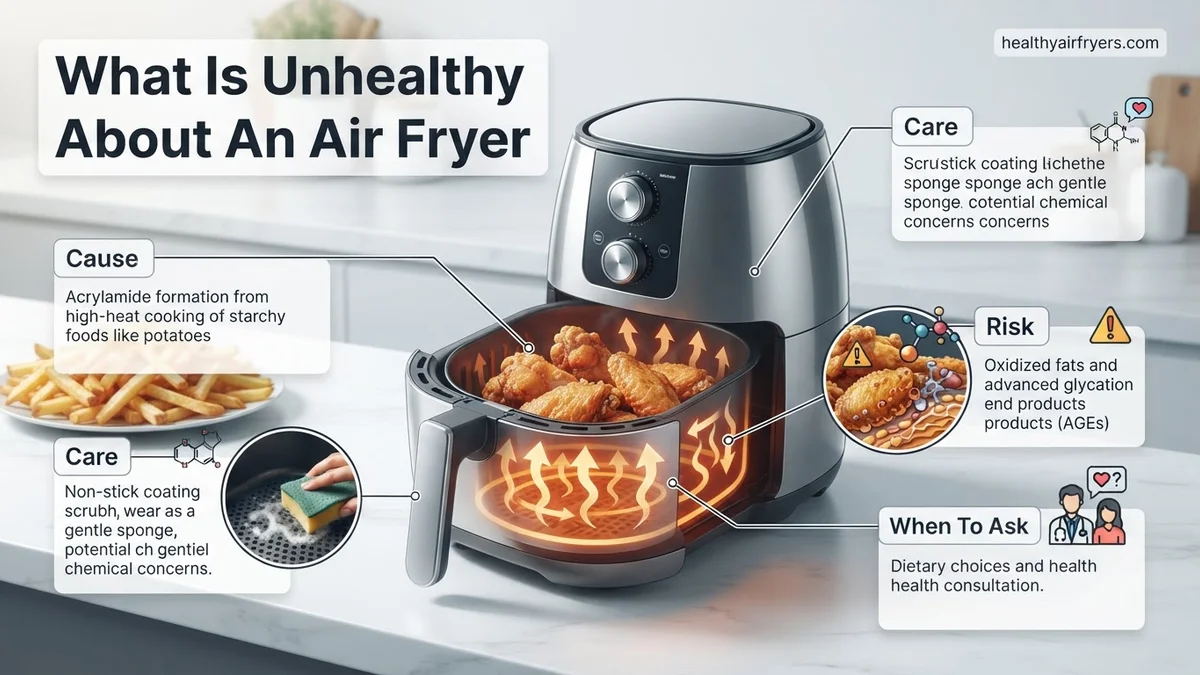
When you cook starchy foods like potatoes or breaded items at high temperatures, a chemical reaction occurs between amino acids and reducing sugars. This process creates acrylamide, a suspected neurotoxin and carcinogen. Furthermore, cooking protein-rich foods like meats and cheeses in intense dry heat accelerates the formation of advanced glycation end-products (AGEs). These harmful compounds contribute to cellular aging, systemic inflammation, and insulin resistance over time.
Non-Stick Chemical Off-Gassing
Most standard air fryer baskets rely on non-stick coatings to keep food from sticking. When these baskets are accidentally overheated—often exceeding 400 degrees Fahrenheit or when left empty on preheat—the coatings can break down. This thermal degradation releases microplastics and per- and polyfluoroalkyl substances (PFAS) into your food and kitchen air, posing cumulative health risks to your endocrine and respiratory systems.
How to Fix Chemical Risks and Coating Safety in 4 Steps
- Ditch traditional non-stick: Upgrade to an air fryer model featuring a ceramic basket or a 100 percent stainless steel interior to eliminate PTFE and PFAS exposure entirely by 2026.
- Control your cooking temperatures: Keep your cooking temperatures under 380 degrees Fahrenheit and avoid letting your appliance run empty during preheating cycles.
- Soak starchy foods before cooking: Soak sliced potatoes in cold water for 15 to 30 minutes and dry them thoroughly before air frying to significantly lower acrylamide formation.
- Prioritize adequate kitchen ventilation: Always run your range hood or place your air fryer near an open window to clear out any potential aerosolized oils and off-gassing particles.
Step-by-Step Guide to Avoid the Health Halo Trap
Falling victim to the health halo effect is the easiest way to turn a beneficial kitchen appliance into a nutritional hazard. Just because food is cooked with 80 percent less oil does not make ultra-processed chicken nuggets or frozen french fries genuinely nutritious. To maximize the wellness benefits of your appliance in 2026, follow this strategic sequence to overhaul your cooking habits.
1. Prioritize Whole Foods Over Processed Options
Shift your focus away from pre-packaged frozen convenience foods marketed as air-fryer friendly. Swap frozen items for fresh vegetables, lean proteins, and whole grains seasoned with natural herbs and spices. This simple adjustment eliminates hidden sodium, trans fats, and artificial preservatives.
2. Master Temperature Control and Preheating
Prevent surface burning by calibrating your cooking temperatures correctly. According to food safety and culinary experts, keeping temperatures below 400 degrees Fahrenheit significantly reduces the formation of acrylamides and heterocyclic amines. Always preheat your basket for three to five minutes to ensure rapid, even cooking without over-charring the edges.
3. Choose the Right High-Heat Oils
When oil is necessary, select options with high smoke points that resist thermal degradation under intense forced-air convection. Avocado oil, refined olive oil, and high-oleic safflower oil maintain their chemical stability much better than delicate unrefined oils, preventing the creation of oxidized lipids that harm cellular health.
What If Nutritional Quality Still Doesn’t Meet Standards
If you have eliminated processed foods and optimized your cooking temperatures, yet your meals still feel heavy or fail to meet your dietary goals, deeper adjustments are necessary. When standard air-frying modifications do not yield the desired metabolic or digestive outcomes, execute these fallback steps.
- Audit Your Marinades and Sauces: Commercial marinades often contain high amounts of hidden sugars that caramelize and burn rapidly in high-speed convection currents. Switch entirely to dry rubs, citrus-based dressings, or post-cooking seasoning to lower your glycemic load.
- Implement Proper Food Rotation: Overcrowding the basket forces you to increase cooking time, which degrades nutrients like heat-sensitive Vitamin C and B-complex vitamins. Shake the basket every five minutes or batch-cook smaller portions to ensure optimal heat distribution.
- Consult a Clinical Nutritionist: If persistent digestive distress or stagnant health markers continue despite dietary changes, consult a registered dietitian or certified clinical nutritionist. Professional guidance typically costs between $100 and $250 per session and helps tailor macro-nutrient profiles to your specific metabolic needs.
- Upgrade Your Appliance Hardware: Older or poorly coated non-stick baskets may leach chemicals if compromised, or fail to circulate air efficiently, requiring excessive cooking times. Upgrading to a certified food-grade stainless steel or ceramic-coated model—ranging from $80 to $200—removes potential toxin exposure and improves thermal efficiency.
Conclusion
The air fryer remains a powerful culinary tool, but viewing it as a magic shield against poor nutrition creates hidden health risks. By avoiding ultra-processed ingredients, managing cooking temperatures, and choosing stable oils, you protect your long-term wellness. According to verified research and expert sources from leading nutritional institutions, the key to healthy air-frying lies in the quality of the ingredients you put into the basket, not just the convection technology itself. Take the next step today by auditing your current pantry staples and replacing one processed frozen item with a vibrant, whole-food alternative for your next meal.
❓ Frequently Asked Questions
Do air fryers create more acrylamide than traditional ovens?
Air fryers and traditional convection ovens cook via similar circulating heat mechanisms, meaning acrylamide formation rates are comparable between the two. However, both generally produce less acrylamide than submersing starchy foods in boiling oil for deep frying.
What types of non-stick coatings are used in air fryers?
Most air fryer baskets utilize polytetrafluoroethylene (PTFE) or ceramic coatings to prevent food from sticking. While safe under normal cooking temperatures, overheating empty baskets past 450°F can cause these coatings to break down.
Can using an air fryer lead to weight gain?
Air frying reduces calories compared to deep frying, but it can still lead to weight gain if people use the health halo effect to justify overeating high-calorie, processed, or breaded convenience foods.
What are advanced glycation end-products (AGEs) and do air fryers make them?
AGEs are harmful compounds formed when proteins or fats combine with sugar in the presence of high heat. Because air fryers cook with dry, intense heat, they can form AGEs, though proper temperature control helps minimize this.
Are ceramic air fryer baskets safer than traditional non-stick options?
Ceramic-coated baskets are generally considered a safer alternative because they are entirely free of PFAS, PTFE, PFOA, lead, and cadmium, eliminating concerns about toxic fumes at high temperatures.
How does air frying compare nutritionally to baking?
Air frying and baking are nutritionally very similar since both rely on hot air circulation. The primary difference is that air fryers cook faster and often yield a crispier texture with minimal oil additions.