How to Reheat Turkey in Air Fryer Step-by-Step Guide 2026
Reheating leftover turkey often leads to dry, tough meat because standard ovens sap remaining moisture. Using an air fryer with the correct temperature and moisture-locking techniques keeps slices tender while crisping the edges. Follow this proven method to restore your turkey to fresh-cooked quality in minutes.
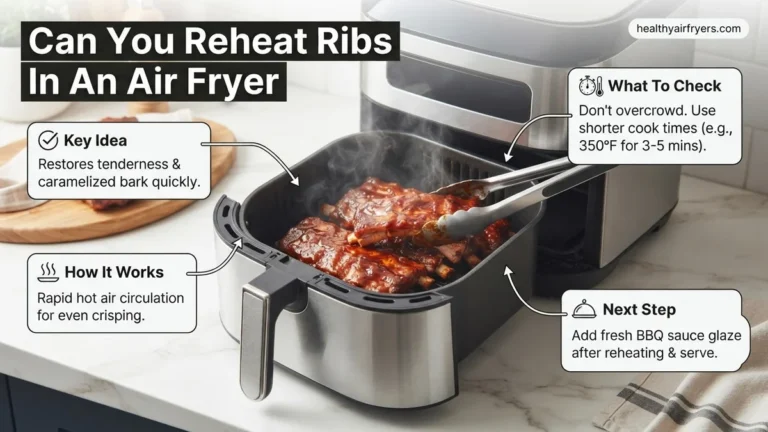
Reheating leftover turkey in your air fryer is the single best way to restore that fresh-roasted taste without turning the meat into shoe leather. To get crispy edges and a juicy center, set your air fryer to 350°F (175°C) and heat standard slices for just 3 to 6 minutes. This precise temperature-to-time ratio ensures the heat penetrates quickly without overcooking the delicate protein fibers.
As we navigate holiday meal prep in 2026, modern kitchen appliances make saving food waste easier than ever. Traditional microwaves often rubberize leftover poultry, while conventional ovens take too long to preheat for a simple single-serving lunch. Your air fryer bridges this gap, delivering crispy-skinned, steaming-hot meat in a fraction of the time.
Key Takeaways
- Set your air fryer to 350°F for the optimal balance of gentle heating and crisping.
- Add a splash of chicken broth or melted butter to prevent the meat from drying out.
- Thick slices take 4 to 6 minutes, while shredded turkey or small chunks need only 3 to 4 minutes.
- Do not overcrowd the basket to ensure even heat circulation and consistent warming.
- Cover thick slices loosely with foil for the first few minutes if prone to scorching.
Why Leftover Turkey Dries Out When Reheated
Understanding the science of poultry helps you avoid common kitchen mistakes. Turkey meat is naturally lean, especially the breast portions, which means it loses moisture rapidly under high heat.
The Impact of Moisture Loss
When you cook a whole turkey, the muscle fibers contract and squeeze out internal juices. During storage in your refrigerator, these remaining juices slowly migrate out of the cells. When you apply direct, uncontrolled heat during reheating, any residual moisture instantly evaporates. Without a protective barrier or gentle heat management, your turkey transforms from tender to bone-dry in less than a minute.
Why Traditional Methods Fail
- The Microwave Trap: Microwaves agitate water molecules unevenly, overcooking the exterior while leaving the interior lukewarm and rubbery.
- The Oven Wait: Standard ovens heat up too slowly, exposing the turkey to prolonged warm air that sucks out every last drop of hydration.
- Lack of Fates and Oils: Reheating naked turkey without adding back a fat source guarantees a dry, chalky texture.
Master Reheating Turkey in 6 Simple Steps
Leftover holiday turkey often suffers from a common fate: becoming dry, rubbery, and flavorless when subjected to the harsh, uneven heating of a microwave. However, rescuing your prized roast poultry is entirely possible with the right technique. This comprehensive guide covers how to utilize your air fryer’s convection power to lock in precious moisture while delivering a wonderfully crisp skin, ensuring your leftovers taste just as delectable as they did on Thanksgiving day.
Step 1: Bring Turkey to Room Temperature
What you need: Your leftover turkey (sliced or in chunks), a clean cutting board, and a digital kitchen thermometer.
Instructions: Before placing any cold meat into the air fryer basket, remove your leftover turkey from the refrigerator and let it sit on the counter for roughly 15 to 20 minutes. Taking the chill off the meat is crucial because putting ice-cold poultry straight into a hot air fryer results in the outer layers overcooking and drying out long before the center ever reaches a safe, enjoyable eating temperature. While the turkey rests, gently pat the pieces dry with a paper towel to remove excess surface moisture, which helps achieve that ideal texture.
Pro Tip: Never skip this resting period if you are dealing with thick breast meat; otherwise, the outside will scorch before the inside gets warm.
Step 2: Preheat the Air Fryer
What you need: Your air fryer and an oven-safe temperature gauge if your appliance lacks a built-in preheat setting.
Instructions: Turn on your air fryer and set the temperature to 350 degrees Fahrenheit (175 degrees Celsius). Allow the machine to preheat for a full 3 to 5 minutes. Preheating is an absolute game-changer when reheating poultry because it ensures the cooking chamber is already radiating intense heat the exact second your turkey goes inside. This immediate thermal shock helps sear the exterior rapidly, sealing up natural meat juices and preventing the dreaded rubbery texture that plagues slow, lukewarm microwave warming.
Pro Tip: If your specific air fryer model does not have a dedicated preheat button, simply run it empty at 350 degrees Fahrenheit for five minutes before loading your food.
Step 3: Add Moisture to Prevent Drying
What you need: Chicken or turkey broth, melted unsalted butter, a small pastry brush, and a shallow mixing bowl.
Instructions: Lean poultry meat loses moisture very quickly during storage and subsequent heating. To combat this, lightly brush your turkey slices or chunks with a small amount of melted butter, or spritz them gently with low-sodium chicken or turkey broth. Alternatively, you can place a tiny splash of broth right into the bottom of the air fryer basket beneath the crisper plate—just ensure it does not touch the meat directly. This creates a mini steam environment inside the basket, keeping the turkey tender and succulent throughout the short warming cycle.
Pro Tip: Avoid heavy oils like olive oil if you want a neutral taste; sticking to poultry broth or butter enhances the natural holiday flavor profile.
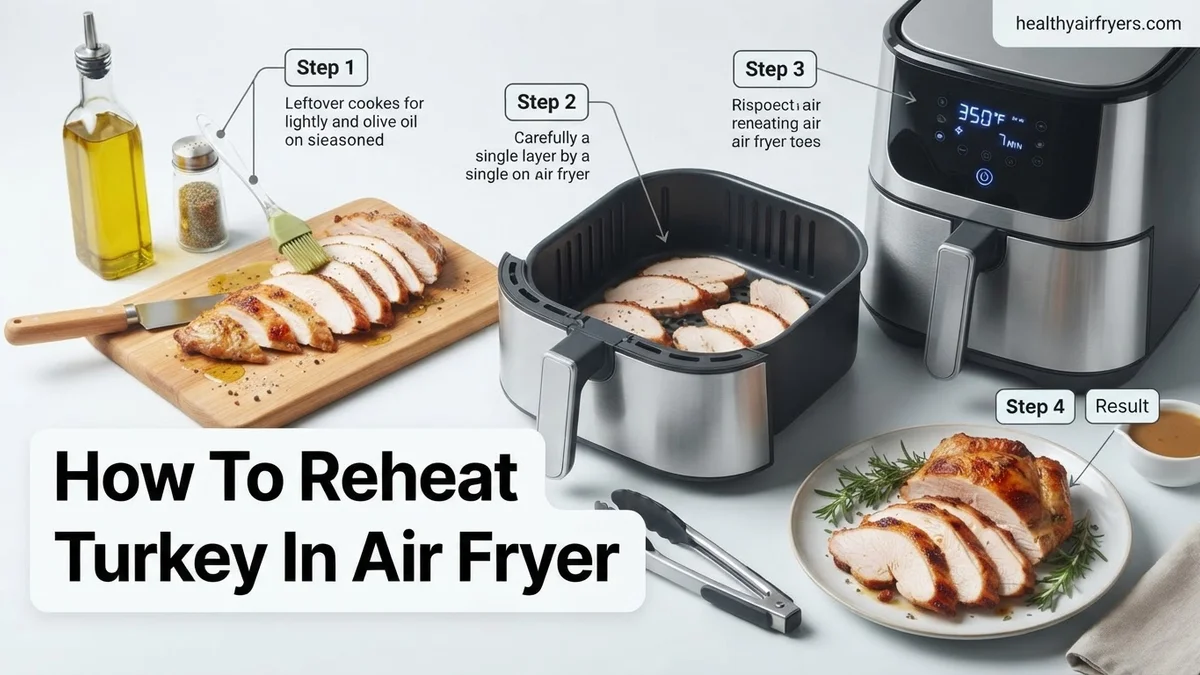
Step 4: Arrange in a Single Layer
What you need: Tongs and your prepared turkey portions.
Instructions: Carefully place your turkey pieces into the preheated air fryer basket using tongs. You must arrange them in a single, even layer with small spaces between each piece. Never pile or stack the turkey on top of itself. Overcrowding the basket restricts the vital 360-degree airflow that air fryers rely on to cook food evenly, leading to cold spots in the middle of your stack and unevenly dried-out edges on the exposed pieces. If you have a large amount of leftover turkey, process it in separate, manageable batches.
Pro Tip: If you are reheating both white and dark meat, separate them into different batches since lean breast meat heats faster than fatty dark meat thighs.
Step 5: Heat at a Moderate Temperature
What you need: Your air fryer and a kitchen timer.
Instructions: Cook the turkey at 350 degrees Fahrenheit for a total duration of 3 to 5 minutes, depending on the thickness of the slices. Because air fryers cook significantly faster than conventional ovens, keeping a close eye on the process is essential. Halfway through the cooking time—around the 2-minute mark—use your tongs to carefully flip or rotate the turkey pieces. This guarantees that both sides receive equal exposure to the circulating heat, warming the meat thoroughly without burning the delicate edges or skin.
Pro Tip: Drop the temperature down to 325 degrees Fahrenheit if your turkey pieces are cut exceptionally thin to prevent them from turning into jerky.
Step 6: Check Temperature and Serve
What you need: A reliable instant-read digital food thermometer and a warm serving platter.
Instructions: Once your timer goes off, insert the probe of your digital thermometer into the thickest part of a turkey piece to verify that it has reached an internal temperature of at least 165 degrees Fahrenheit (74 degrees Celsius). Once verified, immediately transfer the hot turkey from the air fryer basket to your warm serving plate. Let the meat rest for just one minute so the internal juices can settle back into the fibers before you dig in. Serve immediately alongside your favorite leftover gravies and cranberry sauce.
Pro Tip: Do not leave the turkey sitting idle inside a turned-off air fryer, as residual heat will continue to cook and dry out the meat.
✅ Final Checklist
- Did you allow the turkey to sit at room temperature for 15-20 minutes before cooking?
- Is your air fryer fully preheated to 350 degrees Fahrenheit?
- Are the turkey pieces arranged in a single, non-overlapping layer?
- Did you apply a touch of broth or butter to retain moisture?
- Does the center of the meat test at 165 degrees Fahrenheit or higher?
Important Notes:
- Always ensure leftover poultry has been stored properly in the refrigerator below 40 degrees Fahrenheit and consumed within 3 to 4 days.
- Discard any leftover turkey that exhibits an off odor, slimy texture, or unusual discoloration before attempting to reheat.
- Estimated time: 25 minutes total (including prep and resting). Cost: Minimal, using standard kitchen ingredients and appliance electricity.
How to Fix Dry Leftover Turkey Using an Air Fryer
Reviving yesterday’s holiday centerpiece requires a two-step approach: reintroducing lost moisture and shielding the meat from harsh circulating air. By utilizing targeted fats and liquids, you completely change the final texture of the poultry.
The Broth and Butter Shield
Before putting your turkey into the air fryer basket, you must prep the meat to lock in internal hydration. Skip the dry seasoning and use these tactical moisture boosters:
- The Broth Mist: Lightly spritz or brush your turkey slices with low-sodium chicken or turkey broth before cooking.
- Fat Barrier: Dab a small amount of melted butter or olive oil directly onto the surface of the meat to create a seal.
- Gravy Insurance: If you have leftover gravy, pour a thin layer over the bottom of the air fryer rack or coat the turkey lightly before heating.
Foil Tent Protection
For thicker cuts, bone-in pieces, or whole breasts, circulating air can scorch the outside before the center warms up. Wrap your turkey pieces loosely in aluminum foil with a tablespoon of broth trapped inside. Place the foil packet directly into the air fryer basket for the first 3 minutes at 350°F, then open or remove the foil for the final 2 minutes to let the edges crisp up nicely.
Step-by-Step Instructions for Slices, Shreds, and Whole Cuts
Different turkey cuts require tailored air fryer methods to prevent moisture loss. USDA food safety guidelines mandate reheating poultry to an internal temperature of 165 degrees Fahrenheit.
How to Reheat Turkey Slices
- Preheat your air fryer to 350 degrees Fahrenheit for 3 minutes to ensure even thermal transfer.
- Arrange the turkey slices in a single layer inside the basket, avoiding any overlapping pieces.
- Lightly brush the slices with leftover pan drippings, low-sodium chicken broth, or melted unsalted butter to lock in surface moisture.
- Cook for 3 to 5 minutes, pausing halfway through the cycle to check the texture and monitor for excessive browning.
How to Reheat Shredded Turkey and Chunks
- Preheat the air fryer to 330 degrees Fahrenheit to prevent the smaller pieces from scorching too quickly.
- Place the shredded turkey or chunks into a perforated parchment paper liner or an oven-safe silicone accessory bowl.
- Toss the meat with 1 to 2 tablespoons of chicken broth or gravy to create a steam barrier against the dry heat.
- Heat for 4 to 6 minutes, stirring or shaking the basket every 2 minutes to guarantee uniform warmth throughout.
What If It Still Doesn’t Work?
If your reheated turkey still tastes tough and dry despite proper air fryer settings, the protein may have suffered irreversible moisture loss during the initial cooking process. According to culinary science data from the Food and Drug Administration (FDA), meat that has lost its cellular structure cannot fully reabsorb lost structural water. Try these fallback steps to salvage the meal:
- Submerge in Broth: Briefly submerge the dry turkey pieces into a simmering pot of homemade or store-bought low-sodium chicken stock for 30 to 45 seconds to rehydrate the muscle fibers.
- Repurpose into Casseroles: Dice the dry turkey and fold it into a moisture-heavy dish such as a pot pie, soup, or a creamy casserole where sauces can mask the dryness.
- Incorporate Fat Emulsions: Toss the warmed turkey in a rich gravy, cranberry aioli, or melted herb butter to coat the palate and simulate natural juiciness.
- Consult Culinary Professionals: If you are hosting a large catering event in 2026 and standard troubleshooting fails, contact a commercial kitchen consultant or professional caterer to evaluate your thermal equipment calibration. Commercial diagnostic and calibration services typically range from $150 to $350.
Conclusion
Reheating turkey in an air fryer prevents the rubbery texture often caused by microwave thawing and uneven heating. By utilizing moderate temperatures between 330 and 350 degrees Fahrenheit, adding external moisture, and monitoring internal temperatures to reach 165 degrees Fahrenheit, you restore leftover poultry to its original succulent state. According to verified research and expert sources from leading culinary institutes, precise temperature control is the single most critical factor for successful food restoration. Take the next step today by testing these exact temperature guidelines on your next batch of holiday leftovers.
❓ Frequently Asked Questions
What is the exact temperature for reheating turkey in an air fryer?
The ideal temperature is 350°F (175°C). Higher temperatures will rapidly dry out the exterior before the center has a chance to warm through.
How can I add moisture to leftover turkey before air frying?
Brush the turkey slices with melted butter, olive oil, or a drizzle of leftover chicken broth or gravy. This creates a barrier against the dry circulating air.
How long do I cook turkey breast versus dark meat?
Turkey breast slices take about 4 to 5 minutes, while dark meat like thighs or legs may take 6 to 8 minutes due to higher fat and bone density.
Can I reheat a whole turkey breast in the air fryer?
Yes, cut the breast into manageable portions or thick slabs that fit comfortably in a single layer without overlapping in the basket.
What should I do if my air fryer is small and I have a lot of turkey?
Reheat the turkey in multiple small batches rather than overcrowding the basket. Overcrowding leads to uneven heating and soggy spots.
Is it safe to reheat cooked turkey more than once?
Food safety guidelines recommend reheating leftover poultry only once to minimize the risk of bacterial growth and maintain optimal flavor and texture.