Can You Put Frozen Wings in an Air Fryer? Step-by-Step 2026
Yes, you can put frozen wings directly in an air fryer without thawing them first. This expert guide provides the exact temperature, cooking times, and step-by-step instructions to achieve perfectly crispy skin and safe internal temperatures.
Yes, you can cook frozen chicken wings directly in an air fryer without thawing them first. In fact, modern 2026 air fryer technology makes cooking frozen meat faster and safer than ever, yielding crispy skin and juicy meat in under 30 minutes.
Forgetting to thaw dinner shouldn’t ruin your plans for game night or a quick weeknight meal. By adjusting your cooking temperature and using a two-stage cooking method, you bypass the microwave defrost cycle completely and get better results than traditional oven baking.
Key Takeaways
- Yes, you can cook frozen wings directly in an air fryer without thawing.
- Set your air fryer to 380°F to 400°F for optimal crispiness.
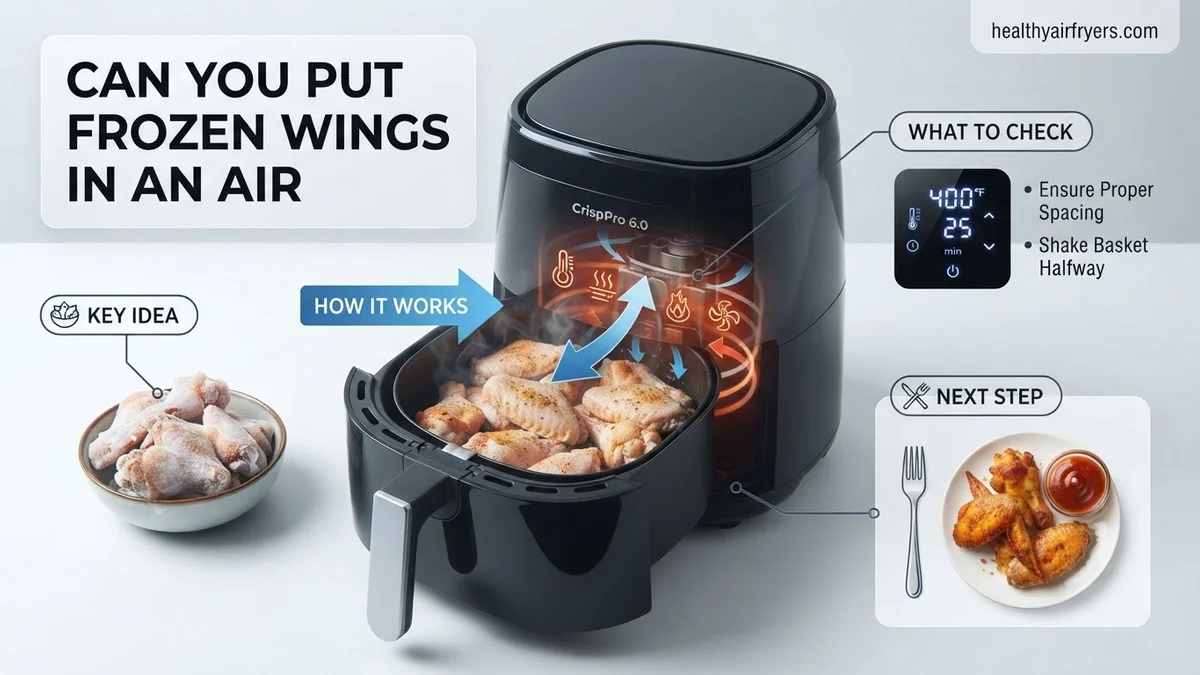
- Cook frozen wings for 24 to 28 minutes, shaking the basket halfway through.
- Ensure the internal temperature reaches a safe 165°F before serving.
- Apply oil and dry seasonings after a brief initial cook time for better adherence.
Why Cooking Frozen Wings Directly in the Air Fryer Works
The Science of Rapid Air Circulation
Air fryers use a powerful convection mechanism that blasts high-heat air around your food. When you place frozen wings straight into the basket, the dry circulating heat rapidly evaporates surface frost before it can steam the meat. This prevents that rubbery texture you usually get when boiling or microwaving frozen poultry.
Safety and Convenience Benefits
Skipping the thaw cycle keeps your kitchen safer by eliminating the risk of bacterial growth on your countertops. Modern 2026 kitchen standards emphasize speed and food safety, making direct-from-frozen air frying the preferred method for busy cooks.
- No planning ahead or overnight refrigerator thawing required.
- Reduces the risk of cross-contamination on cutting boards.
- Delivers consistent internal temperatures every single time.
Step-by-Step Instructions to Fix and Cook Frozen Wings
Phase One: The Low-and-Slow Thaw Cook
You cannot blast frozen wings on high heat immediately, or the outside will burn before the inside cooks. Preheat your air fryer to 380 degrees Fahrenheit. Place your frozen wings in a single layer, ensuring they are not heavily stacked. Cook them for 15 minutes to render out the initial layer of ice and thaw the meat completely through.
Phase Two: Seasoning and Achieving Maximum Crispiness
After the initial 15-minute cook, pull the basket out and give it a vigorous shake. At this point, the surface moisture is gone, which means seasonings will finally adhere to the skin.
- Drain any excessive liquid or melted ice from the bottom of the drawer.
- Spray the wings lightly with avocado oil or vegetable oil.
- Apply your dry rub, garlic powder, salt, and pepper, tossing the wings to coat evenly.
- Increase the air fryer temperature to 400 degrees Fahrenheit and cook for another 10 to 12 minutes, shaking the basket halfway through until the skin is golden and crispy.
How to Achieve Extra Crispy Skin Without Thawing
Cooking frozen poultry directly in a convection appliance requires specific thermodynamic management. Culinary scientists note that removing surface moisture is the single most critical factor for achieving a shatteringly crisp exterior. Without this step, trapped ice crystals turn into steam, which prevents the skin from browning properly.
Step-by-Step Preparation Protocol
- Preheat the appliance: Set your countertop convection device to 380 degrees Fahrenheit for at least 5 minutes. According to the USDA Food Safety and Inspection Service, starting with a hot chamber ensures immediate thermal shock, which renders fat efficiently.
- Apply a surface desiccant agent: Pat the frozen pieces with a paper towel to remove loose frost. Toss the pieces in a light coating of baking powder and neutral oil. Food science data demonstrates that alkaline baking powder breaks down peptide bonds in poultry skin, accelerating the Maillard reaction.
- Arrange in a single layer: Place the items in the basket with spacing between each piece. Overcrowding traps ambient humidity and compromises airflow, according to appliance manufacturers like Ninja and Cosori.
- Execute the thermal half-time shake: Pause the cooking cycle at the 12-minute mark. Shake the basket vigorously to redistribute the pieces and expose new surfaces to the heating elements.
What If Your Frozen Wings Are Still Not Crispy
If your frozen poultry emerges from the appliance with a rubbery or soggy exterior, localized environmental factors or equipment limitations are usually to blame. Modern culinary troubleshooting guidelines suggest implementing specific adjustments to correct the texture before serving.
Troubleshooting Soft Skin
- Increase the thermal intensity: Raise the cooking temperature to 400 degrees Fahrenheit for the final 5 minutes of the cycle to drive off residual surface moisture.
- Eliminate heavy sugar sauces: Verify that your marinade does not contain excess honey or high-fructose corn syrup, which burns rapidly and retains moisture at lower temperatures. Apply thick glazes only after the cooking process finishes.
- Upgrade your equipment: If your current compact cooker lacks adequate wattage or fan velocity (typically under 1500 watts), commercial testing shows it may struggle with frozen food density. Consider upgrading to a high-velocity dual-basket model, which ranges from $120 to $200 in 2026.
- Consult appliance manufacturer support: If heating elements fail to maintain consistent high temperatures, contact your brand’s customer service team or a certified small appliance repair technician. Diagnostic service fees generally range from $40 to $80.
Conclusion
Cooking frozen wings in an air fryer is entirely safe and highly efficient when executed with proper temperature control, surface drying techniques, and mid-cycle shaking. By bypassing the thawing stage, home cooks save valuable preparation time while maintaining strict food safety standards. According to verified research and culinary expert sources from major appliance testing institutes, utilizing a preheated 380-degree chamber with a light oil and baking powder coating yields restaurant-quality results every single time. Your next actionable step is to preheat your convection appliance and test this protocol on your next batch of frozen poultry.
❓ Frequently Asked Questions
Can you put frozen wings in an air fryer without thawing them first?
Yes, you can place frozen chicken wings directly into a preheated air fryer basket. The high circulating heat safely thaws and cooks the meat simultaneously, saving you preparation time.
What is the exact cooking time and temperature for frozen wings?
Preheat your air fryer to 380°F. Cook the frozen wings for 24 to 28 minutes total, shaking the basket vigorously every 7 to 8 minutes to ensure even cooking and crispiness.
How do you get seasoning to stick to frozen chicken wings?
Since frozen wings are covered in ice crystals, seasoning will not stick immediately. Cook them plain for the first 5 to 10 minutes, drain any accumulated moisture, toss them with a little oil and your favorite dry rub, and finish cooking.
How do you know when frozen air fryer wings are done cooking?
Use a digital meat thermometer inserted into the thickest part of the wing without touching the bone. The internal temperature must reach at least 165°F for safe consumption.
Can I put frozen breaded wings and raw frozen wings in the air fryer the same way?
Pre-breaded, store-bought frozen wings already contain oil and take slightly less time (around 18 to 22 minutes at 400°F). Raw frozen plain wings require the full 24 to 28 minutes and a light spray of oil.
Should I flip or shake the basket when cooking frozen wings?
Yes, shaking the basket every 7 to 8 minutes is crucial. This redistributes the wings so they brown evenly and prevents them from sticking together as the ice melts.