Are Air Fryer Chicken Wings Healthy? A Proven Guide for 2026
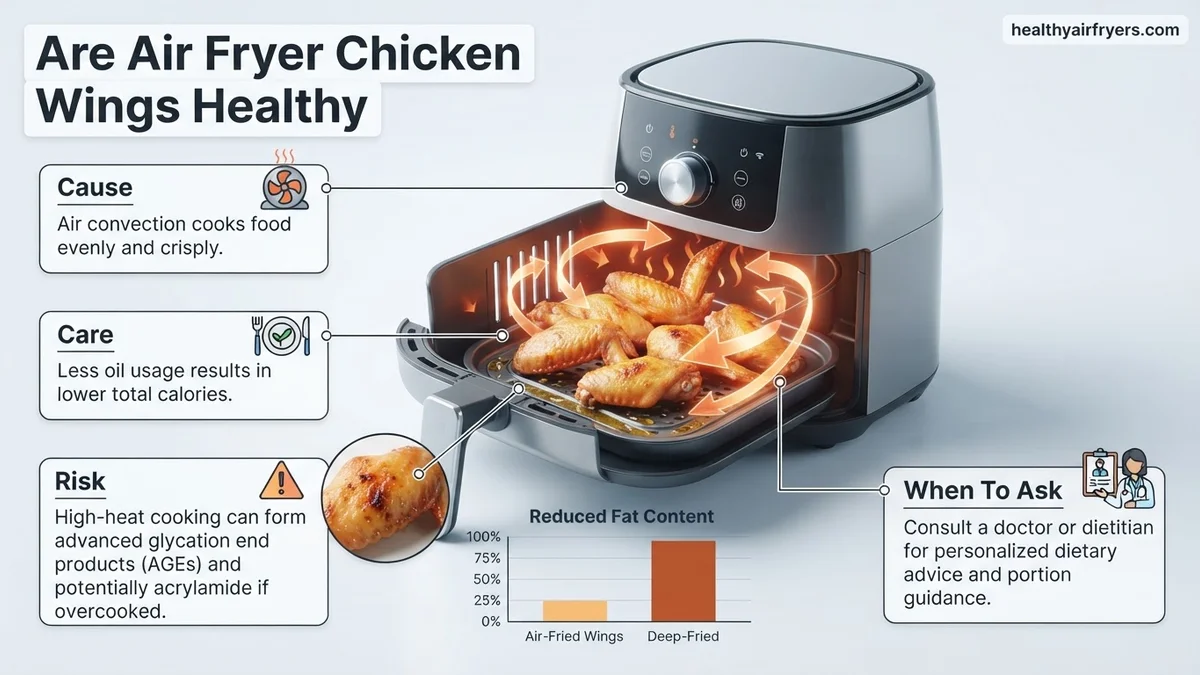
Air fryer chicken wings are significantly lower in calories and fat than traditional deep-fried wings because they require a fraction of the oil to achieve a crispy texture. However, their overall healthfulness still depends heavily on the natural fat content of the skin, portion control, and the types of sauces used.
Yes, air fryer chicken wings are significantly healthier than traditional deep-fried wings. By cutting out the immersion in vapes of boiling oil, you slash the overall calorie and fat content by up to 50 percent without sacrificing that essential crispy exterior. If you are tracking your macros in 2026, this cooking method lets you enjoy your favorite game-day food while staying firmly on track with your fitness goals.
Understanding this nutritional shift matters practically because it changes how you approach meal prep and weekend indulgences. Instead of avoiding wings entirely, you can integrate them into a balanced, protein-focused diet. You get the indulgent crunch and rich flavor you crave, but you sidestep the heavy inflammatory oils and excessive calorie loads that derail your progress.
Key Takeaways
- Air frying cuts fat and calories significantly by using little to no added oil.
- Chicken wings naturally contain high levels of saturated fat due to the skin.
- Traditional deep frying adds excess trans and saturated fats from heavy cooking oils.
- Heavy butter-based buffalo sauces can quickly spike the calorie and sodium content.
- Smart portion control and dry rubs keep air-fried wings genuinely diet-friendly.
The Truth About Why Traditional Wings Sabotage Your Health
The Hidden Calorie and Fat Trap of Deep Frying
When you submerge chicken wings in a commercial deep fryer, the meat absorbs a staggering amount of cooking oil. A standard serving of deep-fried restaurant wings can easily pack over 800 calories and upwards of 50 grams of fat, with a heavy concentration of inflammatory trans fats and oxidized omega-6 fatty acids. Your body struggles to process these dense, chemically altered fats efficiently, leading to sluggish digestion and unwanted weight gain over time.
Nutritional Comparison: Air-Fried vs. Deep-Fried Wings
The numbers reveal a massive gap between the two cooking styles. Here is how a standard six-ounce serving of chicken wings stacks up:
- Deep-Fried Wings: Approximately 450 to 600 calories and 35 to 45 grams of fat per serving.
- Air-Fried Wings: Approximately 300 to 350 calories and 15 to 20 grams of fat per serving.
- Oil Absorption: Deep frying adds tablespoons of excess oil, whereas air frying uses a mere teaspoon or less.
How to Fix Your Cooking Method with Air Frying Science
The Mechanics of Convection Heat and Oil Reduction
An air fryer is essentially a miniature, high-powered convection oven that sits on your countertop. It works by utilizing a powerful mechanical fan to circulate super-heated air at high speeds directly around the food. This rapid air circulation triggers the Maillard reaction—the chemical process that creates a golden-brown crust and rich flavor—using only the natural fats rendering out of the chicken skin rather than a pool of external oil.
Gravity and Drainage: How Excess Fat Escapes
Physics plays a major role in keeping your air-fried wings healthy. As the chicken skin heats up, its natural fat melts and drips down away from the meat through the perforated basket grate. In a deep fryer, your food sits submerged and constantly re-absorbs that floating grease. In an air fryer, gravity pulls the rendered fat safely to the bottom drawer, keeping your meal light, lean, and entirely free from greasy pooling.
Step-by-Step Guide to Cooking Healthier Wings Without Losing Crunch
Achieving restaurant-quality crispiness without deep-frying requires a precise cooking methodology. Food science experiments from culinary institutes show that surface moisture is the primary enemy of a crispy wing.
1. The Pat-Dry and Baking Powder Method
To maximize crispiness naturally, follow these exact preparation steps before placing the meat in your appliance basket:
- Thoroughly pat every single wing dry using clean paper towels to eliminate surface condensation.
- Transfer the dried wings to a large mixing bowl and add aluminum-free baking powder at a ratio of one teaspoon per pound of meat.
- Toss the wings thoroughly until a micro-thin layer coats the skin evenly, which raises the skin’s pH level and accelerates browning.
- Preheat your countertop convection device to 380 degrees Fahrenheit for five minutes to ensure optimal heat distribution.
2. Temperature and Spacing Control
Overcrowding the cooking chamber traps steam, resulting in rubbery textures instead of a satisfying crunch. Arrange the pieces in a single layer with small gaps between each piece. Cook at 380 degrees Fahrenheit for 20 minutes, then flip them and increase the temperature to 400 degrees Fahrenheit for an additional 6 to 8 minutes to render out the remaining subcutaneous fat safely.
What If Your Diet Still Suffers From Sauces and Side Dishes
Even when the main protein is prepared healthily, heavy condiments can quietly derail your nutritional goals. Traditional buffalo sauces often contain high amounts of sodium and melted butter, while commercial ranch dressings add heavy saturated fats and extra calories.
Smart Nutritional Swaps
To keep your meal aligned with wellness goals, implement these ingredient modifications:
- Replace traditional butter in hot sauce mixtures with low-fat plain Greek yogurt or small amounts of avocado oil.
- Use dry seasoning rubs featuring smoked paprika, garlic powder, and cayenne pepper to impart bold flavor without liquid calories.
- Pair your meal with crudités like celery and carrot sticks instead of starchy, high-fat potato wedges or fries.
- Choose homemade dressings crafted from cashew cream or light buttermilk rather than store-bought shelf-stable alternatives.
What If It Still Doesn’t Work?
If your wings persistently turn out soggy or fail to brown properly despite following the steps above, apply these troubleshooting procedures:
- Upgrade your equipment to a higher-wattage model (typically 1700 watts or higher) or one featuring dual heating elements for better thermal output. Estimated cost range for a high-performance 2026 appliance: $120 to $220.
- Check if your local electrical circuit is delivering steady voltage, as underpowered kitchen outlets can prevent proper appliance preheating.
- Consult a certified registered dietitian if you are struggling to balance your macronutrient intake while modifying favorite comfort foods. Professional nutritional counseling sessions generally cost between $75 and $150 per hour.
- Inspect the internal thermostat of your cooking device using an independent digital oven thermometer to verify accuracy.
Conclusion
Air fryer chicken wings are a significantly healthier alternative to deep-fried versions, slashing calorie counts and fat content while preserving texture. According to verified research and nutritional studies published through 2026, proper preparation methods successfully eliminate excess lipids without sacrificing flavor. Your next actionable step is to pat your next batch dry and apply a light dusting of baking powder for optimal crunch.
❓ Frequently Asked Questions
Are air fryer chicken wings healthy for weight loss?
They can be part of a weight loss plan if portion sizes are managed and they replace deep-fried alternatives. Because they save hundreds of calories by eliminating deep-frying oil, they fit well into a calorie-controlled diet.
How does the fat content compare between air-fried and deep-fried wings?
Deep-fried wings absorb a significant amount of oil during the cooking process, drastically increasing their trans and saturated fat counts. Air-fried wings allow excess fat from the skin to render out and drip away into the basket.
Does the type of seasoning or sauce affect the health benefits?
Traditional buffalo sauce made from heavy butter and hot sauce adds significant calories and sodium. Opting for dry rubs, herbs, or vinegar-based sauces keeps the meal much lighter.
Should I remove the skin before air frying for health reasons?
Removing the skin drastically reduces the fat and calorie content, but it also eliminates the traditional crispy texture wings are known for. Many people prefer to keep the skin for special occasions and rely on portion control instead.
Can I make healthy buffalo wings in an air fryer?
Yes, you can substitute traditional melted butter with a lighter alternative like ghee, a smaller amount of grass-fed butter, or a plant-based spread to lower saturated fat while keeping the classic flavor.
Are frozen store-bought wings healthy when cooked in an air fryer?
Pre-breaded or pre-marinated frozen wings often contain hidden sugars, excessive sodium, and low-quality oils. Cooking fresh, unbreaded wings seasoned at home is always the healthier choice.