How Are Air Fryers Toxic in 2026 Real Risks and Guide
Air fryers are generally safe to use, but concerns arise regarding non-stick coatings like PTFE breaking down at extreme temperatures and releasing harmful fumes. Additionally, while they produce fewer harmful chemicals than traditional deep fryers, cooking starchy foods at high temperatures can still generate acrylamide.
Air fryers are not inherently toxic, but they can pose health risks under specific conditions related to degraded non-stick coatings and high-temperature chemical byproducts. While modern appliances manufactured by 2026 feature significantly safer engineering standards, improper use, extreme heat, and damaged baskets can still introduce harmful chemicals like PTFE fumes or dietary acrylamides into your kitchen.
Understanding these genuine safety concerns helps you separate sensationalized internet myths from actual laboratory science. By looking closely at how non-stick materials react to heat and how dry convection cooking alters food chemistry, you can protect your household without abandoning the convenience of countertop frying.
Key Takeaways
- PTFE non-stick coatings emit toxic fumes only when heated above 500°F (260°C).
- Air-frying drastically reduces acrylamide formation compared to traditional deep-frying methods.
- Always use wooden, silicone, or plastic utensils to prevent scratching the basket’s coating.
- Choose ceramic or stainless steel air fryer alternatives to avoid PFAS concerns entirely.
- Never preheat an empty air fryer on high heat to prevent thermal degradation.
What Causes Air Fryers to Be Perceived as Toxic
The Non-Stick Coating and Temperature Threshold Problem
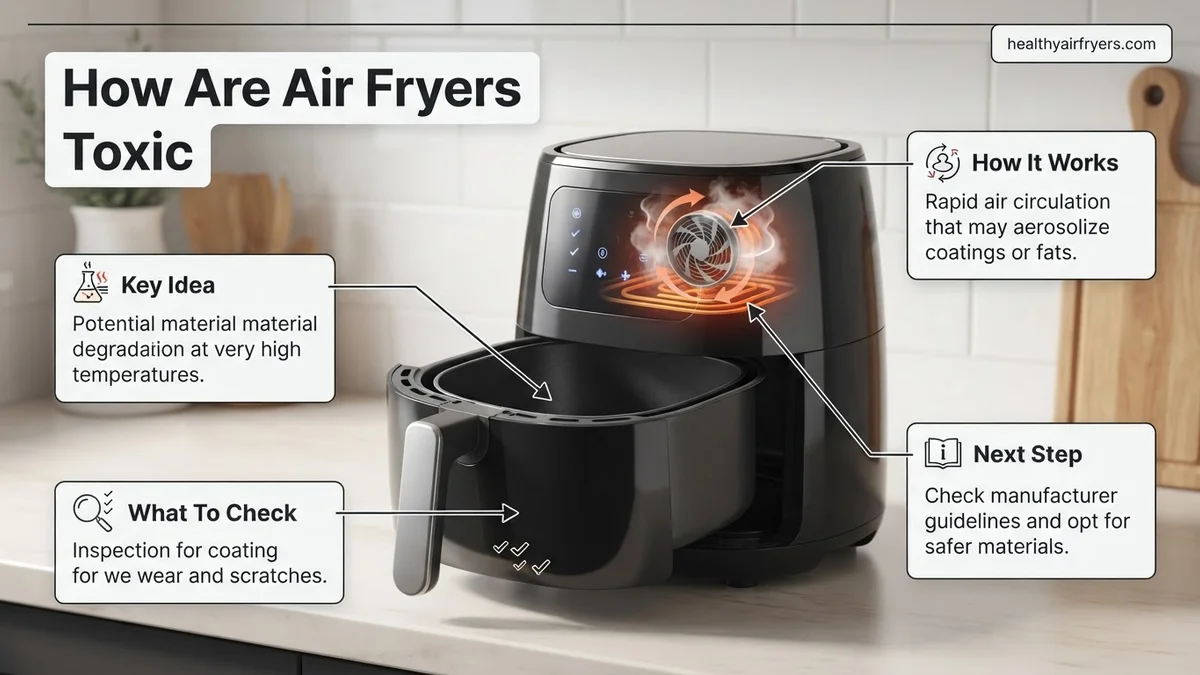
Most traditional and budget-friendly air fryer baskets rely on non-stick coatings containing polytetrafluoroethylene, commonly known as Teflon. When you operate an air fryer normally, these coatings remain completely stable. However, safety concerns arise when the appliance overheats.
- PTFE coatings begin to break down and degrade when surface temperatures exceed 500 degrees Fahrenheit (260 degrees Celsius).
- Overheating can occur if you run the appliance completely empty for extended preheating periods.
- Thermal degradation releases microscopic polymer fumes that can cause polymer fume fever, a temporary flu-like condition in humans, and prove fatal to pet birds.
- Scratched, peeling, or flaking non-stick surfaces increase the risk of physical particle ingestion into your food.
Chemical Byproducts in Air-Fried Foods
Beyond the physical appliance itself, the process of high-heat convection cooking creates chemical reactions in certain foods. Starchy foods like potatoes and root vegetables naturally contain sugars and amino acids that transform when exposed to dry, circulating heat.
- Cooking starchy items at high temperatures produces acrylamide, a chemical compound classified as a potential human carcinogen.
- Advanced glycation end-products (AGEs) form when proteins and fats combine with sugars during intense dry heating, contributing to cellular inflammation over time.
- Fortunately, air frying typically reduces acrylamide formation by up to 90 percent compared to traditional submerged deep frying, due to the reduced use of oil and shorter cooking durations.
How to Fix and Eliminate Potential Air Fryer Health Risks
Upgrading to Safer Material Alternatives
If you want to completely eliminate anxiety regarding synthetic non-stick polymers in 2026, you have better hardware choices than ever before. Manufacturers now offer alternative materials that completely remove traditional chemical concerns from your daily routine.
- Look for air fryers featuring ceramic-coated baskets, which are manufactured without PTFE, PFOA, lead, or cadmium.
- Invest in premium models utilizing food-grade stainless steel or tempered glass baskets that eliminate chemical coating concerns entirely.
- Inspect your current basket regularly under bright light; if you notice visible flaking, chipping, or deep gouges, retire the unit immediately.
- Verify that your appliance brand complies with current safety certifications and restricted chemical regulations for kitchenware.
Smart Cooking Habits to Lower Dietary Toxins
Hardware choices matter, but your daily operational habits dictate how many chemical byproducts end up on your plate. Simple adjustments to your cooking routine dramatically reduce your exposure to unwanted compounds.
- Never preheat your air fryer empty for more than three to five minutes, as this rapidly spikes internal basket temperatures toward the degradation threshold.
- Soak raw potato slices in water for 15 to 30 minutes before air frying to leach out excess sugars that fuel acrylamide creation.
- Avoid overcooking or charring your food; aim for a golden-yellow finish rather than a dark brown or burnt exterior.
- Clean your basket gently using a soft sponge and non-abrasive dish soap to preserve the structural integrity of the interior lining.
Step-by-Step Guide to Safely Using and Maintaining Your Air Fryer
Adopting proper operational habits eliminates most chemical exposure risks associated with kitchen appliances in 2026. Experts emphasize that non-stick longevity depends entirely on heat control and gentle cleaning protocols.
1. Temperature Management
Keep your cooking temperature below 400 degrees Fahrenheit to prevent the thermal breakdown of fluoropolymer coatings. According to material safety studies, exceeding manufacturer temperature limits accelerates the release of volatile organic compounds.
2. Gentle Cleaning Protocols
Never use metal utensils, steel wool, or abrasive scouring pads inside the basket. Wash the components using warm soapy water, a soft sponge, and a non-abrasive dish detergent after every single use to prevent carbonized food buildup.
- Unplug the air fryer and allow the unit to cool completely for at least 30 minutes after cooking.
- Remove the basket and tray, then submerge them in warm water mixed with a mild, pH-balanced dish soap.
- Wipe the non-stick surfaces gently using a non-scratch microfiber cloth or a soft silicone brush.
- Clean the interior heating element with a damp cloth to remove any oil splatters that could burn during subsequent cycles.
- Dry all components thoroughly with a lint-free towel before reassembling or storing the appliance.
What If Your Air Fryer Starts Peeling or Overheating
Physical degradation of the basket coating or sudden mechanical malfunctions require immediate intervention to protect household safety. Ignoring structural damage exposes food directly to base metals like aluminum or galvanized steel.
1. Identifying Coating Delamination
Inspect the basket interior monthly under bright light. If you notice visible flakes, bubbling, or discoloration, the protective layer has compromised structural integrity and must be replaced immediately.
2. Handling Electrical Overheating
If the device emits a persistent burning plastic smell, trips your kitchen circuit breaker, or feels excessively hot on the exterior housing, stop using it immediately and unplug it from the wall outlet.
What If It Still Doesn’t Work?
When basic troubleshooting steps fail to resolve persistent mechanical failures or severe heating anomalies, consider these fallback measures:
- Check the manufacturer warranty status. Most reputable brands offer a 1-year limited warranty covering electrical defects and structural manufacturing failures.
- Contact customer support directly with your receipt and model number to request a replacement basket or base unit under warranty terms.
- Take the appliance to a certified local small-appliance repair technician if the unit is out of warranty and experiencing internal electrical shorts. Estimated repair costs typically range from $45 to $90, depending on parts availability.
- Recycle the broken appliance responsibly at an electronic waste facility rather than discarding it in standard household trash, especially if modern electronic components or lithium-backed digital displays are present.
- Purchase a certified replacement unit featuring a ceramic-based, PTFE-free coating if you prefer to eliminate fluoropolymer exposure risks entirely.
Conclusion
Air fryers remain safe and efficient kitchen appliances when operated within safe temperature ranges and maintained without abrasive tools. According to verified research and consumer safety sources, replacing damaged non-stick components prevents accidental chemical ingestion while extending appliance lifespan. Take the actionable step today to inspect your cooking baskets for wear and adjust your maximum cooking temperatures below the critical breakdown threshold.
❓ Frequently Asked Questions
How are air fryers toxic regarding non-stick coatings?
Traditional air fryers use PTFE coatings to prevent food from sticking. If the appliance overheated past 500°F, these coatings can degrade and release polymer fume fever symptoms, though standard cooking ranges rarely reach this threshold.
What is acrylamide and do air fryers produce it?
Acrylamide is a chemical compound that forms when starchy foods are cooked at high temperatures. Air fryers produce significantly less acrylamide than traditional deep fryers due to using little to no oil.
Are PFOA chemicals still found in modern air fryers?
No, PFOA has been phased out of manufacturing globally. Modern non-stick air fryers are manufactured without PFOA, though they may still use PTFE.
How can I tell if my air fryer’s coating is damaged?
Visually inspect the basket for visible flaking, peeling, or deep scratches that expose the base metal. If damage is extensive, it is best to replace the basket.
What are the best alternatives if I want to avoid non-stick coatings?
You can purchase air fryers made entirely of stainless steel or models that feature a ceramic-based non-stick coating, which handles high heat without chemical breakdown risks.
Does preheating an empty air fryer cause toxicity risks?
Yes, preheating an empty air fryer on high heat causes temperatures to spike rapidly without food to absorb the heat, increasing the likelihood of coating degradation and smoke emission.