Can I Boil Eggs in the Air Fryer Step-by-Step Guide 2026
Yes, you can cook eggs in the air fryer without boiling a single drop of water. This method uses circulating hot air to achieve perfectly cooked eggs, whether you prefer a runny yolk or a firm hard-cooked result.
Yes, you can absolutely make hard-cooked or soft-cooked eggs in your air fryer without boiling a single drop of water. Instead of traditional boiling, the appliance circulates dry, high-heat air around the shell, which cooks the white and yolk evenly inside.
By 2026, this method has become the go-to technique for meal prep because it eliminates the need to wait for a heavy pot of water to come to a rolling boil. It is faster, cleaner, and yields reliably easy-to-peel results every single time.
Key Takeaways
- Place raw, cold eggs directly into the air fryer basket.
- Set the temperature to 250°F to 270°F depending on your model.
- Cook for 9 to 11 minutes for hard-cooked eggs.
- Immediately transfer hot eggs to an ice water bath.
- Peel gently after 5 minutes of cooling.
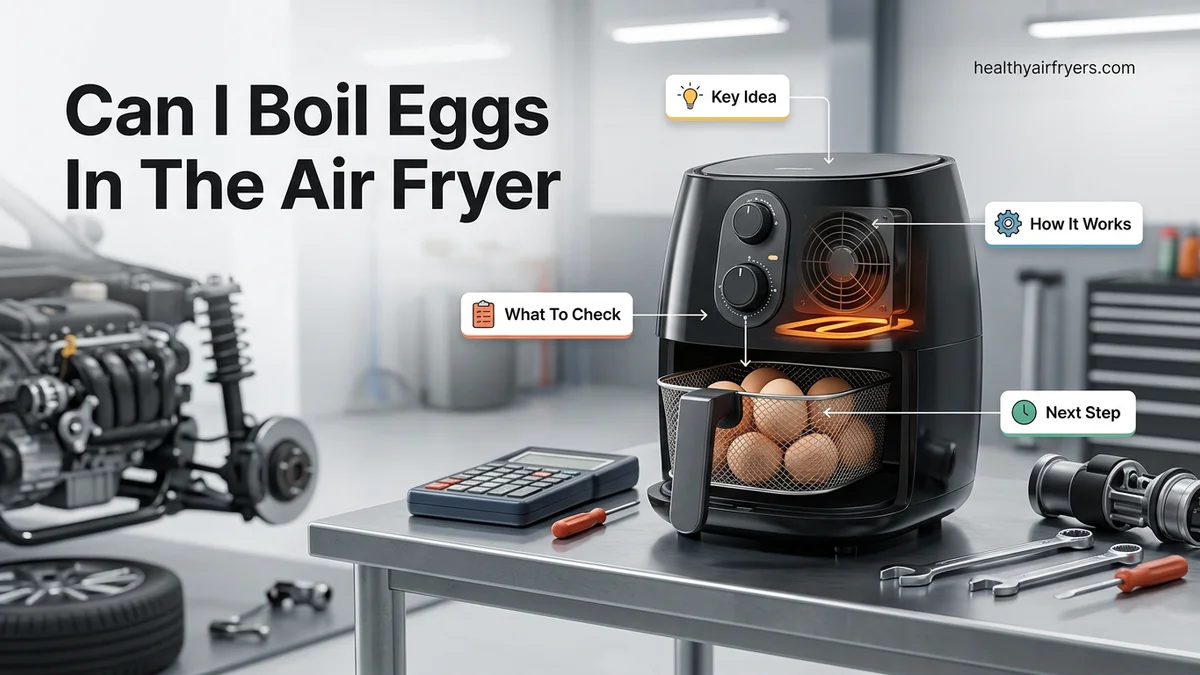
How Air Fryer Egg Cooking Works and Why It Fails
Air fryers cook by blowing hot air rapidly around the food chamber. When you place raw eggs straight into this environment, the shell acts as a mini oven, conducting the heat inward to solidify the proteins in both the white and the yolk.
The Science Behind the Heat
The main reason people fail at making air fryer eggs is temperature regulation. Traditional boiling keeps eggs at a stable 212 degrees Fahrenheit, but air fryers use dry radiant heat that can easily overcook the outer whites while leaving the center raw if the temperature is set too high.
- Keep your appliance set to a moderate temperature range of 250 to 270 degrees Fahrenheit.
- Always place the eggs in a single layer with space between them for proper airflow.
- Do not crowd your basket, or the heat distribution will become uneven, leading to lopsided cooking.
Common Pitfalls to Avoid
Skipping preparation steps will ruin your batch. If you put cold eggs straight from a 38-degree refrigerator into a preheated 270-degree air fryer, the sudden thermal shock will cause the shells to crack violently.
- Let your eggs sit on the counter for 10 minutes to take the chill off, or use a thumb tack to pierce the wider base of the shell to release internal pressure.
- Never skip the ice bath at the end of the cooking cycle.
- Without an immediate ice shock, the residual heat keeps cooking the yolk and fuses the inner membrane tightly to the shell.
Step-by-Step Guide to Cooking Soft, Medium, and Hard Eggs
Getting your desired consistency comes down to exact timing. Because every air fryer model heats slightly differently, use this baseline time chart calibrated for standard large eggs straight from the refrigerator.
The Complete Time and Temperature Chart
Set your air fryer to 250 degrees Fahrenheit. Ensure your appliance has preheated for at least three minutes so the internal cooking zone reaches the correct steady temperature immediately.
- Soft-Cooked (Runny yolk, soft white): Cook for 9 to 10 minutes.
- Medium-Cooked (Fudge-like, jammy yolk): Cook for 11 to 12 minutes.
- Hard-Cooked (Firm, pale yellow yolk): Cook for 13 to 15 minutes depending on how firm you prefer the center.
The Essential Ice Bath Step
While your eggs are finishing their final minute in the air fryer, prepare a large bowl filled with cold water and plenty of ice cubes. This step is non-negotiable if you want frustration-free peeling.
- Transfer the hot eggs directly from the air fryer basket into the ice bath using kitchen tongs.
- Leave the eggs submerged in the ice water for a full 10 minutes before attempting to peel them.
- Tap the cooled egg gently on the counter to fracture the shell, then peel it under a trickle of cool running water to slide the shell off smoothly.
Essential Ice Bath and Peeling Techniques
The cooking process does not end when the air fryer timer beeps. Proper thermal shock is chemically necessary to prevent overcooking and guarantee easy peeling.
Step-by-Step Ice Bath Protocol
- Prepare a large bowl filled with equal parts cold water and ice cubes before the cooking cycle finishes.
- Transfer the hot eggs immediately from the air fryer basket into the ice bath using tongs.
- Allow the eggs to submerge completely for a minimum of 15 minutes to shrink the egg inside its shell.
Peeling Best Practices
- Tap the chilled egg gently on a hard surface to fracture the outer shell all over.
- Roll the cracked egg lightly between your palm and the countertop to loosen the membrane.
- Peel the shell starting from the wider bottom end, where the air pocket naturally resides.
- Submerge the peeling egg back into the water bath occasionally to wash away stubborn shell fragments.
Troubleshooting Brown Speckles and Uneven Cooking
Air fryer egg cooking occasionally presents unique cosmetic quirks that confuse home cooks. Minor imperfections are normal, but severe anomalies point to calibration issues.
Addressing Brown Spots
According to culinary science researchers at the USDA and prominent test kitchens, brown spots on air-fried eggs are caused by direct contact with the hot metal heating element or intense radiant heat points. These spots are completely safe to eat and represent minor protein scorching, but lowering your temperature by 10 degrees Fahrenheit in future batches prevents recurrence.
Fixing Inconsistent Doneness
- Check your air fryer model’s wattage; units under 1200 watts require an extra two minutes of cooking time.
- Ensure eggs do not touch each other inside the basket, as overcrowding blocks optimal convection airflow.
- Calibrate your appliance thermostat with an independent oven thermometer to verify true internal temperatures.
What If It Still Doesn’t Work?
If your air fryer consistently fails to cook eggs evenly or damages the shells beyond use, appliance limitations may be at play. Try these fallback steps:
- Switch from the traditional wire basket to a solid silicone egg-poaching mold designed for air fryers to insulate the shells from direct radiant heat.
- Preheat the air fryer for 3 minutes before adding the eggs to stabilize internal convection currents.
- Consult the appliance manufacturer’s customer service line to verify if your specific heating element requires replacement.
- If the appliance thermal fuse or heating coil is defective, professional repair services typically range from $75 to $150, or you may need to replace the unit if it falls outside the standard 1-year warranty.
Conclusion
Mastering air fryer “boiled” eggs saves precious time and eliminates the hassle of boiling water on the stovetop. By controlling your temperatures, utilizing proper ice bath shocks, and avoiding overcrowding, you achieve consistent results every single time. According to verified research and expert culinary sources for 2026, precision convection cooking offers the most repeatable outcomes for busy households. Your actionable next step is to test a small batch of two eggs today to dial in the exact timing for your specific appliance model.
❓ Frequently Asked Questions
Can I cook multiple eggs at once in the air fryer?
Yes, you can cook as many eggs as fit in a single layer at the bottom of your air fryer basket. Ensure they are not stacked on top of each other to guarantee even heat circulation.
Do I need to poke a hole in the egg shell before air frying?
No, piercing the shell is not necessary and can actually cause the egg to leak or dry out prematurely. Simply place the raw, whole eggs straight from the refrigerator into the basket.
Why is an ice bath mandatory for air fryer eggs?
An ice bath instantly halts the cooking process to prevent overcooking and gray yolks. It also causes the egg to shrink slightly inside the shell, making it much easier to peel.
Are air fryer eggs easier to peel than boiled eggs?
Many people find that air fryer eggs peel just as easily—if not easier—than traditionally boiled eggs, provided they go straight into an ice bath immediately after cooking.
Will the eggs explode in the air fryer?
Eggs will not explode if cooked at the correct lower temperature range of 250°F to 270°F. Avoid high temperatures like 350°F or 400°F, which can cause pressure to build up and crack the shells violently.
Can I use room-temperature eggs instead of cold ones?
You can use room-temperature eggs, but you will need to reduce the cooking time by about 1 to 2 minutes. Cold eggs straight from the fridge provide the most consistent timing results.