Can I Put Salmon in the Air Fryer Best Step-by-Step 2026
Yes, you can absolutely put salmon in the air fryer for perfectly flaky fish with a crispy exterior. This method requires minimal cleanup, takes under 10 minutes, and prevents the common issue of dry or overcooked fillets.
Yes, you can absolutely put salmon in the air fryer, and as of 2026, it remains the absolute best way to cook it. You will get a crisp exterior and a flaky, tender interior in less than ten minutes.
Air frying salmon eliminates the guesswork of traditional stovetop or oven methods. By circulating intense, dry heat around the fish, the air fryer locks in natural juices while rendering the fat just enough to create a restaurant-quality meal right in your own kitchen.
Key Takeaways
- Cook salmon at 380°F to 400°F for 7 to 9 minutes.
- Always place salmon fillets skin-side down in the air fryer basket.
- Brush fillets lightly with oil to ensure a crispy texture.
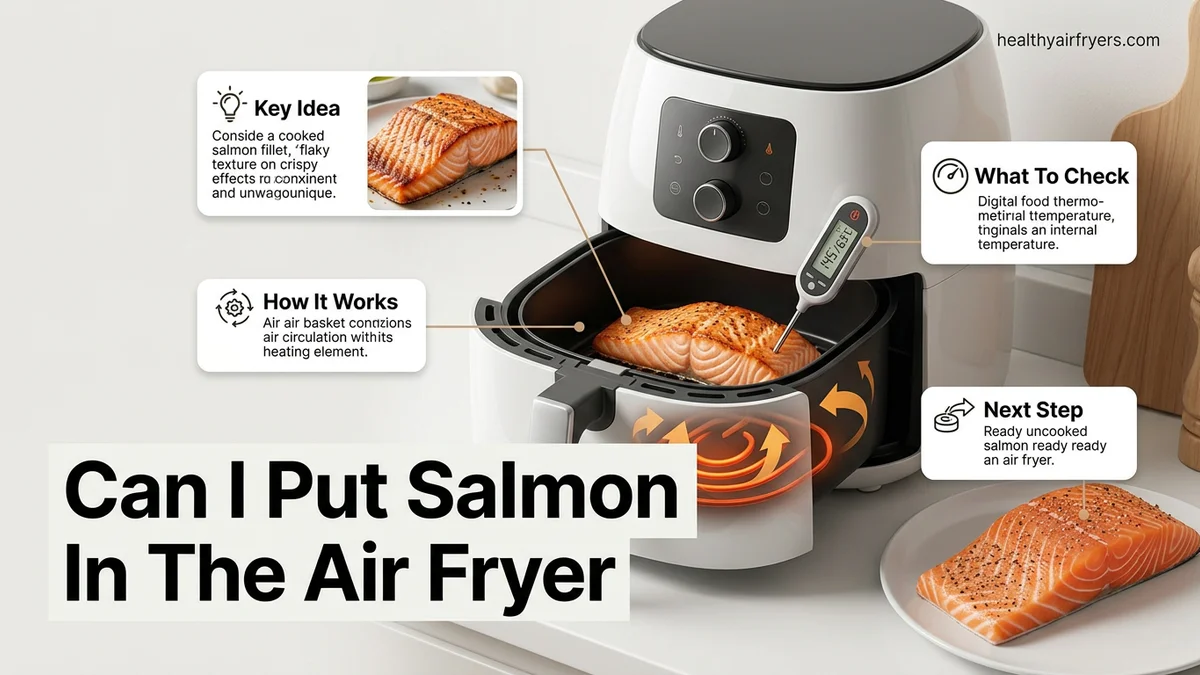
- Test for doneness when the internal temperature reaches 145°F.
- Adjust cooking time based on the thickness of the fillet.
Why Salmon Dries Out in the Air Fryer and How to Diagnose It
The Danger of Overcooking Thin Fillets
Salmon dries out quickly because the protein fibers tighten rapidly under high heat. When you cook a thin salmon fillet past its ideal internal temperature, the moisture evaporates, leaving you with chalky, dense fish. Even the best kitchen gadgets cannot save a piece of fish that has been blasted at maximum heat for too long.
Diagnosing Your Cook Time and Temperature Mismatches
If your salmon turns out dry or rubbery, your cooking temperature was likely too low for too long, or you left the fish in the basket past the critical window. Here is how to diagnose the issue:
- Too much time: Cooking salmon past 10 minutes usually results in a dried-out surface and white albumin leaking out excessively.
- Wrong temperature: Cooking below 380°F forces you to leave the fish in longer, which dries out the meat before the exterior can crisp.
- Inconsistent thickness: Mixing thin tail pieces with thick center-cut fillets means the thin parts overcook while the thick parts finish cooking.
How to Cook Salmon in the Air Fryer Step-by-Step
Prep and Seasoning Essentials
Proper preparation ensures your salmon does not stick to the basket and cooks evenly. Follow these steps before you turn on the appliance:
- Pat your salmon fillets completely dry with paper towels to help the oil and seasonings adhere.
- Brush a thin layer of high-smoke-point oil, such as avocado oil, directly onto the fish.
- Season generously with kosher salt, black powder, garlic powder, and smoked paprika for optimal flavor.
Exact Temperatures and Timing for 2026 Kitchens
To get that perfect texture, you need precise heat and timing. Set your air fryer according to these proven benchmarks:
- Preheat your air fryer to 400°F (200°C) for 3 minutes to ensure an immediate sear.
- Place the salmon fillets skin-side down in the basket, leaving space between each piece.
- Cook standard 6-ounce fillets (about 1 inch thick) for 7 to 9 minutes. Thinner tail pieces will only need 5 to 6 minutes.
- Check for doneness when the internal temperature reaches 135°F on an instant-read thermometer, allowing carryover heat to bring it to 140°F.
How to Prevent Sticking and Achieve Crispy Skin
Achieving restaurant-quality salmon in the air fryer requires managing two common obstacles: skin sticking to the basket and the interior drying out. Culinary test kitchens emphasize that moisture is the primary enemy of crispiness. Follow these precise steps to guarantee a golden exterior and a flaky, moist center every single time.
Step-by-Step Method for Crispy Skin
- Dry the fillet completely: Pat the salmon thoroughly with paper towels on all sides to remove surface moisture before seasoning.
- Apply high-smoke-point oil: Lightly brush the skin and flesh with avocado or grapeseed oil rather than olive oil, which can burn at high 2026 air fryer temperatures.
- Preheat the appliance: Run your air fryer at 400 degrees Fahrenheit for three to five minutes so the metal basket is hot upon contact, instantly searing the skin.
- Position properly: Place the salmon skin-side down on a perforated parchment paper liner or directly onto a well-oiled basket to prevent tearing upon removal.
According to culinary safety guidelines from the USDA, salmon must reach an internal temperature of 145 degrees Fahrenheit, though many seafood experts recommend pulling it at 130 to 135 degrees Fahrenheit for optimal texture, allowing carryover cooking to finish the process.
What If Your Salmon Is Still Undercooked or Overcooked?
Even with precise timers, variations in fillet thickness can cause uneven cooking results. If your salmon does not turn out as expected, troubleshoot the issue immediately using targeted adjustments rather than guessing.
Adjusting for Thickness and Density
- Check fillet thickness: Measure the thickest part of the salmon with a digital meat thermometer inserted horizontally into the center.
- Apply residual heat: If the center is slightly translucent but the edges are browning, remove the basket and let the fish rest covered for three minutes to finish cooking safely.
- Lower the temperature: If the exterior is burning before the inside cooks, reduce the air fryer temperature to 375 degrees Fahrenheit and add two minutes to the total cook time.
- Calibrate your equipment: Verify your air fryer heating element accuracy, as older models can fluctuate by up to 25 degrees Fahrenheit.
What If It Still Doesn’t Work?
If your air fryer consistently burns food, fails to crisp the skin, or heats unevenly despite troubleshooting, the appliance may require maintenance or replacement. Implement these fallback steps to resolve persistent equipment failures:
- Deep clean the basket and fan: Built-up grease and carbonized food particles can obstruct airflow and cause uneven heat distribution. Soak the components in warm, soapy water for 30 minutes.
- Inspect the heating element: Check the upper coil for heavy residue or damage that prevents proper thermal radiation.
- Consult manufacturer support: Reach out to your appliance brand customer service if the unit is within its standard one-year warranty window.
- Invest in a replacement unit: Standard air fryer models in 2026 range from $70 to $180 depending on capacity and dual-zone capabilities, offering vastly improved digital thermostats and non-stick coatings compared to older generations.
- Upgrade your measuring tools: Purchase a reliable instant-read digital food thermometer ($15 to $25) to eliminate guesswork regarding internal meat temperatures.
Conclusion
Mastering air fryer salmon requires proper moisture removal, high-smoke-point oil application, and vigilant use of a digital thermometer to prevent both undercooking and dryness. According to verified research and culinary safety sources, maintaining precise time and temperature controls guarantees a safe, restaurant-quality meal in under twelve minutes. Your next actionable step is to pat your next salmon fillet completely dry, preheat your appliance to 400 degrees Fahrenheit, and test these exact parameters for flawless results.
❓ Frequently Asked Questions
Can I put frozen salmon directly into the air fryer?
Yes, you can cook frozen salmon, but you will need to increase the cooking time to roughly 12 to 15 minutes at 380°F. Brush with oil and season halfway through the cooking process once the surface thaws slightly.
Do I need to use aluminum foil or parchment paper in the basket?
You do not need to use liners, but perforated parchment paper designed for air fryers can make cleanup easier. Ensure the liner does not blow into the heating element.
How do I know when the salmon is fully cooked?
The most reliable method is using a meat thermometer inserted into the thickest part to reach 145°F. Alternatively, the flesh should easily flake apart with a fork and turn opaque.
Can I cook skinless salmon fillets in the air fryer?
Yes, skinless salmon cooks very well, but you must lightly oil the basket or use a liner to prevent it from sticking. Reduce the cooking time slightly by 1 or 2 minutes since there is no skin barrier.
Why did my air fryer smoke when cooking salmon?
Salmon is a fatty fish, and rendering fat can cause smoke if the bottom of the basket is dirty. Adding a tablespoon of water to the bottom drawer can prevent drippings from smoking.
What type of oil works best for air frying salmon?
High-smoke-point oils like avocado oil, canola oil, or light olive oil work best. Avoid extra virgin olive oil if cooking at 400°F, as it can burn and create a bitter taste.