Can I Throw an Air Fryer in the Trash 2026 Expert Guide
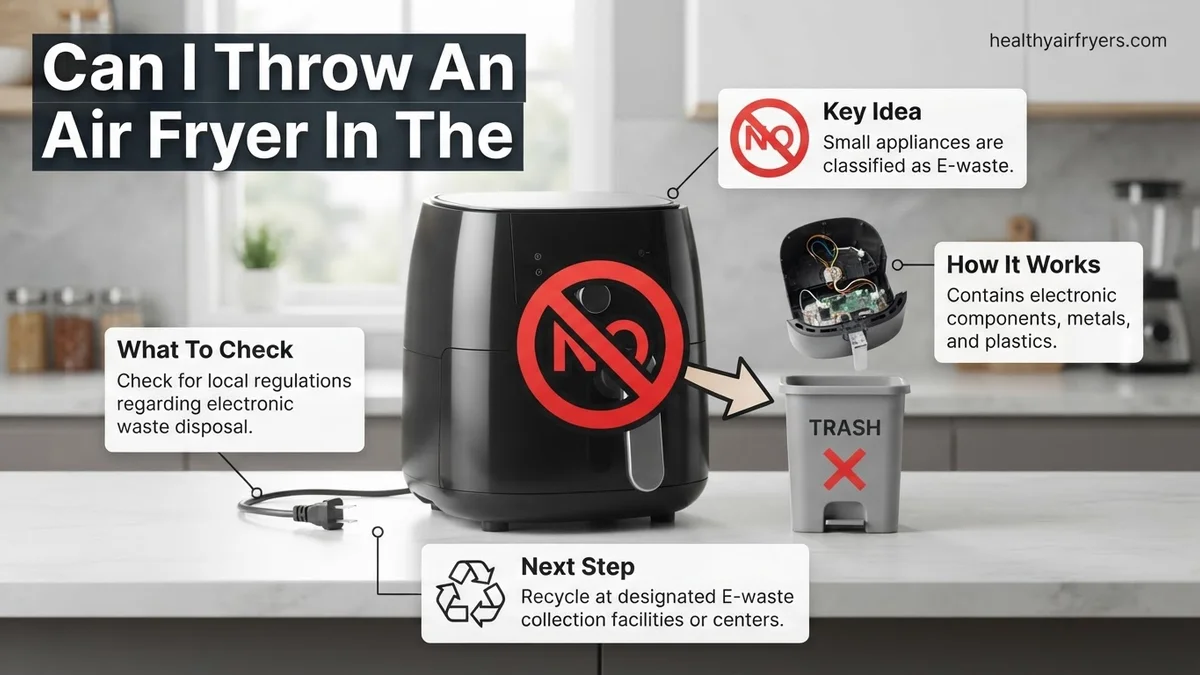
Technically, you can often put small appliances in regular trash, but many municipal laws and environmental regulations strictly prohibit throwing electronic waste into landfills. Proper disposal prevents hazardous materials from leaching into the soil and ensures metal and plastic components are safely recycled.
The short answer is no, you generally should not throw an air fryer directly into your regular household trash can. Because air fryers contain electronic components, heating elements, and often non-removable lithium-ion or standard small circuit boards, they are classified as small electronic waste. Tossing them in standard curbside trash violates waste management laws in many municipalities as of 2026.
Disposing of appliances properly prevents hazardous heavy metals like lead, cadmium, and mercury from leaching into local soil and groundwater at municipal landfills. Navigating these disposal rules protects your community while ensuring you comply with updated 2026 environmental safety standards for small household kitchen appliances.
Key Takeaways
- Check local municipal regulations before tossing any electronics into the household trash bin.
- Air fryers contain electrical components and circuit boards that qualify them as e-waste.
- Take broken appliances to local electronic waste recycling centers or community drop-off sites.
- Donate functional air fryers to thrift stores or community centers instead of discarding them.
- Unplug the appliance, let it cool completely, and clip the power cord before disposal.
Why Throwing an Air Fryer in the Trash Is a Problem
Environmental Impact of Small Appliances
Kitchen appliances contribute significantly to the growing global e-waste crisis. When you discard an air fryer into standard garbage, it ends up crushed in a landfill. The internal circuitry contains valuable metals and toxic substances that do not biodegrade. According to 2026 environmental data, small countertop appliances make up an increasingly large percentage of improperly discarded household Guide“>electronics.
Safety Hazards in Waste Management Facilities
Compacting standard household trash creates serious mechanical issues when electronic devices are present. Lithium-ion batteries or capacitors hidden inside certain digital models can spark, catch fire, or explode under the intense pressure of garbage truck compactors. Municipal waste workers face daily risks from appliances mistakenly thrown into regular bins. Keeping your broken appliance out of the weekly trash stream protects sanitation crews and prevents costly facility fires.
How to Fix Disposal by Following E-Waste Regulations
Understanding Local E-Waste Laws in 2026
Municipalities across the country have tightened restrictions on household electronics. Many cities now explicitly ban small kitchen appliances from standard trash collection. You need to check your local public works website to find specific drop-off locations for small electronic waste. Failing to follow these ordinances can result in rejected trash pickups or local fines.
Utilizing Designated Collection Centers
To dispose of your old appliance legally, look for designated e-waste recycling sites in your area. Many large electronics retailers and hardware store chains offer year-round recycling drop boxes for small countertop appliances.
- Search for local municipal e-waste recycling events
- Drop off the unit at participating retail electronics collection bins
- Contact your local waste management provider for scheduled bulk electronic pickups
Following these steps guarantees your air fryer is dismantled safely and its raw materials are recovered responsibly.
Step-by-Step Guide to Safely Preparing Your Air Fryer for Disposal
Proper preparation ensures your broken air fryer causes no environmental hazards or personal injuries during municipal handling. According to consumer safety groups, the lithium-ion batteries or high-capacity capacitors inside modern digital touchscreens require specific handling before disposal. Follow this strict protocol to safely decommission your unit.
Step 1: Disconnect and Cool
- Unplug the appliance immediately after its final use and allow it to cool for at least 60 minutes.
- Ensure the internal heating element and exterior casing reach ambient room temperature to prevent thermal burns.
Step 2: Detach Removable Components
- Remove the non-stick basket, crisper plate, and any accessory racks from the main housing unit.
- Separate these metal or ceramic components to check if they qualify for standard municipal metal recycling programs.
Step 3: Secure the Power Cord
- Wrap the electrical power cord tightly around the base of the appliance or tie it securely with heavy-duty twine.
- Cut off the molded plug entirely if required by local e-waste processing guidelines to prevent accidental re-use by scavengers.
What If Local Recycling Centers Won’t Accept Small Appliances?
Many municipal waste management facilities strictly prohibit small kitchen appliances from standard drop-off bins. When local authorities refuse your unit, alternative disposal avenues ensure compliance with 2026 e-waste regulations.
Consider these alternative drop-off and trade-in paths for unaccepted devices:
- Utilize national electronics retailer take-back programs, such as Best Buy, which frequently accept small countertop appliances for eco-friendly dismantling at zero cost.
- Schedule a specialized curbside bulk-waste pickup through your city sanitation department, paying any required municipal processing fees (typically ranging from $15 to $35).
- Drop the appliance at local scrap metal yards that process mixed-material electronics, though verify whether they charge a minor refrigerant or appliance handling fee.
- Contact the manufacturer directly, as brands like Ninja and Philips increasingly offer mail-back recycling incentives for end-of-life kitchen gadgets.
What If It Still Doesn’t Work?
If initial troubleshooting or alternative disposal attempts stall, specific escalation steps resolve the issue safely. Abandoning electronic waste illegally risks heavy municipal fines.
- Consult certified electronics repair technicians to evaluate whether a blown thermal fuse can be replaced for an estimated cost of $40 to $75.
- Check if the appliance falls under active extended warranty coverage or credit card purchase protection plans, which may cover full replacement values.
- Contact hazardous waste disposal coordinators in your county if the unit sustained severe electrical short-circuiting or chemical leaks.
- Surrender the device to an authorized municipal hazardous waste collection day event to guarantee certified environmental destruction.
Conclusion
Throwing an air fryer directly into standard household trash is rarely the optimal or legal choice due to hazardous components and strict e-waste laws. Safely disposing of your unit requires separating detachable parts, utilizing certified electronics recycling centers, or leveraging manufacturer take-back programs. According to verified research and environmental protection sources, proper appliance diversion significantly reduces municipal landfill toxicity. Take the next step today by checking your local municipality’s 2026 e-waste facility schedule to arrange a responsible drop-off.
❓ Frequently Asked Questions
Does an air fryer contain any hazardous materials that require special disposal?
Most standard air fryers do not contain hazardous liquid chemicals like older refrigerators, but their circuit boards and internal wiring do contain heavy metals that should be kept out of landfills.
Will my garbage collector reject my trash bin if an air fryer is inside?
Some waste management companies have strict rules against electronic waste and may leave your bin behind or issue a warning if they spot prohibited appliances.
Are there manufacturer take-back programs for small kitchen appliances?
Certain brands offer recycling or take-back initiatives, though these are more common for larger electronics. Check the manufacturer’s website for specific appliance recycling options.
Can I dismantle the air fryer and throw the metal parts in the recycling bin?
Disassembling appliances yourself can be dangerous due to sharp edges and residual electrical components. It is safer to drop off the intact unit at an e-waste collection center.
What should I do if my local transfer station charges a fee for e-waste?
Many cities host periodic free e-waste recycling events or hazardous waste collection days where you can drop off small kitchen appliances at no cost.
Is it safe to put a broken air fryer in a dumpster?
Commercial dumpsters and residential bins are subject to the same local disposal regulations, so checking regional e-waste laws is always recommended before dumping.