Can You Defrost in an Air Fryer? Step-by-Step Guide 2026
Yes, you can defrost food in an air fryer, but it requires careful temperature control to avoid food safety hazards. Because air fryers heat up rapidly, improper settings can cook the outer layer while leaving the center frozen in the danger zone.
Yes, you can defrost food in an air fryer, but you must do it carefully to avoid major food safety risks. Because air fryers use intense, rapid heat circulation, standard defrosting can easily push the outer layers of frozen meat or vegetables into the “Danger Zone” between 40°F and 140°F while the center remains completely frozen solid. This creates a breeding ground for harmful bacteria.
Whether you are rushing to prep dinner in 2026 or just forgot to pull chicken breasts from the freezer ahead of time, understanding the mechanics of rapid countertop defrosting prevents foodborne illness. By utilizing low-temperature settings and specialized cycles, you can safely transition frozen items to ready-to-cook status without ruining the texture.
Key Takeaways
- Always use the lowest temperature setting available on your air fryer for defrosting.
- Food safety is critical; do not let raw meats linger in the temperature danger zone.
- Pre-made foods and frozen vegetables handle air fryer defrosting much better than raw meat.
- Check and flip the food frequently to ensure even thawing.
- Traditional methods like the refrigerator or cold water remain safer for large cuts of meat.
Why Defrosting in an Air Fryer Can Be Dangerous and How It Works
Standard air frying relies on high temperatures to crisp food quickly. When applied to frozen items, this aggressive heat causes exterior layers to cook instantly while the core stays rock solid. Food safety standards dictate that meat should not linger in the temperature danger zone, making improper air fryer defrosting a risky shortcut if done at normal cooking temperatures.
The Danger Zone and Uneven Thawing Risks
Bacteria multiply rapidly when perishable foods sit between 40°F and 140°F. If you blast a frozen steak at 400°F to thaw it, the outer millimeters will reach cooking temperatures while the middle stays frozen for hours. You end up with a surface that is technically entering the danger zone or cooking prematurely, while the center remains raw and unsafe. Understanding this hazard is essential for modern home cooks utilizing 2026 appliance technology.
How Air Fryer Defrost Settings Prevent Disaster
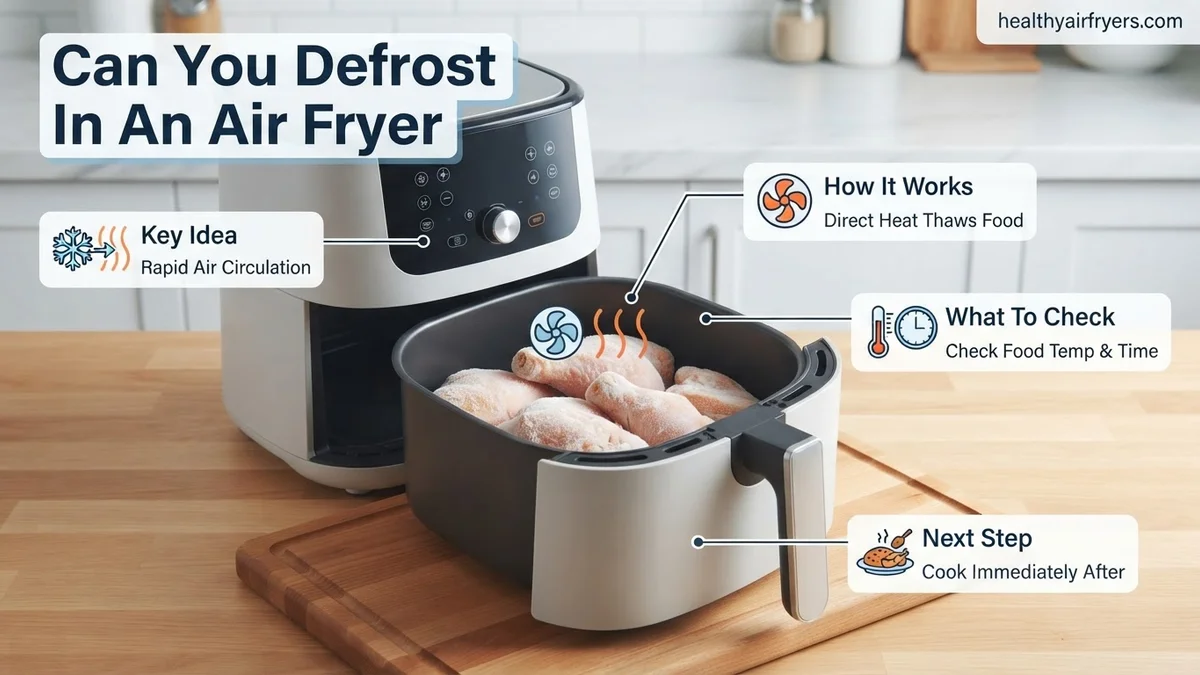
Modern air fryers handle this safely by using a dedicated defrost or low-heat dehydration mode, usually hovering around 180°F to 200°F paired with the fan. This gentle heat introduces warmth gradually. It thaws the item without cooking the outside edges. If your specific model lacks a low-temperature defrost function, you must manually drop your temperature setting to the absolute minimum and monitor the process constantly.
- Low Heat Threshold: Keep temperatures under 200°F to prevent surface cooking.
- Continuous Airflow: The fan helps transfer heat evenly across dense frozen blocks.
- Immediate Transition: Food must be cooked immediately after air fryer defrosting.
Step-by-Step Method to Safely Defrost Food in Your Air Fryer
Executing a safe air fryer defrost requires precision, patience, and active monitoring. You cannot simply drop frozen chicken breasts into the basket and walk away. Follow a structured approach to ensure your ingredients thaw uniformly and transition straight into the cooking phase without risking contamination.
Preparing Your Air Fryer and Food
Start by ensuring your air fryer basket is completely clean and free of old grease that could smoke at low temperatures. Remove all original plastic packaging, styrofoam trays, or absorbent pads from your frozen food. Place the frozen item in a single layer on the basket grate. If you are defrosting smaller items like shrimp or sliced vegetables, use a perforated parchment paper liner to prevent sticking, but ensure airflow remains unobstructed.
Executing the Low-Temp Thawing Cycle
Set your air fryer to its lowest temperature setting, ideally between 160°F and 180°F, or use the dedicated defrost preset if your 2026 model includes one. Set your timer for short intervals rather than a long stretch.
- Set the Timer: Program the air fryer for 4-minute intervals to maintain strict control over the process.
- Flip and Check: Open the basket halfway through each interval. Flip meat or stir loose items to expose frozen spots to the circulating air.
- Monitor Core Temperature: Use a digital meat thermometer to check that the internal temperature is rising safely toward 40°F without cooking.
- Cook Immediately: Once thawed, transition the food straight into your main cooking process. Never refreeze or let thawed food sit on the counter.
How Air Fryer Defrosting Compares to Traditional Methods
When evaluating modern kitchen technology in 2026, efficiency is paramount. To understand whether using an appliance for thawing is the best choice, culinary scientists and appliance manufacturers compare it directly to standard defrosting techniques like microwave thawing, cold-water immersion, and overnight refrigerator placement.
Air Fryer vs. Microwave Defrosting
Microwaves use electromagnetic radiation to agitate water molecules, which quickly thaws frozen items. However, according to data from the USDA Food Safety and Inspection Service, microwaves often begin cooking the outer edges of meat while the center remains frozen solid. An air fryer utilizing a low-temperature dehydrate or warm setting circulates gentle thermal air. This method generally provides a more uniform surface temperature compared to the uneven hot spots typically created by microwave magnetrons.
Air Fryer vs. Refrigerator and Water Thawing
Refrigerator thawing is widely considered the gold standard for food safety, keeping items below 40°F (4°C) at all times. Yet, large cuts of meat can take up to 24 hours per five pounds to thaw this way. Cold-water immersion requires continuous monitoring and a constantly changing water stream to prevent bacterial growth in the danger zone. By contrast, an air fryer reduces this timeline from hours or days down to just 10 to 15 minutes. It serves as a middle ground for hurried meal preparation in 2026, provided safety precautions are meticulously followed.
What to Do If Your Food Only Thaws on the Outside
A common hurdle when using rapid heat circulation for frozen items is uneven thawing. If you check your food mid-cycle and find that the exterior is warm and soft while the core remains a solid block of ice, immediate intervention is required to prevent exterior spoilage and bacterial multiplication.
- Pause and extract the basket: Immediately turn off the machine and pull out the basket to halt the thermal exposure on the outer layers.
- Segment or slice the item: If the outer layer has softened sufficiently, use a sharp culinary knife to slice the food into smaller, thinner portions. This exposes the frozen core to the circulating air.
- Reduce the temperature setting: Drop your appliance down to its lowest possible warm or dehydrate setting (typically around 100°F to 120°F) to give the interior time to catch up without overcooking the exterior.
- Incorporate a rest period: Let the food rest on the counter inside the basket for 5 minutes. Ambient heat transfer will naturally conduct inward from the warm exterior to the cold center.
What If It Still Doesn’t Work?
If your appliance fails to thaw food effectively, or if the internal heating elements malfunction, you may need to troubleshoot hardware limitations or consider professional service. Follow these fallback steps if standard defrosting procedures fail:
- Verify heating element functionality: Test the appliance on a standard cooking cycle to ensure the heating coil and convection fan are both activating properly. A broken fan prevents proper heat distribution.
- Consult manufacturer documentation: Check your specific brand manual or digital database for model-specific low-temperature thresholds, as some budget units lack precise low-heat controls.
- Switch to safe backup methods: If your appliance cannot safely thaw the item, submerge the sealed food in leak-proof packaging into a bowl of cold tap water, changing the water every 30 minutes.
- Assess professional repair costs: If internal thermal sensors or control boards are faulty, contact a certified appliance repair technician. Typical diagnostic and labor costs for small kitchen appliances range from $50 to $120, which may exceed the cost of purchasing a new unit.
Conclusion
Utilizing a convection appliance to thaw frozen ingredients offers a rapid, time-saving solution for modern kitchens, bridging the gap between slow refrigerator thawing and uneven microwave heating. According to verified research and expert food safety sources, success relies entirely on maintaining low ambient temperatures, utilizing intermittent check cycles, and transitioning the food immediately to a cooking phase to prevent bacterial proliferation. As your primary actionable next step, consult your specific appliance manual to identify its lowest temperature setting before attempting to thaw any frozen proteins.
❓ Frequently Asked Questions
Does an air fryer have a specific defrost setting?
Some modern air fryer models feature a dedicated low-temperature defrost or dehydrate setting. If your model lacks this, use the lowest manual temperature available and monitor the food closely.
Why does the outside of my food cook while the inside stays frozen?
Air fryers circulate intense, dry heat very quickly. This rapidly warms the exterior surfaces before thermal energy has time to conduct into the frozen core.
Can I defrost bread and baked goods in an air fryer?
Yes, bread, pastries, and baked goods thaw very well in an air fryer. Set the temperature low (around 300°F) for just 2 to 3 minutes to restore a fresh texture.
Is air fryer defrosting faster than a microwave?
A microwave is generally faster and safer for quick thawing because it uses electromagnetic waves to excite water molecules evenly throughout the food rather than relying on surface heat.
What are the food safety risks of using an air fryer to thaw meat?
The primary risk is the temperature danger zone (between 40°F and 140°F), where bacteria multiply rapidly. Slow surface heating gives bacteria plenty of time to grow on the outer layers.
Should I add oil when defrosting food in an air fryer?
No, do not add oil during the defrosting stage. Keep the food dry until it is fully thawed and you are ready to transition to the actual cooking process.