Can I Put Ceramic in Air Fryer? Best 2026 Safety Guide
Yes, you can put ceramic in an air fryer as long as the dish is explicitly marked as oven-safe. However, sudden temperature changes can cause untreated or non-oven-safe ceramics to crack due to thermal shock.
Yes, you can put ceramic in an air fryer, but only if the item is explicitly labeled as oven-safe. Because air fryers circulate high-heat air rapidly up to 400°F and beyond, standard ceramic decorative plates, mugs, or non-tempered earthenware will crack, shatter, or even explode inside the basket.
Knowing whether your specific ceramic dish can handle the intense environment of a modern air fryer in 2026 prevents kitchen disasters, ruined meals, and dangerous glass-or-ceramic shrapnel. Let us look at the exact safety rules, material limitations, and testing methods you need to follow before tossing a ceramic dish into your appliance.
Key Takeaways
- Always check the bottom of the ceramic dish for an oven-safe stamp.
- Never place cold ceramic directly into a preheated air fryer basket.
- Avoid using cracked, chipped, or decorative ceramic items in high heat.
- Measure your air fryer basket to ensure proper airflow around the dish.
- Silicone and metal cookware serve as safer, shatterproof alternatives.
The Risks of Thermal Shock When Using Ceramic in 2026
Understanding Thermal Shock in High-Speed Convection
Thermal shock is the primary reason ceramic items fail in air fryers. When a cold ceramic dish straight from the refrigerator enters a preheated 2026 model air fryer, the rapid temperature change causes the outer and inner layers of the material to expand at different rates.
- Uneven expansion creates immense structural stress within the ceramic matrix.
- Air fryers use powerful convection fans, transferring heat much faster than traditional static ovens.
- Porosity plays a huge role; if microscopic moisture is trapped inside unglazed ceramic, it turns to steam and cracks the dish from the inside out.
Glaze and Chemical Safety Concerns
Even if a ceramic piece survives the heat, the glaze on the surface might not be formulated for high-temperature dry heat. Older ceramic pieces or decorative items often use lead-based or cadmium-based glazes that degrade, leach toxic chemicals into your food, or release unpleasant fumes when exposed to sustained air fryer temperatures.
- Always ensure your ceramic cookware is food-grade and rated for high-heat dry baking.
- Avoid painted or hand-decorated ceramics, as the exterior designs can blister, burn, or peel off.
Step-by-Step Guide to Testing If Your Ceramic Dish Is Air Fryer Safe
Checking Bottom Stamps and Manufacturer Markings
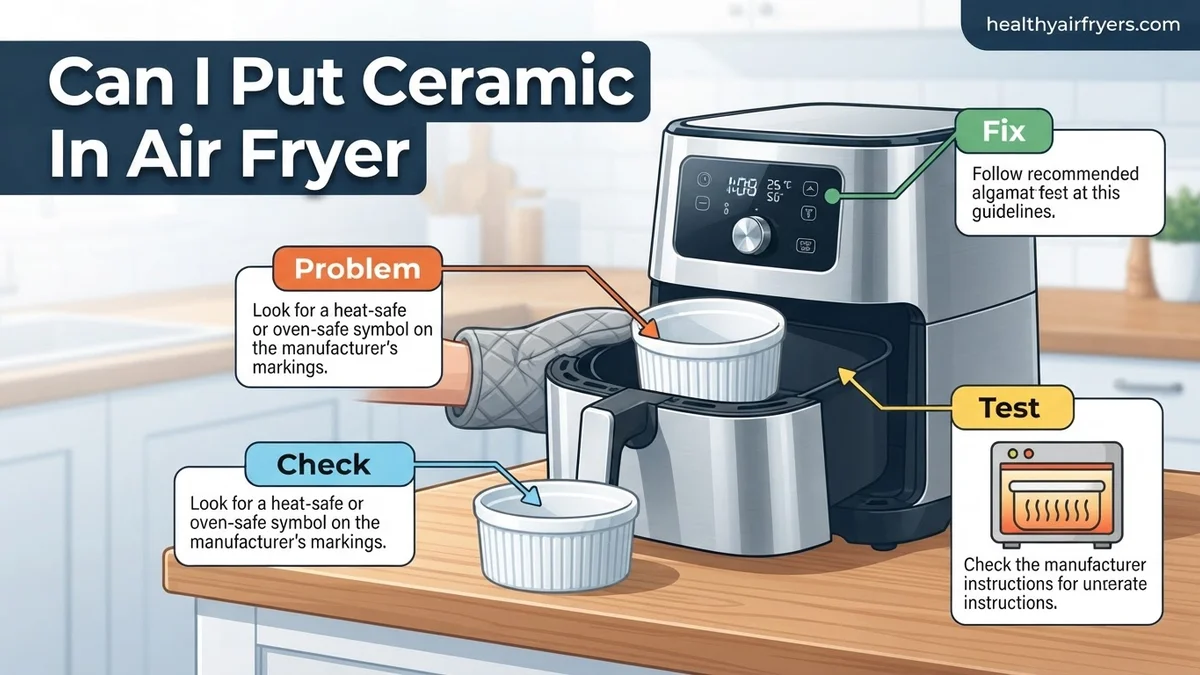
The fastest way to determine if your ceramic item is safe for the air fryer is to flip it over and inspect the unglazed bottom rim. Manufacturers stamp safety symbols directly onto the base of modern kitchenware to guide users.
- Look for an oven-safe icon, which usually resembles an oven with wavy lines or a temperature rating up to at least 400°F.
- Check for a microwave-safe symbol, though keep in mind that microwave safety does not automatically guarantee high-heat air fryer safety.
- If the dish features a generic “ceramic” label with no official symbols or temperature thresholds, assume it is unsafe for direct convection cooking.
The Warm-Water Test and Material Verification
If you cannot find a clear stamp and suspect your ceramic dish might be stoneware or porcelain designed for baking, you can perform a quick diagnostic check before risking your appliance.
- Run lukewarm water over the ceramic dish for 30 seconds to normalize its temperature.
- Place the dish into a warm oven (set to roughly 200°F) for 10 minutes to test its ability to handle dry heat without stress.
- Carefully remove the dish and inspect it for hairline fractures, clicking sounds, or unusual hot spots before attempting a full air fryer cycle.
How to Safely Place and Heat Ceramic Cookware in Your Air Fryer
When you have verified that your ceramic dish is oven-safe up to 400 degrees Fahrenheit or higher, correct placement is essential to prevent thermal shock and uneven cooking in your 2026 air fryer model. Air fryers rely on rapid convection heat circulation, meaning airflow management dictates your cooking success.
Step-by-Step Loading Guidelines
- Inspect the ceramic piece for hidden hairline fractures or chips under bright light before loading.
- Bring your ceramic dish to room temperature if it was stored in a refrigerator; never transfer chilled ceramic directly into a preheated basket.
- Place the dish centrally on the air fryer crisper plate, ensuring at least one inch of clearance around all sides for proper 360-degree air circulation.
- Preheat your air fryer with the ceramic inside only if the manufacturer explicitly approves gradual temperature ramping to avoid sudden thermal stress.
- Use silicone-tipped tongs or heat-resistant mitts rated for extreme temperatures when removing the dish after cooking concludes.
What If Your Ceramic Item Isn’t Safe and You Need Alternatives?
If your ceramic dish lacks a heat-safe stamp, features decorative metallic paint, or shows signs of existing damage, attempting to use it in an air fryer creates a severe safety hazard. Fortunately, several purpose-built alternatives match your baking needs without risking structural failure or toxic chemical leaching.
Approved Air Fryer Substitutes
- Switch to certified borosilicate glass bakeware, which engineered thermal resistance handles rapid temperature fluctuations up to 450 degrees Fahrenheit.
- Utilize pre-cut, heavy-duty perforated parchment paper liners designed specifically for air fryers to contain messes safely.
- Invest in dedicated non-stick carbon steel or anodized aluminum air fryer accessories ranging in price from $12 to $35.
- Contact the cookware manufacturer directly via customer service channels if material specifications remain unclear; professional replacement queries cost nothing and prevent accidents.
- Discard cracked or compromised ceramicware immediately to prevent sudden shattering during high-intensity convection cooking cycles.
Conclusion
Determining whether you can put ceramic in an air fryer depends entirely on manufacturer safety certifications, thermal shock resistance, and proper sizing clearances. When in doubt, prioritize safety by selecting dedicated borosilicate glass or coated metal accessories. According to verified research and culinary safety sources for 2026, adhering strictly to these temperature thresholds prevents dangerous kitchen accidents. Your next actionable step is to check the bottom stamp of your favorite baking dish before your upcoming meal prep.
❓ Frequently Asked Questions
Can I put glazed ceramic in an air fryer?
Glazed ceramic is generally safe if it is rated for oven use up to the required temperatures. However, older glazes might contain lead or cadmium that can degrade under high heat.
Is it safe to use ceramic mugs in an air fryer?
Most standard coffee mugs are not rated for high-oven temperatures and lack thermal shock resistance. Only use mugs explicitly stamped as oven-safe.
Can I use parchment paper with ceramic in an air fryer?
Yes, placing a sheet of perforated parchment paper beneath your ceramic dish can help prevent sticking and ease cleanup.
What happens if a ceramic dish breaks inside the air fryer?
Turn off the appliance immediately, unplug it, and let it cool completely before carefully removing all shards and cleaning the interior.
Are ceramic-coated air fryer baskets safe?
Yes, factory-made ceramic-coated baskets and accessories are specifically designed for air frying temperatures and are completely safe to use.
What are the best alternatives to ceramic for air frying?
Silicone baking cups, stainless steel pans, and tempered glass dishes rated for oven use make excellent alternatives.