Can You Put Cardboard in the Air Fryer? 2026 Safety Guide
No, you should never put standard cardboard in an air fryer. Doing so creates a severe fire hazard because the high-heat heating elements can easily ignite dry paper products. Additionally, standard cardboard often contains toxic inks, glues, and chemical treatments that contaminate food when heated.
No, you cannot put standard cardboard in an air fryer. Doing so creates an immediate fire hazard and can release toxic chemical fumes into your food.
As kitchen safety guidelines evolve through 2026, air fryer manufacturers continue to emphasize that cardboard is not designed to withstand the intense, direct radiant heat and rapid air circulation of a convection appliance. Whether you are tempted to use a takeout box divider or a makeshift tray liner, putting cardboard in your machine puts your kitchen at risk.
Key Takeaways
- Never place standard cardboard inside an air fryer due to extreme fire risks.
- Cardboard releases toxic fumes and chemical glues when exposed to high heat.
- Standard packaging blocks vital air circulation, ruining cooking results.
- Use perforated parchment paper specifically rated for air fryers instead.
- Silicone liners and stainless steel racks offer reusable, safe alternatives.
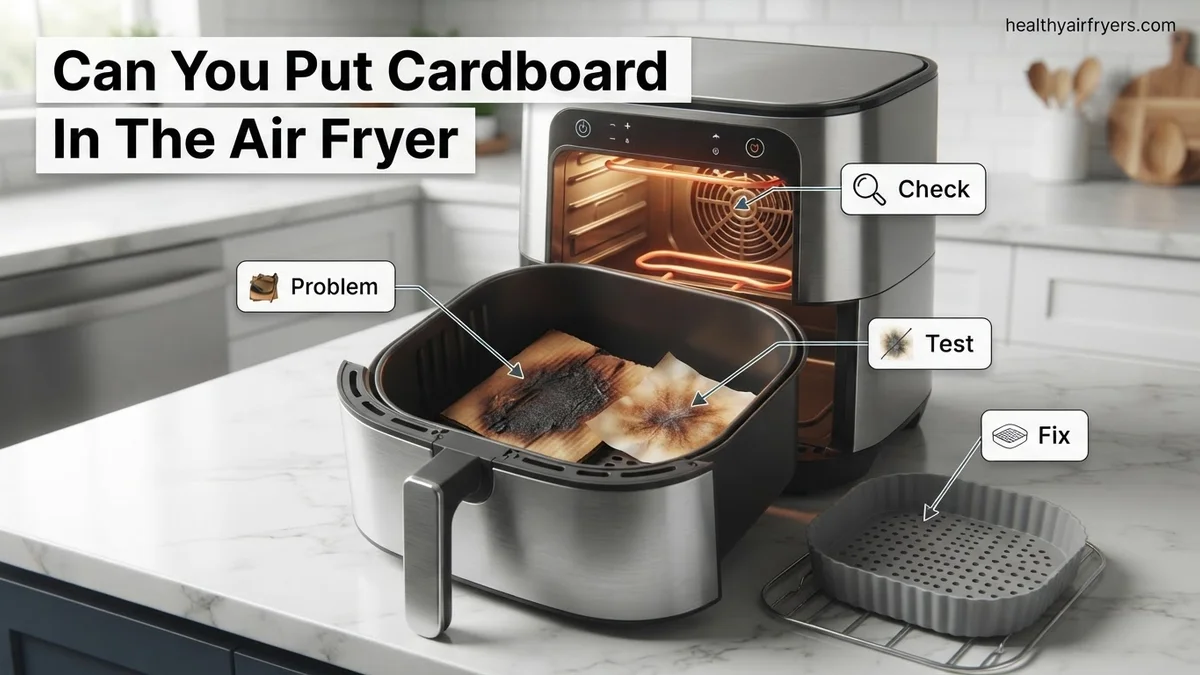
Why Cardboard and Air Fryers Do Not Mix: Fire and Chemical Hazards
The Fire Risk of High Heat and Dry Paper
Air fryers typically reach temperatures between 350 and 400 degrees Fahrenheit, and heating elements sit very close to the food basket. Standard cardboard has a very low ignition point, usually starting to scorch around 426 degrees Fahrenheit, but the localized hot spots in your air fryer can easily trigger combustion sooner.
- Dryness: Cardboard contains very little moisture, making it highly flammable in a dry heat environment.
- Airflow disruption: Placing a solid piece of cardboard inside the basket blocks the designed vortex of hot air, forcing the heating element to work harder and creating dangerous localized overheating.
- Proximity to coils: The powerful fans inside modern air fryers can lift lightweight pieces of cardboard, blowing them directly against the top heating element and instantly starting a grease fire.
Toxic Glues, Inks, and Coatings
Beyond the obvious danger of fire, cardboard is manufactured using industrial processes that leave behind harmful residues. When exposed to high heat, these materials break down and contaminate your food.
- Adhesives: The glues holding corrugated cardboard together liquefy and burn, releasing acrid smoke and volatile organic compounds.
- Chemical inks: Printed logos, barcodes, and shipping labels on cardboard contain heavy metals and synthetic dyes that vaporize at cooking temperatures.
- Waxes and treatments: Many packaging materials feature water-resistant plastic linings or chemical coatings that melt or off-gas toxic fumes when heated.
Step-by-Step Guide to Safely Replacing Cardboard with Air Fryer Accessories
Choosing Certified Heat-Resistant Alternatives
If you want to keep your air fryer basket clean without risking a kitchen fire, you must switch to materials engineered specifically for high-heat cooking. Standard parchment paper is often confused with cardboard, but even paper products require careful selection in 2026.
- Perforated parchment liners: Always use liners with pre-punched holes that match the airflow patterns of your specific basket model.
- Silicone mats: Food-grade silicone trays withstand temperatures up to 450 degrees Fahrenheit and can be washed and reused hundreds of times.
- Metal wire racks: Elevating food allows fat to drip away naturally while maintaining the 360-degree air circulation your appliance needs.
Proper Installation Techniques for Safe Cooking
Using safe accessories incorrectly can still damage your air fryer or ruin your meal. Follow these rules every time you cook with a liner or accessory:
- Never preheat with empty liners: The lightweight nature of paper or silicone liners means an empty basket will cause them to fly into the heating element. Always weight the liner down with food immediately.
- Trim excess edges: Ensure your parchment or silicone does not climb up the sides of the basket where it can catch fire or block the exhaust vents.
- Check manufacturer ratings: Verify that any accessory you purchase is explicitly certified heat-safe for air fryers, not just standard conventional ovens.
What If Your Packaging Claims to Be Oven-Safe? Evaluating Exceptions
Many takeout containers and frozen food trays feature labels declaring they are “oven-safe.” Consumers frequently assume this rating automatically applies to air fryers as well. However, heating dynamics differ substantially between conventional ovens and convection-powered air fryers.
Understanding Temperature Thresholds
Most commercial oven-safe paperboard and cardboard products are rated to withstand temperatures up to 400°F (204°C). While standard air fryers operate within this exact thermal window, the proximity of the food to the heating element inside a compact basket changes the equation. According to thermal safety testing data from Underwriters Laboratories (UL), localized radiant heat directly beneath a high-wattage coil can spike significantly higher than the digital thermostat setting.
The Convection Fan Danger
Traditional ovens rely on passive radiant heat or gentle convection. Air fryers utilize high-velocity fans blowing air at speeds exceeding 40 miles per hour. This violent air stream creates two major hazards when dealing with treated cardboard:
- Lightweight paper products can lift, flutter, and collide directly with the top heating element, igniting instantly.
- Chemical coatings, such as per- and polyfluoroalkyl substances (PFAS) historically used to greaseproof paperboard, can break down or aerosolize faster under forced-air friction, contaminating your meal.
How to Prevent Air Fryer Fires and Ensure Proper Air Circulation
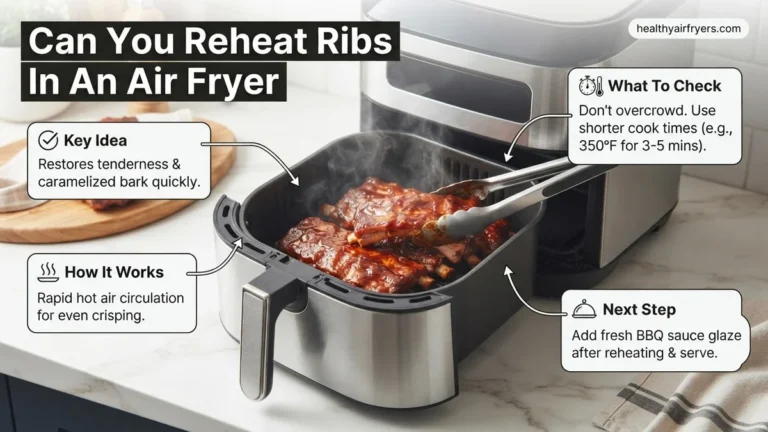
Air fryers operate on the fundamental principle of rapid air circulation. Blocking the basket prevents even cooking and traps grease, drastically increasing the risk of smoke and kitchen fires. Following strict operational protocols ensures safe food preparation.
Optimizing Airflow and Safety Protocols
If you need a convenient liner or barrier inside your appliance basket, abandon cardboard entirely and adopt verified alternatives. Implementing proper loading techniques safeguards both your appliance and your health in 2026.
- Replace all cardboard products with certified food-grade parchment paper specifically perforated for air fryers to maintain necessary airflow channels.
- Never preheat an air fryer with an empty paper liner inside, as the vacuum pressure and lack of weighted food will suck the liner directly into the heating element.
- Limit cooking temperatures to a maximum of 400°F when using approved parchment alternatives to prevent scorching.
- Clean the grease trap and basket tray thoroughly after every use to eliminate built-up oils that can ignite if exposed to stray paper fibers.
What If It Still Doesn’t Work?
If your air fryer has already suffered damage from melted cardboard, or if you are experiencing persistent burning odors, specific troubleshooting and repair steps are required.
- Unplug the appliance immediately and allow all internal components to cool completely before inspecting the heating element for stuck paper residue.
- Carefully scrape away any charred paper or adhesive residue using a non-metallic plastic scraper to avoid scratching the ceramic or non-stick coating.
- Run a cleaning cycle by heating the empty basket with a damp sponge or lemon-water solution to neutralize lingering smoke odors.
- If the heating element is permanently warped, heavily coated in melted wax, or short-circuiting, consult the manufacturer for warranty replacement options. Professional small appliance repair services typically cost between $45 and $90, making total unit replacement more economical for most standard models.
Conclusion
Putting cardboard into an air fryer introduces severe fire hazards, chemical contamination risks, and appliance damage due to extreme convection heat and proximity to open heating coils. Even packaging labeled “oven-safe” lacks the structural integrity required to withstand high-velocity fan drafts. According to verified research and expert safety sources, consumers should always utilize certified, perforated parchment paper or silicone liners instead of cardboard. Take the next step today by auditing your kitchen supplies and discarding any questionable paper containers before your next cooking session.
❓ Frequently Asked Questions
Why is putting cardboard in an air fryer a fire hazard?
Air fryers use a high-powered heating element located very close to the food basket, paired with a powerful convection fan. Lightweight cardboard can easily lift up toward the heating element, scorching, smoking, or instantly catching fire.
Are there any types of cardboard that are safe for air fryers?
Almost all standard packaging cardboard is unsafe. The only rare exception is commercial food packaging explicitly certified and labeled by the manufacturer as ‘air fryer safe’ or rated for high-temperature convection ovens.
What toxic chemicals are released when cardboard heats up?
Standard cardboard and paper packaging frequently contain recycled materials treated with heavy-metal inks, chlorine bleaches, and synthetic adhesive glues. Heating these materials vaporizes the chemicals directly into your cooking chamber and food.
How do safe air fryer liners differ from cardboard?
Air fryer-safe parchment paper and silicone liners are engineered to withstand high temperatures without degrading. They are also designed with proper airflow perforations to prevent suffocating the convection mechanism.
Can I use aluminum foil instead of cardboard?
Yes, aluminum foil is safe for most air fryers, provided you do not line the entire bottom pan in a way that blocks airflow vents. Always leave space around the edges for air circulation.
What should I do if something catches fire in my air fryer?
Immediately unplug the appliance if it is safe to do so. Keep the air fryer basket closed to starve the fire of oxygen, and use a Class B fire extinguisher or baking soda if the flames persist.