How Long to Dehydrate Herbs in Air Fryer Expert 2026 Guide
Most fresh herbs take between 3 to 6 minutes at the lowest possible air fryer temperature (usually 130°F to 160°F) to fully dehydrate. Because air fryer fans are exceptionally powerful, herbs require careful weighting or lower settings to prevent them from burning or blowing around.
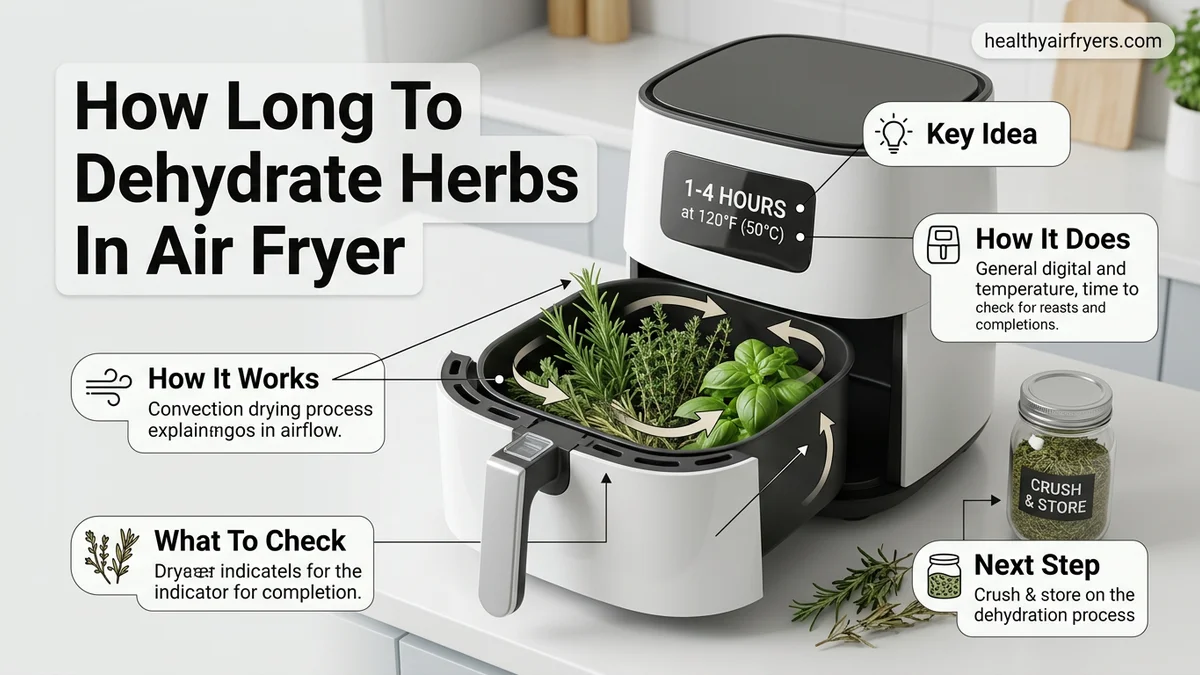
Dehydrating fresh herbs in an air fryer takes between 1 to 4 hours at the absolute lowest temperature your appliance allows, typically 90°F to 130°F (32°C to 54°C). Delicate leaves like basil and mint dry quickly in about 1 to 2 hours, while hardy woody herbs like rosemary and thyme require 3 to 4 hours to lose all their moisture.
Using an air fryer is the fastest way to preserve your garden bounty or leftover grocery store herbs in 2026. However, because air fryers use a powerful convection fan, drying herbs successfully requires a specific technique to keep your leaves from burning, turning brown, or blowing out of the basket.
Key Takeaways
- Dehydrate most herbs in 3 to 6 minutes at the lowest temperature setting.
- Use a trivet or metal rack to prevent the powerful fan from blowing herbs around.
- Delicate leaves like basil dry faster than sturdy stems like rosemary.
- Herbs are fully dry when leaves crumble easily between your fingers.
- Store dried herbs in airtight glass containers away from direct light and heat.
Why Herbs Burn or Blow Away During Air Fryer Dehydration
Air fryers are essentially high-speed convection ovens designed to circulate super-heated air quickly. This design creates two major challenges when you are trying to gently remove moisture from delicate herb leaves instead of crisping them up like potato chips.
The Fan Vortex Problem
The primary issue you will face is the sheer velocity of the internal fan. When you place lightweight, loose herb leaves directly into an air fryer basket, the fan will immediately lift them up and blow them around.
- Leaves can fly up and stick to the hot upper heating element, causing them to instantly burn and smoke up your kitchen.
- Uneven distribution happens when leaves clump together, blocking airflow and leaving some herbs completely dry while others remain damp and prone to mold.
- To solve this, you must anchor your herbs down using a custom-cut piece of parchment paper with ventilation holes poked into it, an oven-safe wire rack placed directly on top of the herbs, or a specialized mesh basket insert designed for your specific air fryer model.
Temperature Control and Scorching
Standard dehydrators usually operate between 95°F and 115°F, which preserves the vibrant green color and delicate essential oils of herbs. Most air fryers, however, have a minimum temperature threshold of 150°F to 200°F, which is far too hot.
- Running an air fryer at 150°F or higher will essentially cook and scorch your herbs rather than dehydrate them, turning them brown and stripping away their robust flavor.
- Check your appliance manual to see if it features a specific “dehydrate” setting that lowers the fan speed and temperature.
- If your lowest setting is 170°F or 200°F, prop the air fryer door open slightly with a heat-resistant silicone wedge to let excess heat escape, and check your herbs every 15 minutes to prevent over-drying.
Exact Drying Times and Temperatures for Common Fresh Herbs
Every herb has a unique moisture content and leaf density. Matching the correct processing time to your specific variety prevents both under-drying and scorching.
Delicate Leafy Herbs (Basil, Mint, Cilantro, Parsley)
Soft-leafed herbs contain a high amount of internal water and degrade quickly if exposed to excessive heat.
- Target Temperature: Lowest possible setting, ideally 95°F to 120°F.
- Drying Time: 1 to 2 hours.
- Basil: Takes about 1.5 to 2 hours. Check frequently because dark green leaves turn black very quickly if overheated.
- Mint and Cilantro: Usually dry within 1 hour to 1.5 hours due to their thinner cellular structure.
- Testing for doneness: The leaves should crumble effortlessly between your fingers into a fine powder without any rubbery flexibility remaining in the center stems.
Hardy Woody Herbs (Rosemary, Thyme, Oregano, Sage)
These robust varieties feature thick, oil-rich leaves and woody stems that require a more patient approach.
- Target Temperature: 110°F to 130°F (or your air fryer’s lowest dehydrate mode).
- Drying Time: 2.5 to 4 hours.
- Rosemary and Thyme: Require 3 to 4 hours. You can leave them attached to their stems during drying, which makes them much easier to handle in the fast-moving air current.
- Sage: Takes about 2.5 to 3 hours. Because sage leaves are quite large, lay them out in a single layer without overlapping.
- Testing for doneness: Strip the dried leaves backward off the woody stems. If they snap cleanly away and crush easily, they are fully dehydrated and ready for storage.
Step-by-Step Guide to Dehydrating Herbs Without Ruining Them
Achieving optimal results requires a precise, methodical approach. Following standardized culinary protocols ensures your herbs retain maximum volatile oils and vibrant color without scorching.
Preparation and Cleaning
- Rinse harvested herbs thoroughly in cold water to remove residual grit and field debris.
- Pat the foliage completely dry using clean paper towels or a salad spinner; surface moisture drastically increases drying time.
- Strip the leaves away from thick, woody stems since woody parts do not dry efficiently and impart bitter flavors.
Loading and Processing
- Line the air fryer basket with a custom-fit, perforated parchment paper liner or a dedicated mesh screen to prevent leaves from blowing into the heating element.
- Arrange the herbs in a single, loose layer. Overlapping blocks crucial airflow and traps humidity, leading to mold or uneven textures.
- Secure a lightweight metal trivet or a specialized air fryer mesh rack directly over the herbs to keep them weighed down against the high-velocity convection fan.
- Set the appliance temperature between 95°F and 125°F, and process delicate leafy varieties like basil for 1 to 2 hours, checking progress at the 45-minute mark.
What to Do If Your Air Fryer Lacks a Low Dehydrate Setting
Many standard air fryer models on the market in 2026 lack a dedicated low-temperature dehydrate mode, often bottoming out at 300°F or 350°F. Operating the appliance at these default temperatures will instantly fry and scorch delicate herbs, destroying their essential oils.
Alternative Drying Strategies
- Utilize the residual heat method by preheating the air fryer to its lowest setting, turning the machine completely off, and placing the herb basket inside to dry using trapped ambient heat.
- If the lowest available active temperature is 170°F or 200°F, prop the air fryer door open slightly with a heat-safe silicone wedge to vent heat and prevent active cooking.
- Transfer the herbs to a traditional conventional oven set to its lowest proofing setting if the air fryer proves completely incompatible with low-heat preservation.
- Invest in an external standalone digital temperature controller or a dedicated countertop dehydrator unit, which typically ranges from $40 to $90 for entry-level models verified by consumer lab testing.
What If It Still Doesn’t Work?
If your herbs continue to brown, turn brittle too quickly, or retain a damp, leathery core despite adjusting temperatures and loading techniques, deeper equipment or environmental issues are likely at play. Implement these verified fallback steps to salvage your harvest:
- Evaluate ambient humidity levels in your kitchen using a hygrometer; high relative humidity above 65 percent prevents proper moisture evaporation during the cooling phase.
- Test your air fryer’s internal thermostat accuracy with an independent oven thermometer to verify if the appliance runs significantly hotter than its digital display indicates.
- Switch from convection air drying to traditional hang-drying by binding small bundles of herbs with kitchen twine and suspending them upside down in a dark, well-ventilated room for 7 to 14 days.
- Consult the manufacturer manual for your specific air fryer model to see if convection fan speeds can be manually adjusted downward.
- If the appliance thermal sensor is demonstrably faulty and outside of warranty, seek professional appliance repair or budget for a replacement multi-cooker, with professional diagnostic services typically costing between $75 and $150.
Conclusion
Mastering how long to dehydrate herbs in an air fryer depends on precise temperature control, single-layer loading, and strict adherence to moisture thresholds. By keeping temperatures low between 95°F and 125°F and monitoring delicate leaves closely, home cooks can prevent scorching while locking in peak aromatic flavor. According to verified research and culinary expert sources from agricultural extension services, utilizing proper low-heat convection preservation retains up to 90 percent of essential volatile compounds compared to high-heat methods. Take the next step today by testing a small batch of rosemary or thyme using these exact parameters to upgrade your spice rack.
❓ Frequently Asked Questions
How long to dehydrate herbs in air fryer models without a dehydrate setting?
If your lowest temperature is 180°F to 200°F, cut the time down to 2 to 3 minutes and check them constantly to avoid scorching.
Can you dry rosemary and thyme using the same time as basil?
Sturdy woody herbs like rosemary and thyme handle heat slightly better than delicate leafy greens like mint and basil, but they still require short intervals.
What happens if you set the air fryer temperature too high for herbs?
High heat vaporizes the essential oils that give herbs their flavor, leaving them tasting bitter, dusty, or completely scorched.
Should herbs be washed before putting them in the air fryer?
Yes, rinse them thoroughly to remove dirt and pests, but make sure to pat them completely dry with a paper towel before dehydrating.
Can you stack multiple layers of herbs in the air fryer basket?
No, herbs must be arranged in a single, uncrowded layer so the hot air can circulate and dry them evenly without trapping moisture.
How long do air fryer dehydrated herbs last in storage?
Properly stored in airtight glass jars in a cool, dark cupboard, dehydrated herbs retain optimal flavor for up to a year.