Are Air Fryer Safe Are Air Fryers Safe ? Expert 2026
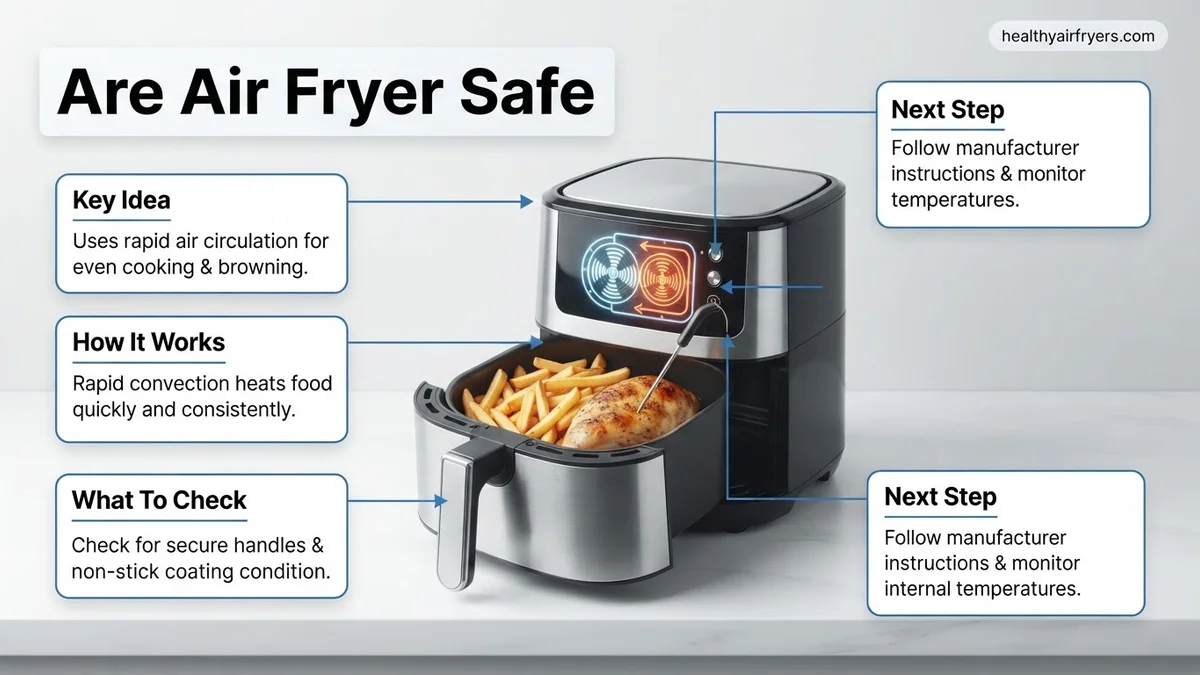
Are air fryers safe? Yes, air fryers are generally safe for cooking and offer a healthier alternative to deep frying by significantly reducing oil use and harmful chemical compounds. However, safe usage depends on avoiding damaged non-stick coatings and ensuring proper kitchen ventilation during operation.
Air fryers are generally safe to use for daily cooking, and they actually reduce your exposure to certain harmful compounds compared to traditional deep-frying. When you use an air fryer, you minimize the formation of acrylamide—a potentially carcinogenic chemical that forms when starchy foods are cooked at very high temperatures in oil.
Concerns about air fryers usually focus on non-stick coatings, chemical leaching, and physical kitchen hazards. As we look at kitchen safety standards in 2026, understanding how these appliances operate helps you cook your meals without compromising your long-term health.
Key Takeaways
- Air fryers produce significantly less acrylamide than traditional deep-frying methods.
- Modern non-stick coatings are strictly PFOA-free and safe under normal cooking temperatures.
- Always discard or replace baskets with severely scratched or flaking non-stick surfaces.
- Keep the appliance clear of walls and use dedicated outlets to prevent fire hazards.
- Regularly clean the basket and heating element to prevent smoke and grease buildup.
What Causes Safety Concerns with Air Fryers
Non-Stick Coatings and PTFE/PFOA Risks
Many traditional and modern air fryer baskets feature non-stick interior coatings to prevent food from sticking. The primary safety concern revolves around polytetrafluoroethylene (PTFE), commonly known as Teflon, and historical associations with perfluorooctanoic acid (PFOA). If a non-stick coating overheats—typically above 500 degrees Fahrenheit (260 degrees Celsius)—it can break down and release toxic polymer fumes. These fumes can cause polymer fume fever, a temporary flu-like condition in humans and fatal toxicity in pet birds.
- PFOA has been largely phased out of manufacturing globally, reducing direct exposure risks.
- Damaged, scratched, or flaking non-stick baskets increase the likelihood of coating particles transferring directly into your food.
- Ceramic-coated alternatives offer a PTFE-free and PFOA-free option for health-conscious users.
Acrylamide Formation and Cooking Chemistry
While air fryers use up to 80 percent less oil than deep fryers, high-heat convection cooking still generates chemical reactions in food. Starchy items like potatoes and processed snacks produce acrylamide when heated past 240 degrees Fahrenheit. Although air frying typically produces lower levels of acrylamide than traditional frying due to the absence of hot oil immersion, overcooking or burning your food will still spike these chemical byproducts.
How to Fix and Prevent Air Fryer Safety Hazards
Managing Physical and Electrical Risks
Beyond chemical concerns, operational safety requires proper kitchen habits to prevent fire hazards and burns. Air fryers draw significant electrical power—often between 1500 and 1800 watts—which means plugging them into overloaded circuits or extension cords can trigger electrical failures or melt outlets.
- Maintain at least five inches of clearance around all sides and the back of your air fryer to ensure proper ventilation.
- Never place your unit directly against a wall, under low-hanging cabinets, or on top of vulnerable surfaces like plastic mats or paper towels.
- Always plug the appliance directly into a wall outlet, avoiding extension cords or power strips entirely.
- Allow the basket and internal heating elements to cool completely before cleaning to avoid severe contact burns.
Inspecting and Replacing Damaged Equipment
Your equipment maintenance plays a major role in keeping your cooking routine safe. Scratched baskets, frayed power cords, and malfunctioning auto-shutoff sensors turn a convenient countertop appliance into a hazard. Make it a habit to inspect your air fryer components regularly.
- Switch to silicone, wood, or plastic utensils inside your basket to preserve the non-stick surface and prevent deep scratches.
- Discard and replace baskets that show peeling surfaces, deep gouges, or exposed base metal.
- Clean the grease trap and heating coil regularly to prevent smoke buildup and potential grease fires during high-temperature cooking cycles.
Step-by-Step Guide to Safe Daily Air Fryer Operation
Ensuring safety during daily operation requires adhering to standardized manufacturer protocols and electrical best practices. According to 2026 consumer safety data from Underwriters Laboratories (UL), following a strict operational sequence drastically reduces the risk of thermal runaway and electrical shorts.
1. Pre-Operation Inspection
Before plugging in your appliance, inspect the power cord for fraying and ensure the cooking chamber is free of foreign objects. Verify that the basket’s non-stick coating remains intact, as chipped coatings can degrade under high heat.
2. Proper Loading Techniques
Never overcrowd the basket. Overfilling restricts airflow, causing the heating element to work overtime and potentially triggering thermal fuses. Maintain at least a two-inch clearance around food items.
3. Post-Cooking Cool Down
Allow the appliance to cool for at least 15 minutes before cleaning. Never submerge the main housing unit in water, and unplug the unit directly from the wall outlet rather than pulling by the cord.
What If Your Air Fryer Still Smells or Malfunctions
If you have cleaned your air fryer thoroughly and checked for proper ventilation, but persistent chemical smells, smoke, or erratic heating continue, the issue may stem from internal component failure. Here are the necessary troubleshooting and resolution steps for 2026 appliance owners:
- Perform a Burn-Off Cycle: Run the empty air fryer at 400°F (200°C) for 15 minutes in a well-ventilated space to eliminate lingering factory residues trapped in the insulation.
- Test the Electrical Source: Plug the unit directly into a wall outlet rather than an extension cord or power strip, which can overheat and cause voltage drops.
- Inspect the Thermal Fuse: If the unit shuts off randomly, the internal thermal fuse may be tripping. Do not attempt to bypass this safety feature yourself.
- Contact Manufacturer Support: If the appliance is within its standard one-to-two-year warranty window, request a replacement unit.
- Evaluate Repair vs. Replacement: For units out of warranty, professional electrical repair services typically cost between $60 and $120. Because new, certified safe air fryer models retail starting at $50, replacement is often more economical and safer than repair.
Conclusion
Are air fryers safe? Modern models operate securely when users maintain proper ventilation, avoid toxic aerosol sprays, and adhere to strict cleaning schedules. If your appliance displays persistent electrical faults or unresolving chemical odors, immediate decommissioning is required. According to verified research and consumer product safety standards, taking proactive measures ensures your kitchen remains both efficient and secure. Make your next step a complete safety audit of your current kitchen setup.
❓ Frequently Asked Questions
Are older air fryers containing Teflon dangerous to use?
Most modern appliances use modern non-stick formulations that are completely PFOA-free. As long as you do not overheat the appliance past 400°F empty, the coating remains stable and safe.
What happens if the non-stick coating starts chipping or flaking?
If the basket coating begins to chip or flake off, small particles may mix into your food. While accidental ingestion of inert flakes is generally not toxic, it is best to replace the basket immediately.
Do air fryers produce harmful chemical fumes?
Air fryers do not produce harmful fumes under normal operating temperatures. Fumes only occur if the unit is severely overheated, which can break down low-quality plastics or degraded non-stick coatings.
Is it safe to run an air fryer on a standard kitchen counter?
Yes, but you must ensure adequate clearance around the unit—at least five inches of space from walls and cabinets—to allow proper ventilation and prevent heat damage to your countertops.
How do air fryers compare to conventional ovens regarding safety?
Air fryers are functionally miniature convection ovens. They share the same electrical and thermal safety profiles, though their smaller size reduces overall heat exposure in enclosed kitchen spaces.
Can leaving an air fryer plugged in cause an electrical fire?
While rare, leaving high-wattage appliances plugged into overloaded outlets can pose a fire hazard. Always plug your air fryer directly into a wall outlet and unplug it after use.